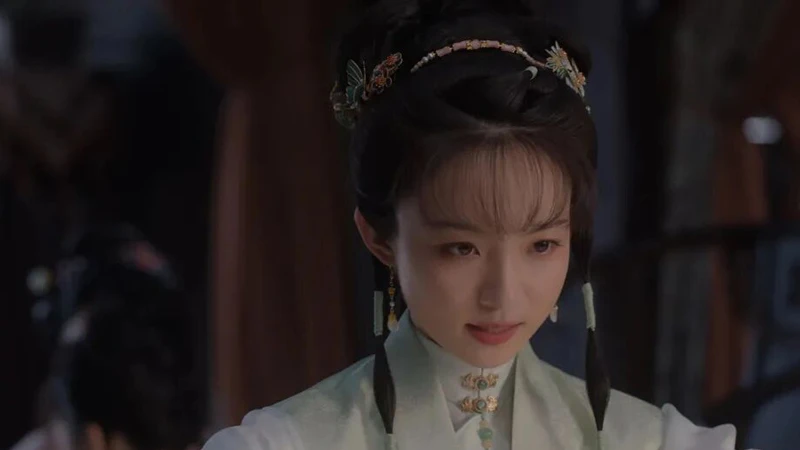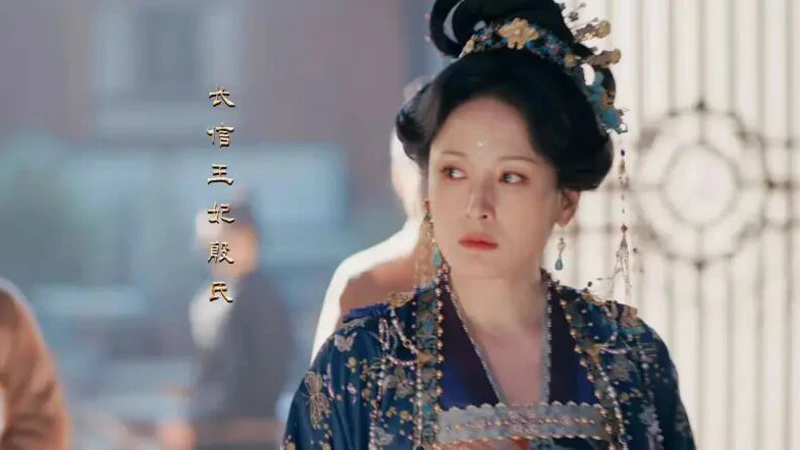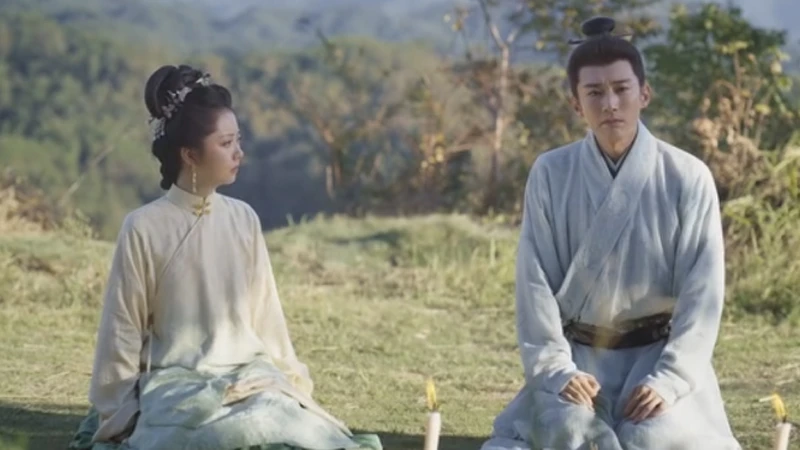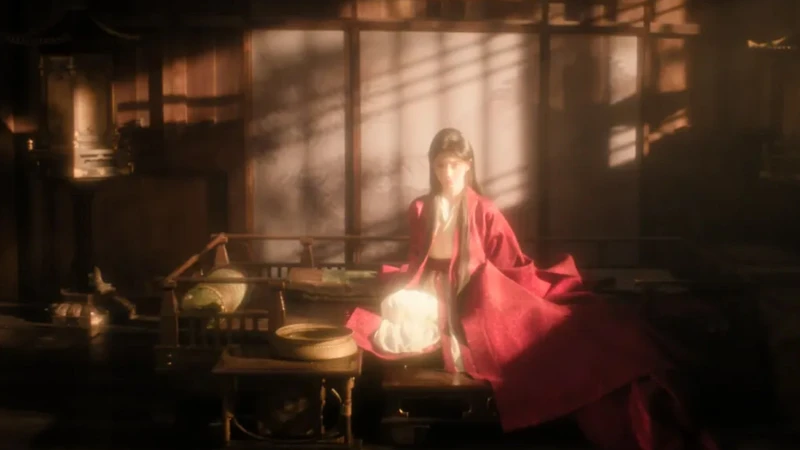
What if the god you trusted turned out to be a puppet himself? In episode 9 of Veil of Shadows (月鳞绮纪), the drama delivers a gut-punch twist: the Dragon God is not the real Chiwen (螭吻). He is just a stand-in, a hollow mask hiding an even stranger truth. And yet, beneath that cold facade, his feelings for Lu Wuyi (露芜衣) burn with an intensity he cannot deny. This episode does not just flip the script on power and identity—it asks a painful question: can a fake god feel real love? The answer, it turns out, is more heartbreaking than any lie.
The Wooden Truth
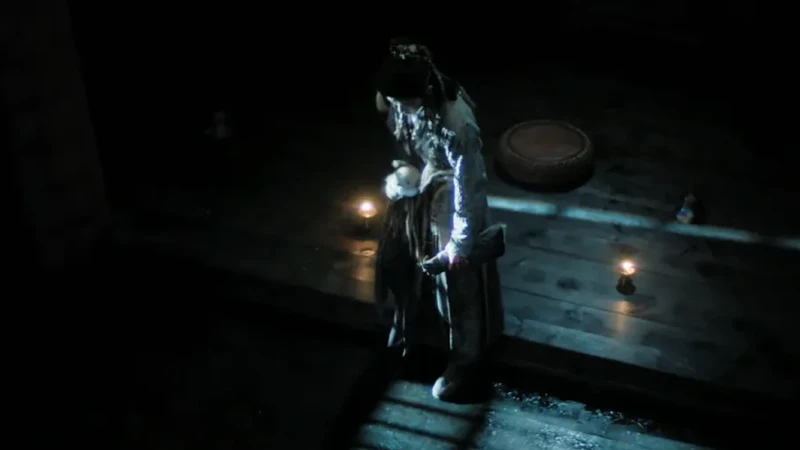
When Wu Shiguang (武拾光) hunts down Ji Ling (寄灵), he believes he has found the Dragon God—the one who destroyed his clan. He slices off Ji Ling’s arm, expecting blood. Instead, a piece of carved wood falls to the ground. Ji Ling is not a god. He is a puppet. A beautifully crafted marionette with the exact face of the Dragon God.
Ji Ling refuses to believe it. He touches fire to prove he can feel pain. He wipes a tear from his eye. He remembers being a little fox saved from falling rocks. How can he be wood? But the broken limb on the ground tells the truth he cannot escape. He even joked earlier, “I don’t understand love or hate. Maybe I’m just a piece of wood.” That joke now lands like a bullet to his own heart.
He confronts the Dragon God, desperate for a denial. But the god does not lie. “You are a puppet,” he says. “Your memories, your power—I gave them all to you. You are only a container.” The cruelty is stunning. Why destroy Ji Ling’s innocence so violently? The answer hides in the god’s own eyes: pain, reluctance, and the weight of a mirror he does not want to look into.
Mirror, Shadow, and Pain
Ji Ling asks the question that matters: “Why create a puppet?” The Dragon God’s reply is mechanical. “I gave you life. I let you taste the world. Isn’t that a gift?” But even he does not believe his own words. Trapped in his temple, he has asked himself the same question every day. Why keep living? Why serve as a substitute for the real Chiwen, who never shows his face?
Then Ji Ling strikes deeper. “Did you make me to control me? Or to have someone die in your place?” The god’s silence says everything. These are not just Ji Ling’s questions. They are the Dragon God’s own cries to the absent Chiwen. When he warns Ji Ling not to be reckless, he is really warning himself. Ji Ling is the brighter, younger version of who he used to be—before duty turned him into a hollow idol.
For a moment, something shifts. When Ji Ling stops asking about being wood and starts asking about his purpose, the god’s eyes light up. A tiny curve appears at the corner of his mouth. He seems to convince himself that there is a way forward. But reality hits hard. He takes Ji Ling to see the shelf of wooden puppets he carved over the years. “See?” the god says. “You are one of these. And I am not Chiwen.” A mask worn too long makes you forget the face underneath. But the heart never forgets who it truly is.
Love Bleeding Through
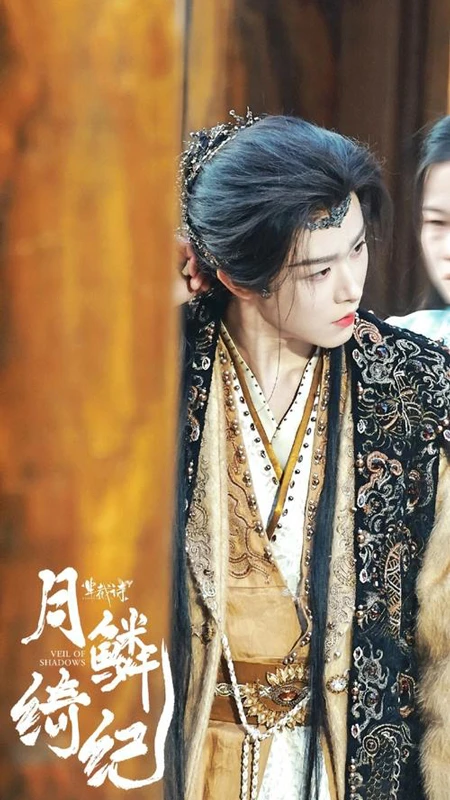
So what about Lu Wuyi? She loved Ji Ling. And Ji Ling loved her. But when the Dragon God kills Ji Ling in front of her, she sees only a monster. Her eyes burn with hatred. The god, far more powerful, cannot meet her gaze. He dodges her attacks. He refuses to strike back with killing force. He only wants her to submit—not to hurt her.
She uses her forbidden word magic on him. It backfires, knocking her unconscious. And what does the god do? He stays by her side the entire time. The moment she opens her eyes, he looks away quickly. He swallows hard. Then he stumbles into an awkward explanation of why her magic rebounded. This is not a cold deity. This is a man terrified of being seen.
He insists he is not Ji Ling. But when she asks, “Will I ever see him again?” he replies, “Didn’t you say I am him?” Denial on the lips, confession in the heart. He gives her a token that forces her to stay near him. He notices when her eyes are red. He cares what she eats and wears. He even secretly matches his outfit to hers. A fake god, a wooden puppet’s ghost, and a love so real it bleeds through every lie. Episode 9 proves one thing: sometimes the mask loves more truly than the face beneath it.