When a Stern Lecture Becomes a Lifeline? How One Woman’s ‘Wasted’ Concern Saved Renegade Immortal’s (仙逆) Wang Lin (王林) on Ran Yun Star (冉云星)
In the brutal cultivation world of Renegade Immortal, where every stranger hides a blade behind their smile, Wang Lin has learned to trust no one. His journey is a trail of blood and betrayal. So when he arrives on Ran Yun Star, a seemingly unremarkable planet, he expects more of the same.
What he finds instead is a woman who treats him not as a threat or a tool, but as a disappointing student. Her scolding, born not from malice but from a genuine sense of wasted potential, strikes a chord deeper than any enemy’s attack ever could. It is in this unexpected, almost mundane interaction that the story reveals its most human moment, proving that in a universe of gods and demons, the simple, uncorrupted kindness of a stranger can be the most profound weapon of all.
A Scolding from the Heart
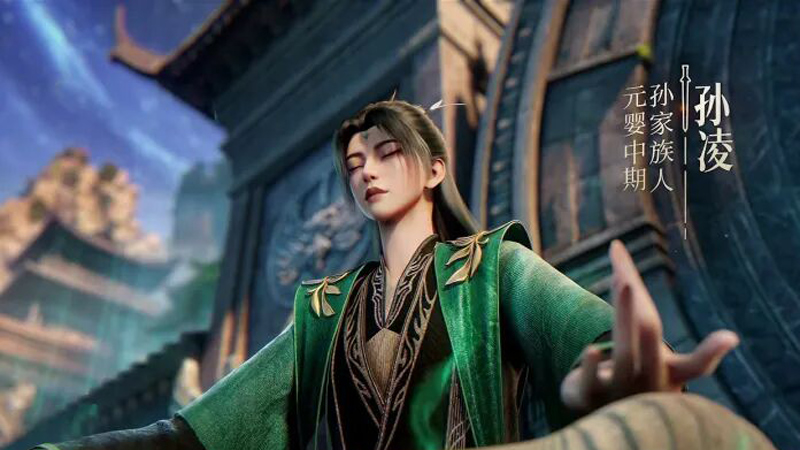
Sun Ling (孙凌) is not a powerful figure. She is a dedicated but perpetually stuck Nascent Soul cultivator, toiling away in the vast Sun family on Ran Yun Star. To her, the new arrival is simply a lazy Core Formation cultivator, someone who clearly lacks the discipline to ever form a Nascent Soul. She watches him wander around aimlessly in the early morning, and her frustration boils over. With the earnestness of a strict schoolteacher, she pulls him aside and delivers a lecture on the virtue of diligence. “Hard work can make up for a lack of talent,” she tells him, her voice thick with a sense of “to be frustrated that iron won’t turn into steel” — a Chinese sentiment that perfectly captures her frustration at seeing someone she perceives as wasting their potential.
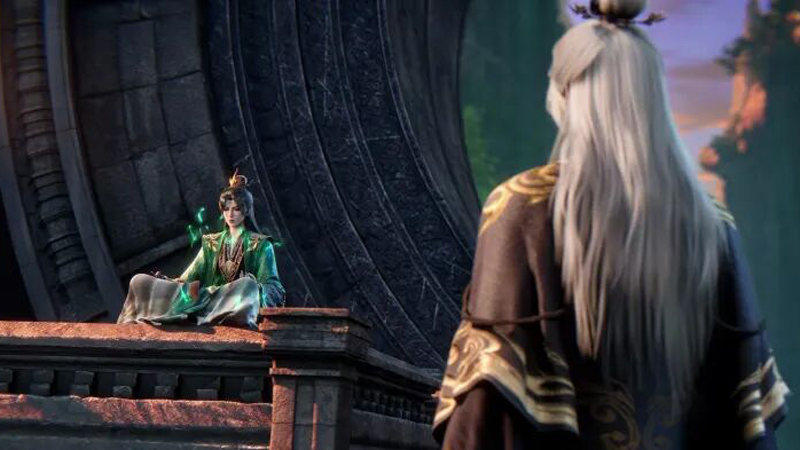
Wang Lin, a man who has faced down elders and demons, stands there and takes it. He does not argue. He does not sneer. Instead, her words make his nose sting with an unfamiliar emotion. He has spent his entire cultivation life surrounded by deceit. Every stranger who approached him did so with a hidden agenda, their kind words masking deadly intent. But here is Sun Ling, a woman with no idea who he truly is, scolding him not out of greed or malice, but out of a genuine, almost motherly concern for his future. In a world where every interaction is a transaction, her unsolicited, honest advice is a currency he hasn’t held in centuries.
Seeing his surprisingly receptive attitude, her tone softens. She doesn’t push further. Instead, she offers him a simple lifeline: if he has any questions about cultivation, he can come to her. She will help. This is not a grand promise of protection or a political alliance. It is a humble offer from a minor cultivator to one she believes is even more minor. It is this very humility and lack of pretense that makes the offer so powerful. She is just an ordinary member of the vast Sun family, yet in that moment, she becomes unforgettable to a man who has seen and forgotten empires.
The Hero in the Shadows
The true depth of Sun Ling’s character is revealed not in her words, but in her actions when danger appears. Sun Xi (孙析), the ancestor of the Sun family and a cultivator at the same level as Wang Lin, arrives. Sun Ling, who has no idea of Wang Lin’s true power or the ancestor’s identity, only sees a powerful stranger approaching the “weak” young man she has been trying to guide. Without hesitation, she steps between them. She positions herself as a shield, her face set with a desperate determination that far exceeds her actual combat ability.
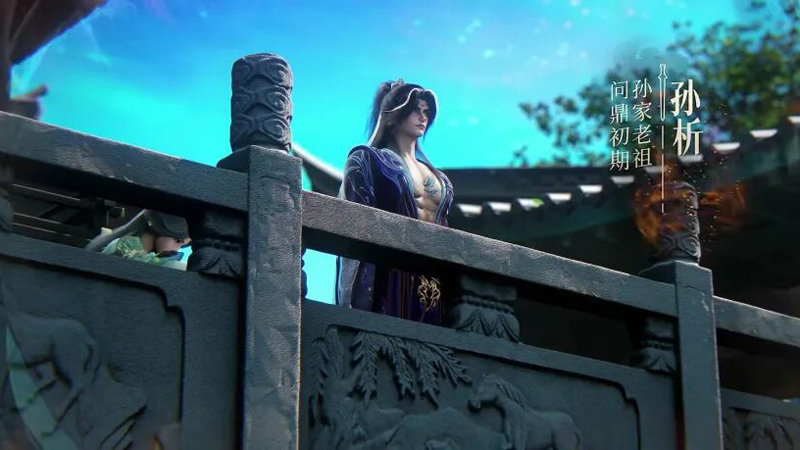
She urges Wang Lin to flee, her voice urgent, her body tense. She is ready to face a powerhouse she knows she cannot defeat to buy him a few precious seconds. When he doesn’t move, her anxiety mounts to near panic. She is not a hero; she is just an ordinary cultivator acting on an instinct that has become rare in their world: the instinct to protect someone weaker. When Wang Lin finally leaves with the ancestor, she is consumed by a sense of failure and grief, already mourning what she believes is his inevitable death.
For Sun Xi, this entire incident is a surprise. He is not there to harm Wang Lin—he wouldn’t dare, knowing the disparity in their combat prowess. Wang Lin could crush him with ease, perhaps without even lifting a finger, simply by commanding one of his celestial guards. But Sun Ling doesn’t know this. Her bravery is born from ignorance of the facts, but that doesn’t diminish its purity. In a universe built on strength and calculation, her willingness to sacrifice herself for a stranger is a rare and precious anomaly. She acts not from strategy, but from a simple, unshakeable sense of what is right.
The Purest Form of Salvation
When Wang Lin returns unharmed, Sun Ling’s reaction is a flood of genuine relief. All her earlier anxiety, her desperate attempts to protect him, and her self-recrimination for “failing” to keep him safe, melt away into pure, unadulterated happiness. She is overjoyed simply to see him alive. This reaction, more than her lecture or her attempted sacrifice, is what solidifies her place in Wang Lin’s memory. In a world where people are judged by their utility and power, her care for him is utterly unconditional.
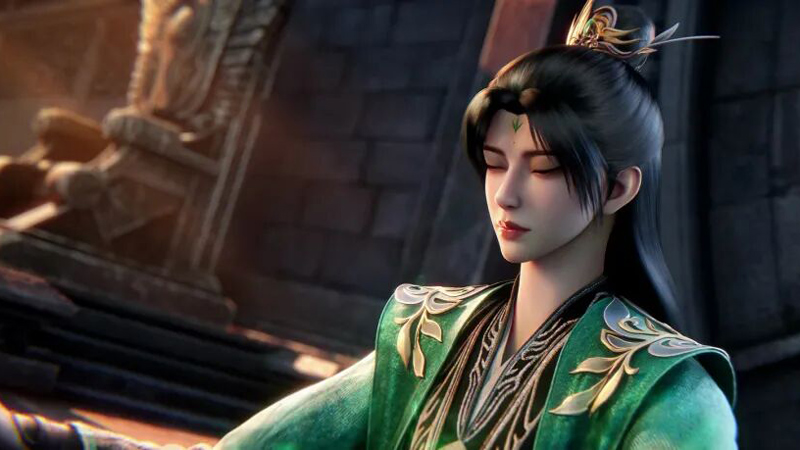
Her joy stands in stark contrast to the countless betrayals that have shaped Wang Lin’s life. She expects nothing in return. She doesn’t ask how he survived or what secrets he holds. Her happiness is not tied to his strength but to his existence. This is a type of interaction that has become almost alien to him. The cultivation world has forged him into a weapon, a relentless pursuer of strength, and it has taught him that kindness is merely a mask for ambition. Sun Ling wears no mask. Her emotions are as transparent as her cultivation is mediocre.
It is this very transparency that moves him. Sun Ling is not a powerful ally or a cunning strategist. She is a warm heart in a cold, indifferent universe. Her presence does not change the trajectory of his power, but it reaffirms a truth he had nearly forgotten: that not everyone in this world is a predator. In the grand scheme of his ascension, this encounter on Ran Yun Star is a small event, but emotionally, it is a pivotal one. It serves as a reminder that even in a realm defined by ruthless ambition, the simple, selfless care of one person can be the most unexpected and powerful form of salvation.
