
The sprawling narrative of Pursuit of Jade (逐玉) has guided its audience through a landscape of political turmoil, personal sacrifice, and the relentless pursuit of justice. As the story barrels toward its conclusion, with the female general returning to a capital city on the brink of revelation and her partner poised to expose a seventeen-year-old massacre, the question of how it all ends becomes paramount.
The resolution, drawn from the original text, offers a surprising tableau of outcomes. It is a finale where ambition is redefined, love finds its own language, and the most tortured soul achieves a peace that is as dark as it is desired, painting a picture of an ending that is less about simple happiness and more about the complex fulfillment of deeply held, sometimes contradictory, wishes.
1. Fan Changyu (樊长玉) and Xie Zheng (谢征)
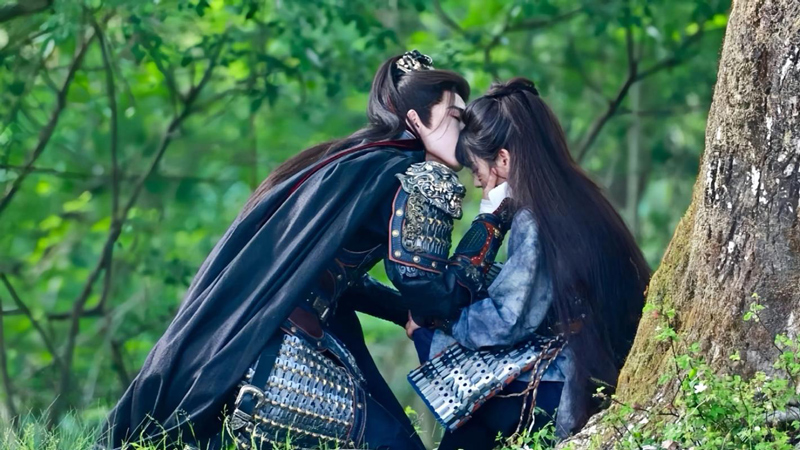
After the failed coup, the path for Fan Changyu and her partner is not a simple leap into domesticity. They first shoulder the immense responsibility of a new regime, with him acting as regent for the young emperor. Their marriage is a public celebration, a moment of joy hard-won. Yet, the call of duty is immediate. A border crisis pulls them back to the very lands where their journey began. She, now a titled general, must lead the defense against northern invaders, proving her mettle in a brutal campaign that earns her the title of Marquis Qingping (清平). It is a reminder that for those who have taken up the sword, peace is often a temporary, hard-fought state. Their story does not end with them ruling from a gilded palace. Instead, he relinquishes power, and together they choose to return to the frontier town of Lin’an (林安), the site of their first meeting.
There, away from the intrigues of the capital, they find a different kind of victory. She gives birth to twins, a daughter and a son. The daughter, Xie Congyun (谢从韫), inherits her mother’s indomitable spirit, becoming known as the “Little Marquis.” Their legacy is not a dynasty, but a return to origins, a life of quiet purpose on the border they once fought to protect. It is a choice that defines their characters: power and titles are tools to be used and then set aside for the sake of personal freedom and shared life. They build a family rooted in the very place where their individual struggles first intertwined, suggesting that true fulfillment for these warriors was never about conquest, but about the autonomy to choose their own battlefield and, finally, their own peace.
2. Qi Shu (齐姝) and Gongsun Yin (公孙鄞)
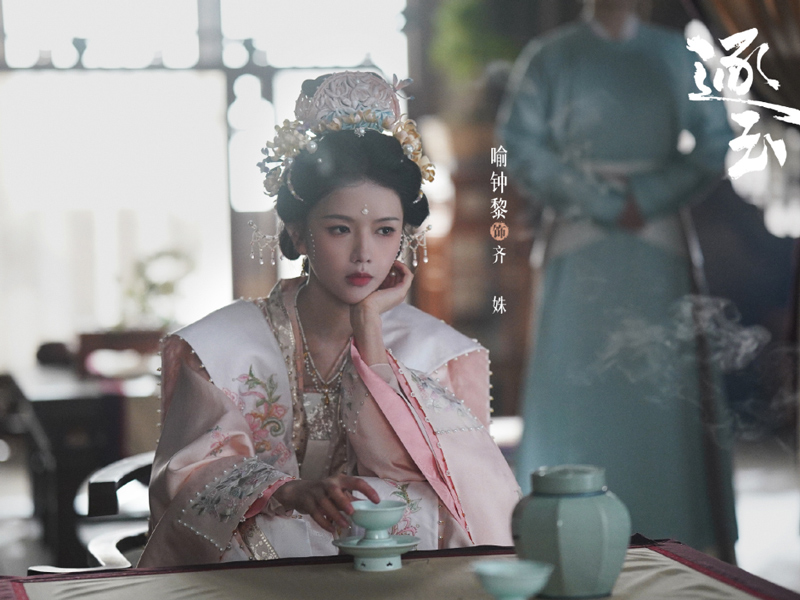
The second narrative thread follows a more cerebral, yet equally compelling, path. It begins with a chess game played across a mountain pavilion, a silent conversation between a princess and a reclusive strategist. Princess Qi Shu and Gongsun Yin are brought together by intellect and a shared, unspoken understanding. Their early interactions are a dance of wit and disguise—she infiltrates his academy in male attire, and he, upon discovering her ruse, has her sent away. Their love story is not one of immediate passion, but of gradual, deliberate acknowledgment. It is built on respect for each other’s minds, forged in the crucible of political upheaval. Even when he goes to the front lines and she follows, disguised as a physician, their connection remains a series of unspoken understandings, delayed by duty and circumstance.
Their resolution is a testament to their shared values. On the eve of her return to the palace, they finally speak plainly. He offers a future outside the political sphere, one he has secured by challenging his family’s strict rules. He asks if she would leave the gilded cage of the court to become “idle clouds and wild cranes” with him. Her response is to name his family’s vast library as her betrothal gift—a request that perfectly encapsulates their bond. Their union is a partnership of equals.
After the new order is established, he resigns his post as imperial tutor, and together they leave the capital to wander the land. Their happiness is not found in power, but in the freedom to pursue knowledge and companionship, a quiet, intellectual idyll that stands in stark contrast to the political storms they helped to calm.
3. Yu Qianqian (俞浅浅) and Qi Min (齐旻)
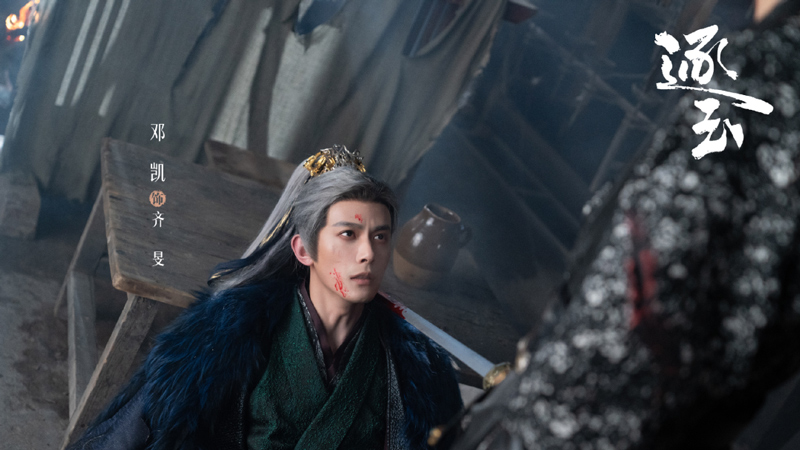
The most unsettling, yet strangely conclusive, arc belongs to the story’s antagonist. After his failed rebellion, his pursuit of the throne ends in ruin. Mortally wounded, he falls from the city walls. In that moment of extremity, he learns to let go—literally. He had once bound himself to the woman he loved, Yu Qianqian, with an iron chain, a physical manifestation of his possessive desire.
As he falls, he severs his own hand, ensuring she is pulled to safety while he alone plummets into the abyss. This act of final, self-destructive release is the first step toward the fulfillment of his true, lifelong wish. It was never the throne.
Lying broken, he faces a final reckoning. For the new empire to be stable, he must die. The task falls to her. In a gesture that is both cruel and merciful, she prepares him a last meal, a poisoned soup. As he dies by her hand, he reveals his ultimate desire: to have his tortured story end with her. His life was a desperate, uneducated search for love and warmth, a pursuit that only resulted in driving away the very person he sought to possess.
In his final moments, he finds peace not in victory, but in surrender. She chooses to grant his final wish, to be the one to end his suffering. His “happy ending” is a dark one, a tragic fulfillment of a lifelong plea for connection, proving that for some, resolution is not redemption, but a final, intimate act of closure defined by the person who knew him best.
