
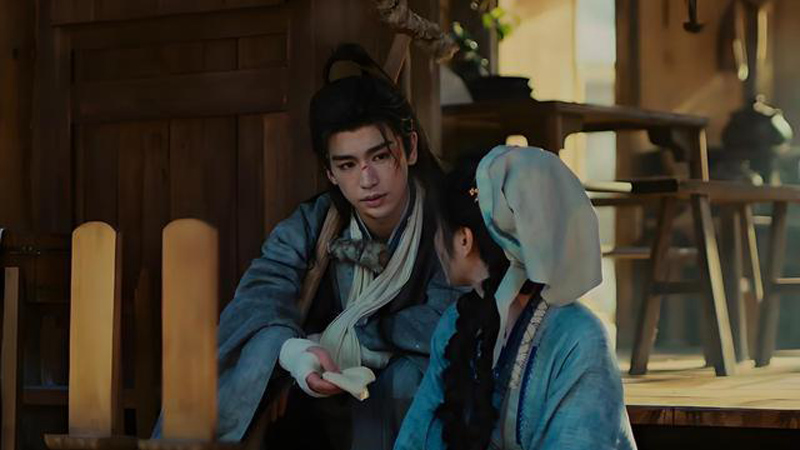
In the midst of a battlefield confrontation, a young woman’s blade reveals a past her family tried to bury. She discovers her father is not the humble butcher she remembers, but the most hated man in the empire—a traitor accused of causing the deaths of thousands. The truth, however, is buried under layers of royal conspiracy, a forbidden love, and a desperate sacrifice. The question that haunts her is one that cuts to the heart of power itself: who truly decides what makes a villain, and how many must suffer to protect that lie?
A Butcher’s Daughter, A Traitor’s Blade
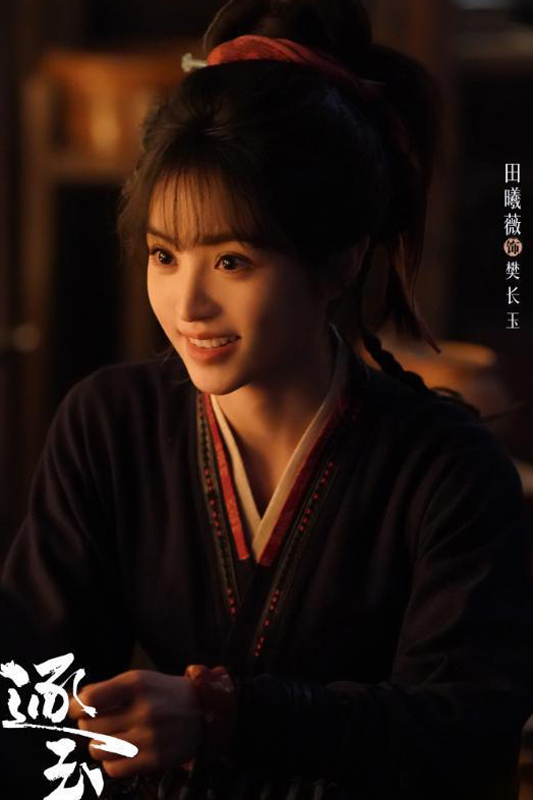
The clash of steel on the battlefield brought more than the threat of death to Fan Changyu (樊长玉). When the Prince of Changxin (长信) recognized the style of her blade, he didn’t see a soldier; he saw a legacy. He spoke of the Wei brothers and named a man she knew only from childhood rhymes: Wei Qilin (魏祁林), the great traitor. In that moment, her world fractured.
The loving father who taught her to fight, the honest butcher who never cheated a customer, was the very villain whose name was used to scare children. Her father was Wei Qilin. Her sworn uncle, He Jingyuan (贺敬元), had lied about their connection, and the Prince’s knowledge of the technique confirmed a past she had never known.
The weight of this revelation crashed down on her during He Jingyuan’s funeral. It was a cruel coincidence that he and another general had died on the same date seventeen years prior. The soldiers, in their grief, had combined their memorials and created a gruesome centerpiece: a paper effigy of Wei Qilin, dressed in mourning clothes, forced to kneel before the heroes’ tablets. A sign around its neck declared him a criminal of the Dayin (大胤) dynasty.
As Fan Changyu stood there, she heard the soldiers’ curses, their hatred a physical force. When she dared to speak a word in her father’s defense, the crowd’s fury turned on her. It was only the intervention of Xie Zheng (谢征) that saved her from their rage, leaving her isolated with a secret she could not share.
The Echoes of a Childhood Game
Later that night, the memories of her childhood returned, sharp and painful. She recalled the simple, cruel game she had played as a child, where one boy would wear a sign that read “Wei Qilin” while the others danced in a circle, singing a taunting rhyme about a traitor who squandered supplies and doomed an army. It had been just a game then, a bit of fun that reflected the world’s hatred without her understanding its meaning. Her mother, upon seeing her play it, had reacted with a fury that scared her more than any battlefield. She had been dragged home and forced to kneel in punishment, her mother’s eyes filled with a grief that went far beyond childish mischief.
When Fan Changyu had promised her mother she would never play the game again, her mother had responded with a bitter truth that now echoed with a terrible clarity: “In this world, how many can truly distinguish loyalty from treachery?” Her father, the man she now knew as Wei Qilin, had stood silently behind her that day. The contrast was stark: a mother with a fiery temper who would not tolerate a traitor in her home, and a father so gentle he gave meat to the poor. This simple domestic memory became her cornerstone. She knew her father could not be the monster of legend.
A man so kind could not have committed the heinous acts laid at his feet, and her proud, righteous mother would never have shared a life and a secret with a true villain. The seed of doubt planted on the battlefield had now taken root as a solemn vow to unearth the truth.
The Forbidden Love That Sealed a City’s Fate
The answer, as it so often does, lay hidden in the heart of the imperial court. Whispers began to circulate of a scandal from seventeen years prior, a tale that the Prime Minister, Wei Yan (魏严), had been entangled with the emperor’s own concubine. This rumor, which painted him as a man who defiled the imperial harem, soon reached Fan Changyu and Xie Zheng. They understood that this was no simple gossip; it was the key to the Jinzhou (瑾州) massacre and the true reason her father had become the empire’s scapegoat.
The story was one of a dying empress, a jealous emperor, and a woman caught between love and duty. To protect her son, the crown prince, the empress had introduced her own niece, a woman of ethereal beauty named Qi Rongyin (戚容音), to the emperor as a new consort.
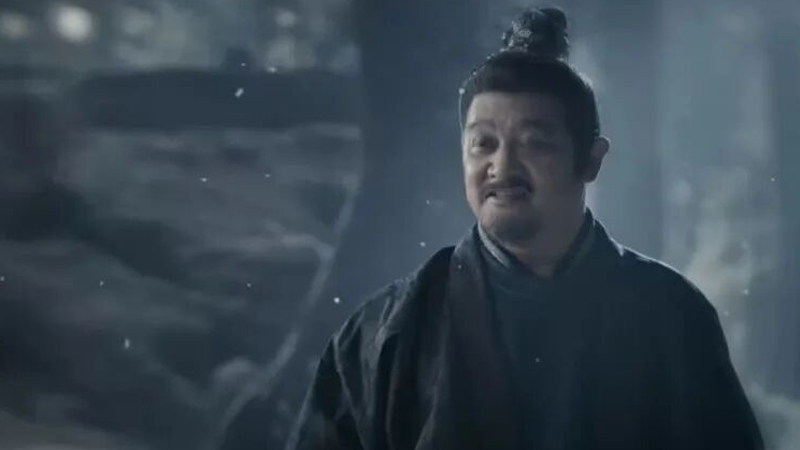
Qi Rongyin, however, was already in love with Wei Yan. When her pregnancy was discovered to be from a time before her imperial union, she was confined. Wei Yan, who was supposed to be leading a critical relief mission to Jinzhou with the military tally, made a fateful decision. He handed the tally to his trusted cousin, Wei Qilin—Fan Changyu’s father—and instructed him to go in his stead. Wei Yan himself turned back to save Qi Rongyin. Trapped in a web of the emperor’s own making, she chose to protect her lover’s honor and her own. She took her own life, silencing the truth.
Meanwhile, Wei Qilin arrived at the Prince of Changxin’s camp, only to have his authority questioned. The tally was not a perfect match, a subtle flaw that gave the prince the excuse he needed to refuse to move the troops. The supplies never arrived. The soldiers starved, the city fell, and the beloved Crown Prince and his general were killed in the chaos. It was only then that Wei Yan realized the truth: the emperor had orchestrated the entire catastrophe to eliminate his own son, using ten thousand lives as a tool for his peace of mind. To cover for his own treason and to preserve Qi Rongyin’s honor, Wei Yan had no choice but to sacrifice one man. Wei Qilin, the simple, loyal cousin who had followed orders, was given the weight of an empire’s sins and branded the ultimate villain.
