

What Makes the Jinzhou (瑾州) Massacre in Pursuit of Jade (逐玉) So Devastating? Three Victims Who Never Had a Chance
The Jinzhou Massacre was never really a battle. It was a trap set by an emperor who saw a loyal general not as a defender of the realm, but as a threat to his throne. In the end, the sovereign won, and the subjects paid the price. The slain officials were innocent, but the real tragedy lies with those caught in the crossfire—people who were guilty of nothing more than being connected to the men the emperor wanted to destroy.
Qi Rongyin (戚容音), who set herself on fire to save the man she loved; Sui Yuanhuai (随元淮), a child who walked into the wrong room and never walked out; and Meng Lihua (孟丽华), a woman forced to choose death to protect her family. Their stories are not subplots. They are the brutal, beating heart of the drama's deepest cruelty.
1. Qi Rongyin

She was the daughter of the venerable General Qi, a woman of high status who should have commanded respect. But Qi Rongyin’s life was never her own. She met Wei Yan (魏严) in her youth, and they shared a deep, mutual affection. That happiness was short-lived. To secure her family’s position, she was forced to enter the palace, becoming another ornament in the emperor’s collection. She faded into a quiet melancholy, a ghost in fine silks.
The emperor, paranoid and cunning, knew of her past with Wei Yan. To him, she wasn’t a person; she was the perfect weapon. First, he tried to trap them in a fabricated scandal of a secret meeting. When that failed, he accused her of being pregnant, a crime against the imperial record. She was imprisoned, interrogated daily—her suffering was a lure designed to pull Wei Yan back to the capital, straight into the executioner’s hands. She understood the game. To break the trap, she started a fire in her own palace, the Qingyuan Palace (清源宫), creating chaos so he could escape. But the emperor was relentless. Under the guise of putting out the flames, his men poured tung oil onto the blaze. She burned alive, a noble soul sacrificed so another could live. She was a pawn from birth, and her end was a fire she willingly walked into.
2. Sui Yuanhuai
The defeat at Jinzhou led to the death of Crown Prince Chengde (承德). His consort, the Crown Princess, was not naive. She knew her husband’s death was merely a prelude, and that she and her son would be next. To create a smokescreen, she invited noblewomen and their children to the palace, feigning a need for company to soothe her grief. Among the guests was the Princess of Changxin (长信), who brought her eldest son, Sui Yuanhuai.
During the gathering, a servant spilled tea on the boy’s clothes. It was a small, deliberate accident. He was led to a side hall to change. Then, the Eastern Palace went up in flames. The Changxin mansion took back a child whose face was burned beyond recognition, barely alive. The world believed he was Sui Yuanhuai. But he was actually the Crown Prince’s son, Qi Min. The real Sui Yuanhuai never came out of that fire. He was a vibrant, cheerful child whose life had just begun. He died not because of anything he did, but because his identity as a nobleman’s son made him a useful substitute in a political game he was too young to understand. His innocence was not a shield; it was a prerequisite for his sacrifice.
3. Meng Lihua
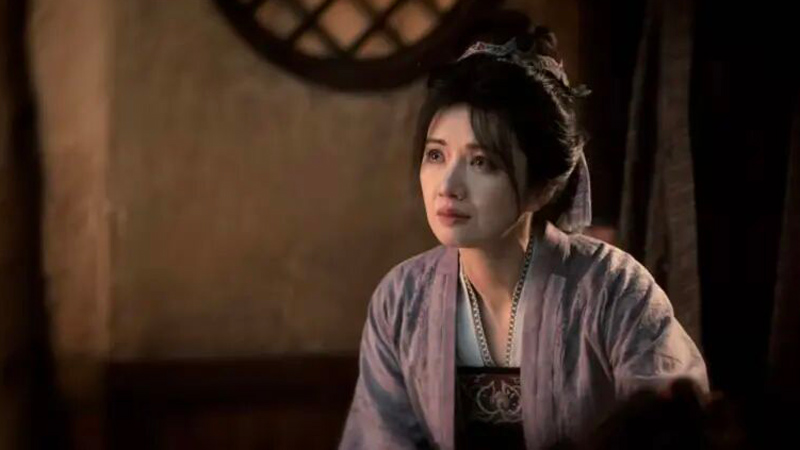
Meng Lihua was the only daughter of Meng Shuyuan (孟叔远). Before the chaos, her life was simple and sweet—beloved by her father and married to the man she loved. The Jinzhou campaign shattered that world. Her father was branded a traitor and forced to take his own life. Her husband, Wei Qilin, was painted as the emperor’s villainous henchman. If not for a sliver of conscience left in her husband, she would have been killed along with her father. They fled, faked their deaths, and lived in obscurity in Lin’an, protected by a loyal friend, He Jingyuan, for over a decade.
But the past has a long memory. Years later, Wei Yan, now in power, issued a kill order for them. When his men closed in, Meng Lihua and her husband faced an impossible choice. They could not run again, not with their children. To protect their son and daughter, they chose to die by their own hands, ending the hunt. She did nothing wrong. She never plotted, never schemed. Her only crime was being the daughter of a man who fell from favor and the wife of a man who served a corrupt master. She survived the initial purge, only to spend the rest of her life hiding from it, until it finally caught up and demanded payment in blood.
