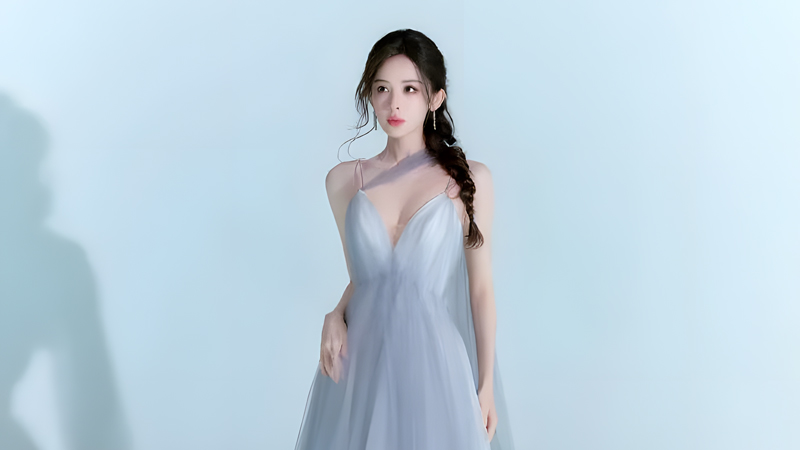
When actress Na Zha (娜扎) recently appeared in a series of photographs, the internet collectively paused. The images did not merely showcase another celebrity in another beautiful dress; they presented a masterclass in a specific, captivating aesthetic. The focus was a gown of misty blue, a color that seems spun from early morning haze over a distant mountain lake. This was not simple glamour, but a calculated embodiment of a feeling—a blend of celestial grace and an almost tangible, human softness.
The look immediately sparked widespread admiration, with fans and fashion observers alike dissecting its components. What exactly about this ensemble, from its silhouette to its subtle styling choices, crafted such a powerful and resonant vision? The answer lies in a delicate balance between contrasting elements, a balance that reflects both a personal style evolution and a deeper, almost instinctual, cultural resonance.
The Anatomy of a Look
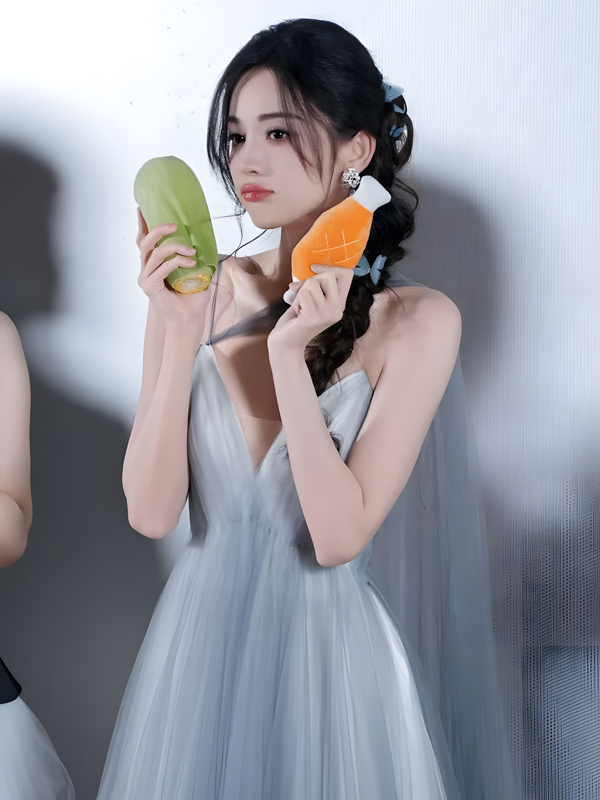
The gown itself is the cornerstone. Its V-neck bodice and delicate spaghetti straps frame the collarbone and shoulders with elegant precision, suggesting classic Hollywood glamour. However, this familiarity is cleverly subverted by an asymmetric halter detail on one shoulder. This single design choice disrupts expectation, introducing a modern, almost architectural twist to the soft drapery. The fabric is sheer chiffon, layered to create a sense of depth and movement. It doesn't cling but flows, suggesting weightlessness and adding that crucial "veiled in mist" quality. The color, that specific shade of muted, cool blue, acts as a luminous filter. It complements the skin, creating a porcelain-like effect, while its inherent coolness establishes the "qing leng gan" (清冷感)—a Chinese term describing a beautiful, refined aloofness.
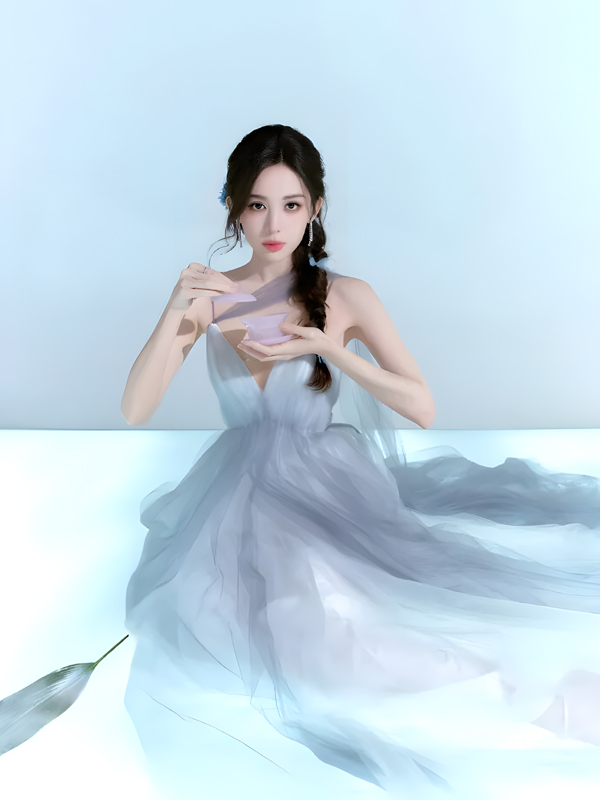
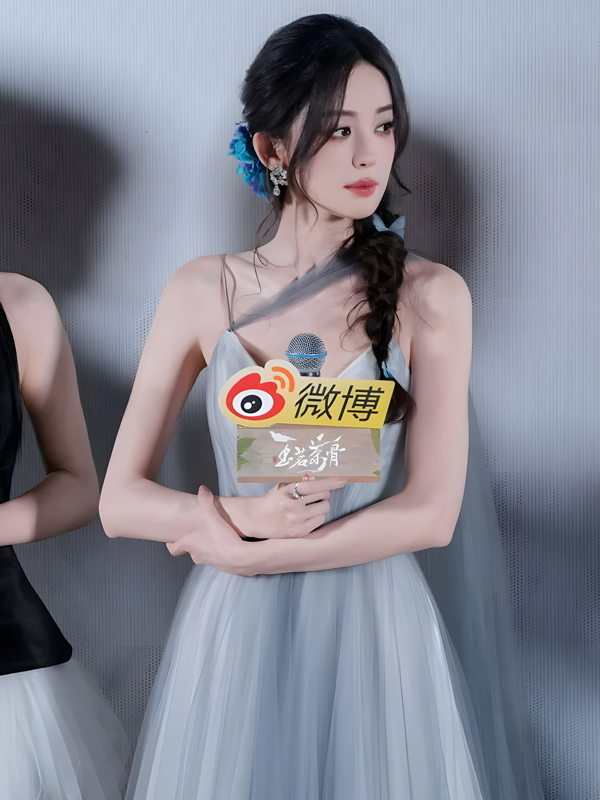
Styling choices elevate the dress from a garment to a complete character. A single, loose side braid replaces any elaborate updo. This injects a note of casual, youthful innocence, a stark and intentional contrast to the gown's inherent elegance. The braid suggests a narrative, as if its wearer has just come from a windswept walk, instantly adding relatability to the otherworldly dress. Makeup is deliberately understated. A clean base allows the focus to remain on the dress and the wearer's expressions. The eyes are subtly defined, perhaps with a faint wing, holding a gaze that is both serene and knowing. Delicate, swaying earrings catch the light with every slight turn, their movement providing a gentle, rhythmic punctuation to the stillness of the photograph.
Every component speaks to a duality. The cool blue versus the warm skin. The structured halter versus the fluid skirt. The elegant gown versus the playful braid. The overall "xian yu gan" (仙欲感)—a portmanteau describing a "fairy-like" yet subtly alluring aura—stems from this careful tension. It is a look that understands allure is often most potent when it feels slightly out of reach, wrapped in layers of delicate mystery. The photographs capture not just a woman in a dress, but a mood suspended in time, proving that true style impact is about curating feeling as much as form.
Beyond the Photograph
The public reaction was immediate and fervent. Comments flooded social media, with phrases like "a goddess descending to earth" and "painting come to life" capturing the collective awe. Beyond fan admiration, the look drew praise from fashion photographers who noted its exceptional composition and lighting, techniques that served to heighten, not create, the inherent atmosphere. This moment is not an isolated incident in Na Zha's career but a milestone in a deliberate style journey. Early in her career, she was often typecast in sweet, girlish roles, her striking features sometimes leading to reductive "pretty face" labels. Her path since has been one of purposeful diversification.
In both her acting and public appearances, she has systematically explored a spectrum of identities. She has moved from ingénue to more complex roles, and in fashion, from safe prettiness to bold, conceptual choices. She has worn modern interpretations of traditional Uyghur dress, embraced sharp, contemporary tailoring, and now, embodies this poetic, ethereal ideal. This evolution shows a growing agency and understanding of image as a language. The misty blue gown is a statement of that mastery—an intuitive knowledge of how clothing, hair, and expression can coalesce into a powerful personal narrative.
This narrative connects to something broader than personal style. The color blue, particularly these pale, misty shades, holds deep significance in traditional Chinese aesthetics and philosophy. It can symbolize the heavens, purity, distance, and tranquility—concepts often associated with scholarly refinement and spiritual elegance. By wearing this color in a modern, Western-cut gown, Na Zha creates a dialogue. The look bridges a timeless, cultural ideal of restrained beauty with contemporary confidence and global fashion language. It is this subconscious resonance, this meeting of inherited meaning and present-day expression, that gives the images their profound depth. They celebrate more than a beautiful person in a beautiful dress; they capture a moment where personal growth, stylistic confidence, and cultural memory gracefully intertwine.