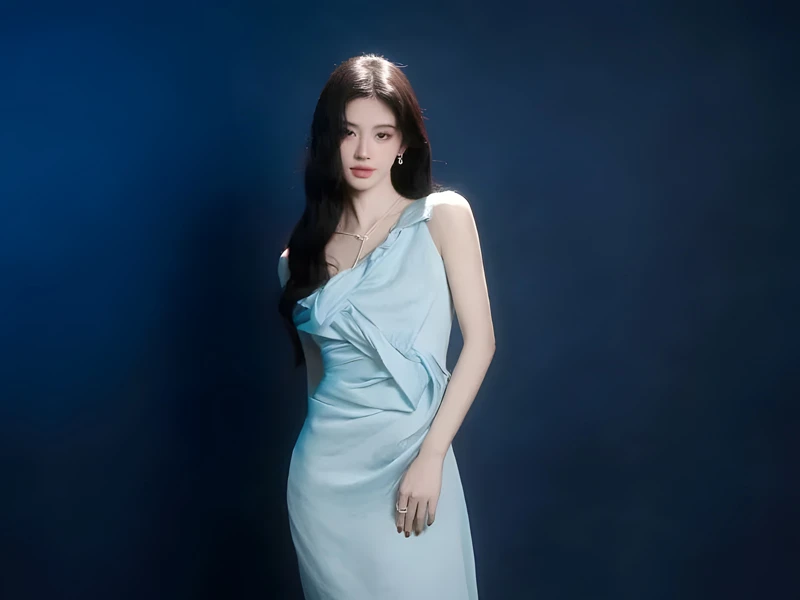
The crimson carpet is a battlefield of visual noise, a place where bold statements often shout the loudest. Yet, in a recent stunning display, actress and singer Ju Jingyi (鞠婧祎) commanded attention through a whisper of sublime elegance. Her appearance was not defined by extravagance but by a masterful, serene composition in a singular shade of pale ice-blue.
The gown, a study in fluid architecture, did not merely clothe her; it seemed to become an extension of her poised and ethereal demeanor. This moment transcended a simple fashion choice, evolving into a nuanced statement on modern femininity and the power of restrained artistry in an era of excess. It presented a compelling argument for beauty that resides not in the obvious, but in the delicate balance between structure and softness, coolness and warmth.
The Dawn of a New Aesthetic
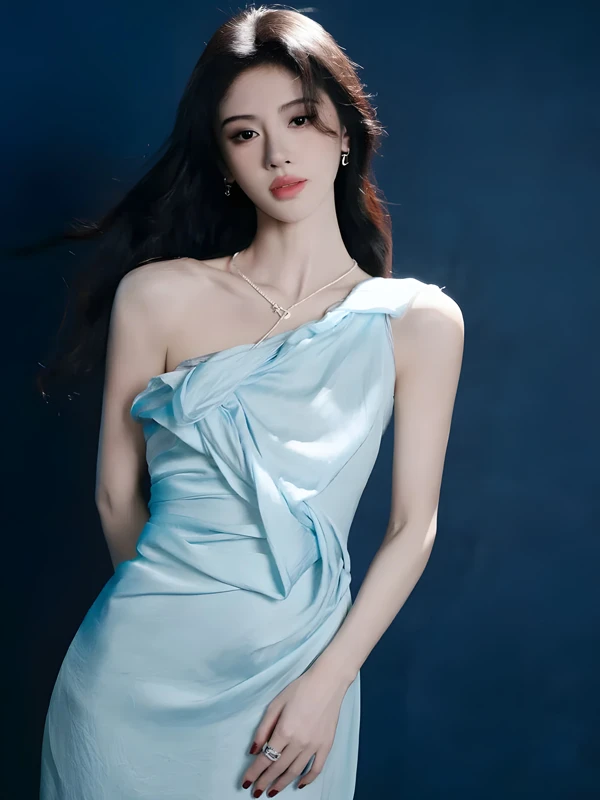
Ju Jingyi’s gown immediately distinguished itself through its masterful manipulation of form and fabric. The one-shoulder silhouette created an asymmetrical line that was both architecturally interesting and inherently graceful. This single strap drew the eye across her collarbone, a subtle highlight of feminine form without overt exposure. The true genius of the design, however, lay in its intricate draping and strategic knotting. These elements were not mere decoration; they served as a functional sculpture, meticulously defining her waist and creating a cascading rhythm down the skirt.
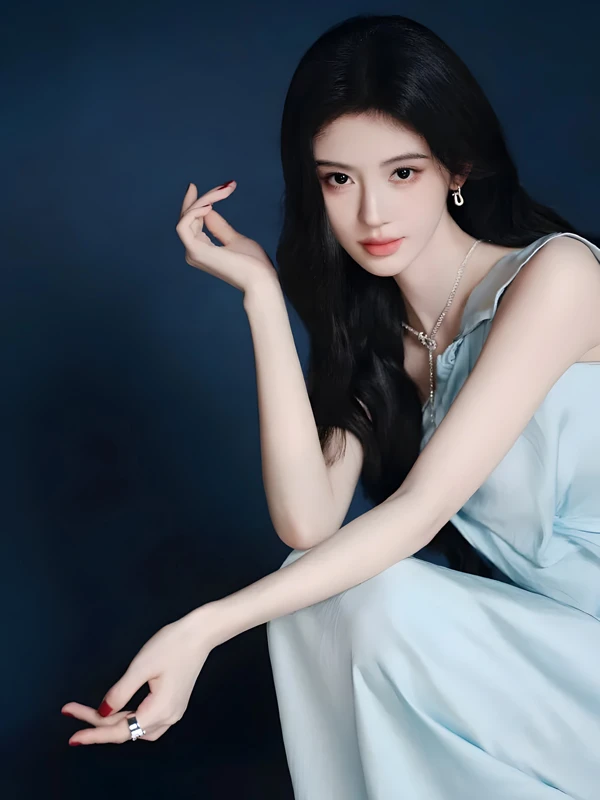
The choice of material was equally pivotal. A luminous satin captured and transformed light, making the dress appear as if it were woven from liquid moonlight or the still surface of an alpine lake. With every slight movement, the fabric released a soft, rippling glow, emphasizing a sense of quiet dynamism. The color itself, that elusive pale ice-blue, acted as the foundational mood. It carried a refreshing, almost otherworldly coolness, yet the satin’s inherent warmth and the soft folds prevented it from feeling austere or remote.
This harmonious interplay between cool color and warm texture, between sharp drapery and soft flow, is what defined the look’s unique character. It rejected binary categories. It was neither purely romantic nor strictly minimalist; it existed in a sophisticated middle ground. This aesthetic shift reflects a broader movement in contemporary style, where audiences and designers alike are seeking complexity and emotional resonance over one-dimensional themes.
The Philosophy of Less
Beyond the gown itself, the complete styling demonstrated a disciplined commitment to the principle that less is profoundly more. Her stylist exercised remarkable restraint, accessorizing only with understated silver jewelry. A delicate necklace and simple earrings provided just a hint of metallic reflection, ensuring the dress’s intricate details remained the undisputed focal point. This avoidance of clutter allowed the quality of the craftsmanship and the purity of the color to speak for themselves.
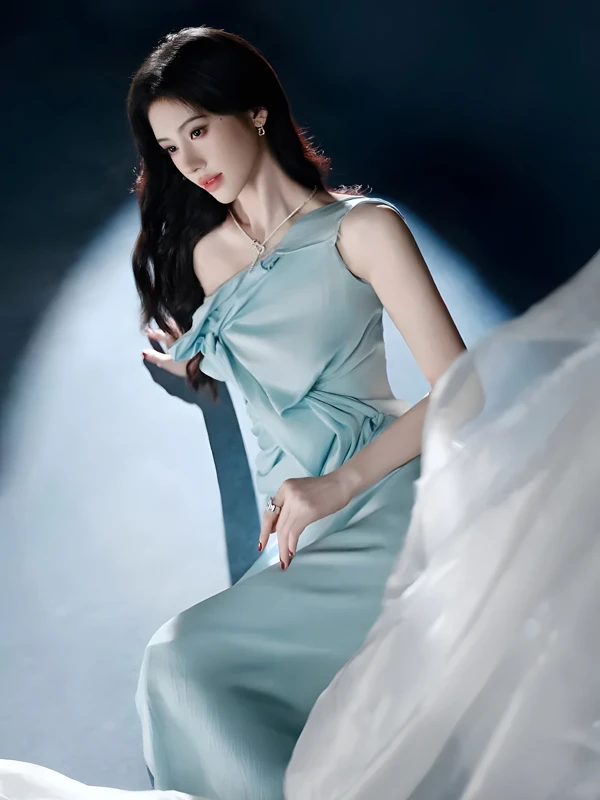
Her hair and makeup followed the same coherent vision. Her long, dark hair was styled in loose, flowing waves, its organic softness contrasting beautifully with the gown’s precise construction. This choice added a touch of effortless humanity, preventing the look from appearing too meticulously staged. Her makeup palette was clean and radiant, focusing on flawless skin and a subtle enhancement of her features rather than dramatic color. The overall effect was one of transparent, breathable beauty.
This holistic approach to styling—where every element serves the central theme without competing for attention—is what elevates an outfit from being merely pretty to being intellectually cohesive and memorable. It treats the wearer as a complete canvas, where harmony is the ultimate goal. The success of this philosophy was evident in the immediate and visceral reaction it provoked from the public and fashion commentators online.
From Red Carpet to Cultural Pulse
The public reception to Ju Jingyi’s appearance was swift and enthusiastic. Social media platforms were flooded with praise, with fans and fashion observers using poetic language to describe the impact. Comments compared her to an “ice princess from a fairy tale” and celebrated the gown’s “celestial yet contemporary” feel. The look was widely dissected for its clever design elements, particularly the waist-defining knot and the hypnotic color. Many noted that it represented a pinnacle in her style evolution, marking a confident step into a more refined and powerfully subtle sartorial language.
This evolution mirrors a fascinating trend in celebrity influence. A single, powerful red-carpet moment can now catalyze wider fashion movements. Ju Jingyi’s ice-blue gown has the potential to spark renewed interest in monochromatic, cool-toned palettes and inspire appreciation for sophisticated, single-shoulder silhouettes and elegant drapery. It champions a vision of glamour that is intelligent and composed, offering an alternative to more overtly sensual or fantastical styles.
Ultimately, the significance of such a look extends beyond seasonal trends. It taps into a growing desire for authenticity and nuanced expression. In a world saturated with imagery, it presents a quiet argument for confidence that doesn’t need to shout, for beauty that embraces contradiction, and for an elegance that is felt as much as it is seen. It proves that sometimes, the most lasting statement is made not with a bang, but with a breathtaking, ice-blue whisper.