In the cutthroat world of Qing Dynasty commerce, a single victory can plant the seeds for a far greater defeat. This is the harsh lesson learned by tea merchant Gu Pingyuan (古平原), the protagonist of the period drama Legend of the Magnate (大生意人). After achieving the prestigious title of “Finest Tea Under Heaven,” he finds himself not celebrating in the capital, but delivered in chains back to his personal hell: the remote, freezing penal colony of Ningguta (宁古塔). His tormentor? The very man he once ruined, the former garrison commander, Xu Feng (徐丰). Yet, as Gu soon discovers, the hand that delivered him to this fate was not Xu’s, but that of a far more calculating and dangerous foe: the enigmatic Su Zixuan (苏紫轩).
Anatomy of a Revenge
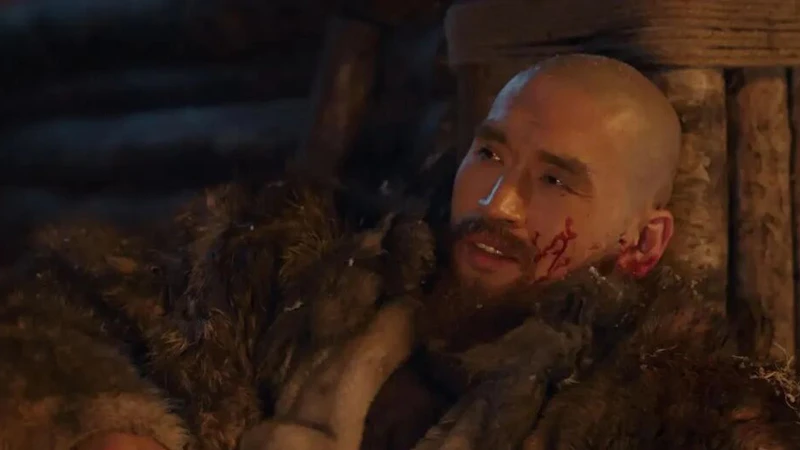
Xu Feng’s demise is a spectacle of self-engineered spite. Luring Gu Pingyuan back to Ningguta under false pretenses, he never intended to travel to the capital. His goal was a twisted, mutual destruction. By creating a scenario that would attract a wolf pack, he sought to make Gu experience his own fall from grace—a plummet from the clouds of hope back into the mud of despair. His final act was to burn his own world down, choosing death in a pyre of his own making over any future.
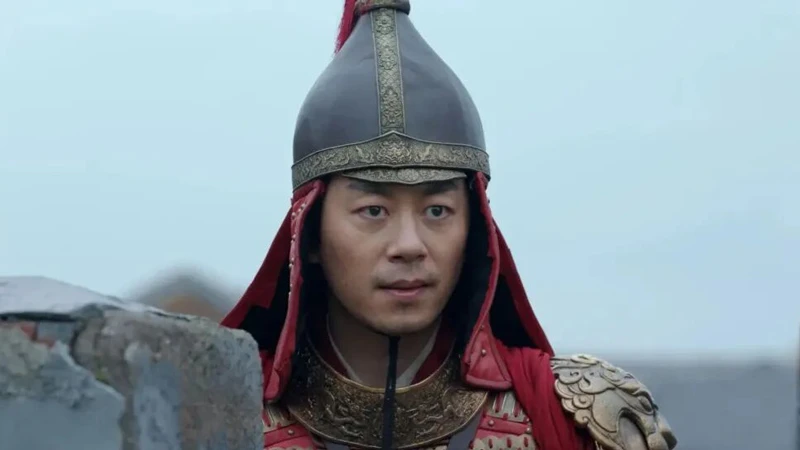
This bitter end, however, was not unwitnessed. Gu Pingyuan survived the wolf attack thanks to the timely intervention of allies like Chang Yu’er and Fourth Master Chang. Their lifesaving aid stands in stark contrast to Xu Feng’s solitary, hate-filled exit. It underscores a central theme: Gu’s network, built on past kindness and fair dealings, becomes his salvation. Xu Feng, who ruled through fear and extraction, died as he lived—alone and despised by those he commanded. His fate was not merely Gu’s doing, but the culmination of a lifetime of cruelty.
In his dying moments, Xu Feng let slip a crucial detail. It was not his own cunning that brought Gu back, but a deliberate arrangement by Su Zixuan. She had provided Xu with supplies, essentially keeping him alive like a coiled snake, waiting for the precise moment to unleash him upon her enemy. This revelation shifts the entire axis of the conflict. The immediate, brutal vengeance of Xu Feng was merely a tool; the true architect of Gu’s suffering was operating from the shadows with cold, premeditated precision.
The Architect’s Grudge
Who is Su Zixuan? A figure of intelligence and mystery, she initially saw potential in Gu Pingyuan and sought to recruit him. Her change from would-be patron to vengeful schemer was not impulsive. It was a calculated response to what she perceived as two profound betrayals. The first occurred in Shanxi, where Gu, aligning with a rival, thwarted her plans to acquire a legendary rebel treasure known as the Chuang Wang (闯王) treasure. This move damaged her strategic mission and personal ambition.
The second offense was far more personal. Gu unintentionally disrupted Su Zixuan’s intricate plot to assassinate the Empress Dowager. For Su, this was no mere political setback; it was the derailment of a years-long quest for filial vengeance, as the Empress Dowager was responsible for her father’s execution. Gu’s actions, though morally driven from his perspective, shattered her chance at retribution. From that moment, her desire to utilize his talents transformed into a determination to see him broken.
Her method was psychologically exquisite. Knowing Gu’s deepest trauma was his past imprisonment in Ningguta, she engineered his return. Delivering him to his old nemesis, Xu Feng, guaranteed that Gu would not just die, but die in a place of past nightmares, after having tasted freedom and success. It was a punishment designed to attack both body and spirit. As she coldly reasoned, if a talent like Gu could not be controlled, he must be eliminated to prevent him from becoming a future threat.
A Forced Alliance
Irony defines the next turn of events. Despite her deep-seated hatred, circumstances now force Su Zixuan and Gu Pingyuan into a temporary alliance. A new crisis emerges involving the capture of their mutual acquaintances, Li Cheng (李成) and Bai Yimei (白依梅). Their rescue requires resources and cunning that neither possesses alone. This uneasy partnership becomes the drama’s new focal point, charged with tension and mutual suspicion.
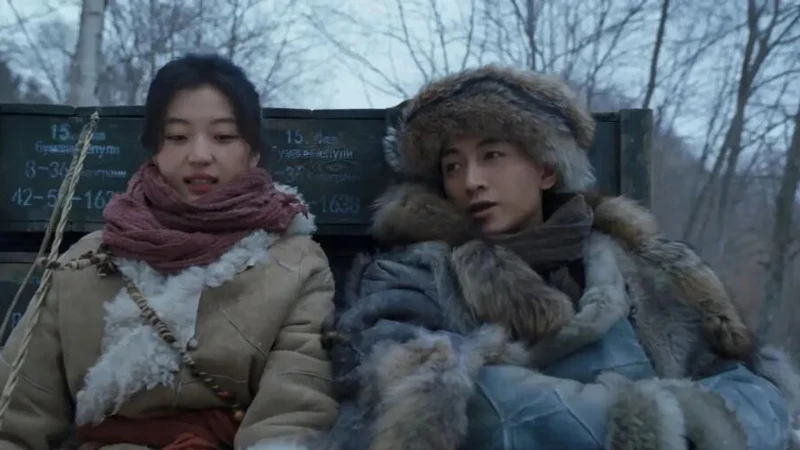
Can two people who have orchestrated such profound suffering for one another set aside their animosity for a common goal? Gu Pingyuan must work with the woman who condemned him to a torturous death. Su Zixuan must rely on the man who twice destroyed her most crucial plans. Their collaboration is less about trust and more about grim necessity, a precarious dance where a misstep could lead to betrayal.
This forced team-up pushes the narrative beyond simple revenge. It explores whether shared pragmatism can overcome personal history. The rescue mission tests their strategic minds and forces them to see each other not just as obstacles, but as capable, albeit dangerous, individuals. The outcome will likely redefine their conflict, setting the stage for either a more complex rivalry or an unpredictable shift in the power dynamics of their world.