
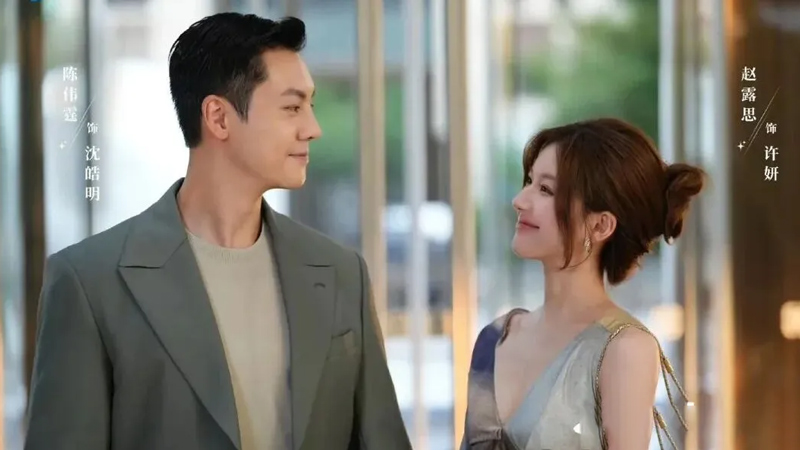
In the competitive landscape of Chinese television, a drama about a marriage built on lies has become an unexpected triumph. Love's Freedom (许我耀眼), starring Zhao Lusi (赵露思) and William Chan, arrived on screens with no prior announcement, yet it managed to shatter records and redefine its leading lady's career. This series follows a seemingly perfect couple whose beautiful facade hides a web of deceptions and calculated moves.
The drama's success is intertwined with Zhao Lusi's personal evolution as an actress. Once predominantly known for sweet, romantic roles, she boldly steps into the shoes of Xu Yan (许妍), an ambitious woman who uses her wit and, when necessary, deception to navigate a world that often judges her for her humble beginnings. This role is a departure from the characters that made her famous, showcasing a darker, more complex side to her acting abilities and proving that she is far more than just a "sweetheart" of the screen.
Beyond the Sweet Girl
For years, Zhao Lusi charmed audiences with her bubbly and innocent characters, earning her the title of a "sweet specialist." However, Love's Freedom marks a significant turning point. Her character, Xu Yan, is a determined woman who climbed from a small-town background to become a renowned television host. To maintain her hard-won status and marry into a powerful family, she meticulously constructs an elaborate lie, even hiring actors to pose as her well-educated parents.
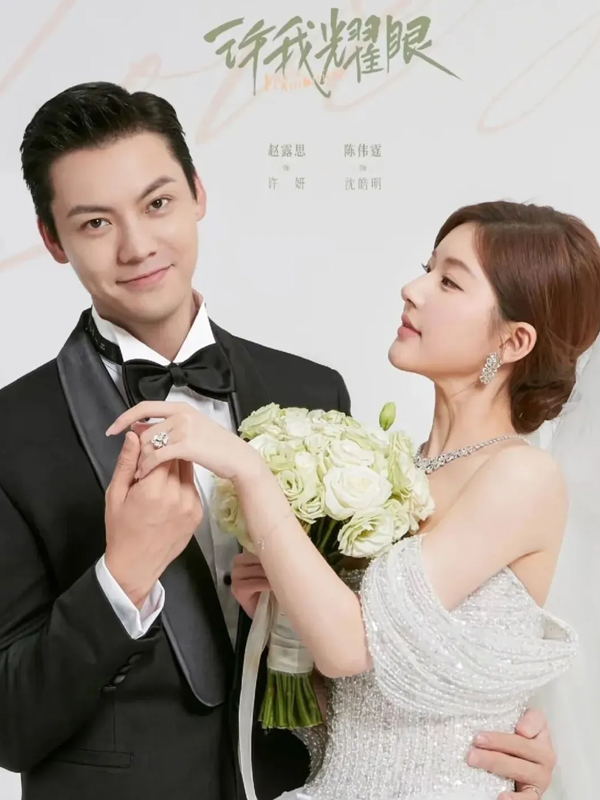
This transformation was a risk. Before the drama aired, doubts circulated about her ability to handle such a morally complex role. Critics questioned whether she could shed her established image. The response, however, was overwhelmingly positive. Viewers were captivated by her layered performance, which conveyed Xu Yan's intelligence, vulnerability, and fierce determination. She held her own in intense emotional scenes with her co-star and in clever, high-stakes verbal exchanges with her on-screen mother-in-law.
A notable aspect of her performance was her decision to use her own voice. Moving away from the soft, high-pitched tones of her previous roles, she adopted a lower, more authoritative, and resonant voice. This change added a new dimension of maturity and power to the character, further cementing her successful transition and earning praise for her clear and forceful delivery.
The Complex Heart
What makes Love's Freedom truly compelling is that it does not simply present a cunning heroine. Instead, it peels back the layers to reveal the deep-seated trauma that fuels Xu Yan's ambition. Through flashbacks, we learn about her painful childhood, where she felt overlooked and undervalued by her family. In a pivotal moment, her parents prioritized her older sister during a household emergency, and later, her father denied her the chance to take the crucial college entrance exam, or Gaokao (高考).
These experiences taught her a harsh lesson: that obedience and sweetness would not earn her love or security. She realized that she could only rely on herself. This backstory transforms her from a mere "schemer" into a sympathetic figure. Her actions, though questionable, are framed as the survival strategies of someone who has been given a "bad hand in life" and is determined to change her fate by any means necessary.
The drama's narrative structure reinforces this complexity. The plot moves at a breakneck pace, packed with confrontations, career comebacks, and identity crises. The relationship between Xu Yan and Shen Haoming is a delicate dance of mutual suspicion and attraction. He is aware of her deceit but plays along for his own reasons, creating a captivating dynamic of "two calculators" trying to outmaneuver each other while navigating their growing feelings.
Redefining Success
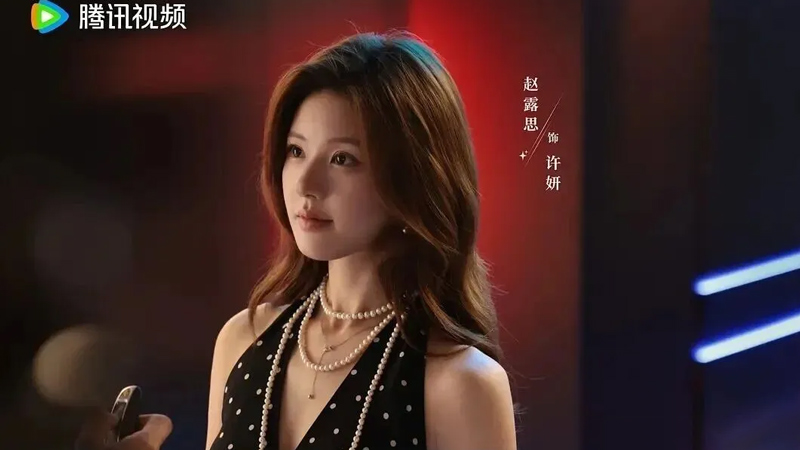
The resonance of Love's Freedom and the character of Xu Yan speaks volumes about shifting audience preferences. Modern viewers, particularly women, are increasingly drawn to female characters who are intelligent, proactive, and flawed. They are tired of passive heroines who wait for a man to solve their problems and instead gravitate towards figures who, like Xu Yan, take control of their own destinies.
Her mantra strikes a chord. It reflects a pragmatic understanding of social mobility that many find relatable. While not everyone condones her methods, they understand her drive. She represents the idea that background should not dictate one's future and that ambition, when coupled with hard work and intelligence, is not a flaw but a tool for empowerment.
For Zhao Lusi, this role is more than just a hit drama; it is a professional rebirth. Love's Freedom served as her powerful answer to critics, solidifying her status not just as a popular star, but as a versatile and compelling actress. The series demonstrates that content is king: when stories are rooted in complex characters and relatable struggles, they can achieve both critical acclaim and widespread popularity, shining a light on new possibilities for Chinese television.
