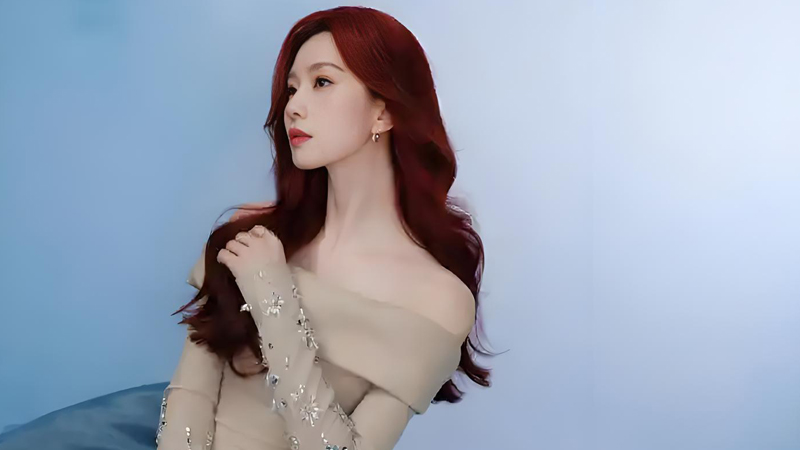
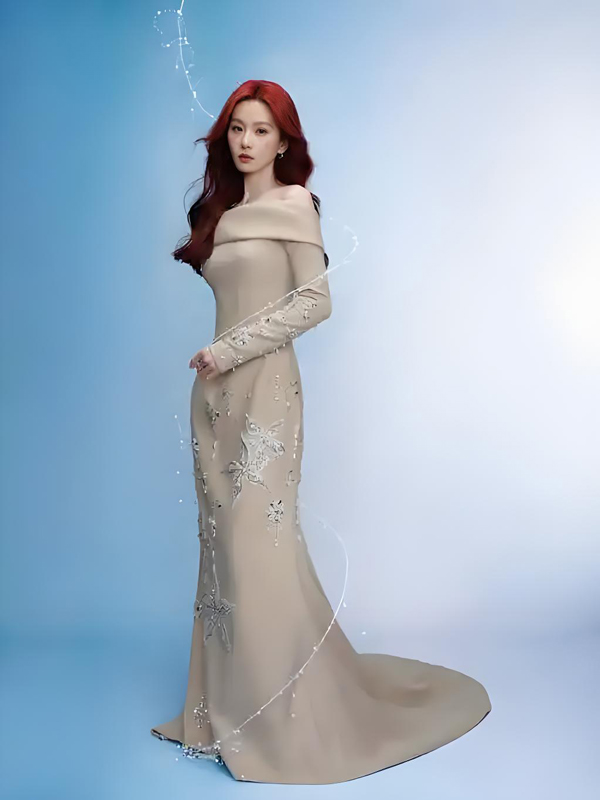
Imagine the shockwaves: Liu Shishi (刘诗诗), long synonymous with ethereal grace and porcelain-doll elegance, standing transformed. Gone was the delicate white gown, replaced by a vision of crimson hair cascading like liquid fire over bare, luminous shoulders – a stunning declaration as the "Ocean Princess." This wasn't a stylist's fleeting experiment; it was a deliberate, personal detonation within her carefully curated world. It whispered a question louder than any headline: What happens when the quietest force decides to roar?
The Crimson Unveiling
Witnesses describe a charged stillness settling over the set as she prepared. A soft smile, then the deliberate shrug of an outer garment. The shock of vibrant red tumbling down, framing shoulders exposed not for mere provocation, but as a canvas for raw power. Photographers froze, recalibrating their lenses to capture this unexpected eruption. This wasn't the gentle Liu Shishi of collective memory; this was a force emerging from the deep.
Her mastery lay in minimalism. No theatrical gestures, just eyes holding depths as mysterious and potent as the sea itself. A subtle arch of the brow, a curve of the lip held in perfect tension – radiating a contained ferocity reminiscent of mythic sirens. This calculated restraint amplified the impact tenfold. True courage, it seemed, wasn't found in dramatic tears, but in this silent willingness to shatter expectations, to court misunderstanding deliberately.
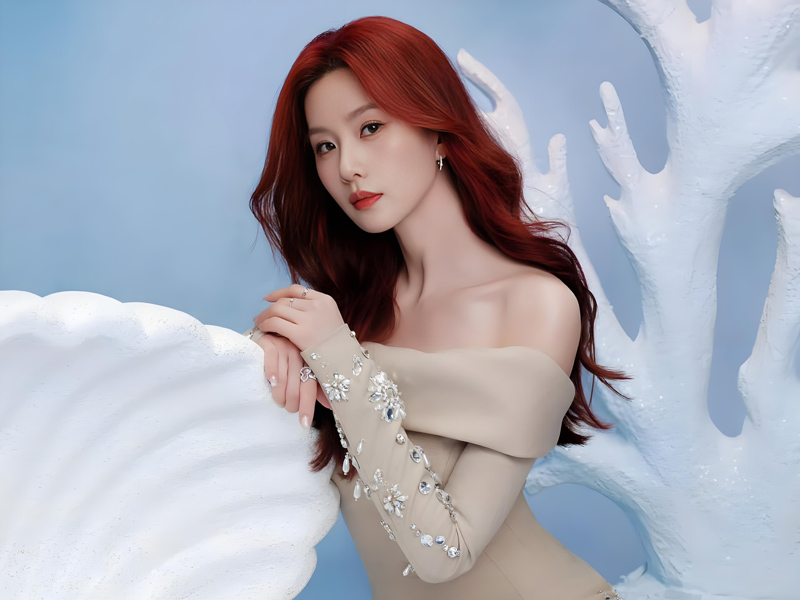
The transformation transcended aesthetics. That crimson mane wasn't a fashion accessory; it was a battle standard unfurled. The bare shoulder wasn't just skin; it was a statement of vulnerability wielded as strength. Every element screamed a refusal to remain confined within the elegant cage built over a decade. This was artistry weaponized for self-liberation.
Beyond Role
To grasp the magnitude, rewind. 2011: Scarlet Heart (步步惊心) explodes, catapulting Liu Shishi to stratospheric fame as the heartbreakingly demure Ruoxi (若曦). That role crystallized her public image: the serene, almost melancholic beauty, forever associated with Qing dynasty robes and quiet suffering. She became the nation's gentle muse.
In the chaotic decade that followed, as peers chased viral fame and weathered scandals, Liu Shishi seemed to recede. She navigated the industry's churning waters with remarkable quietude, often absent from the exhausting circus of trending topics. Observers labeled it detachment, perhaps even retreat – a quiet exit from the "grotesque carnival" of fame.
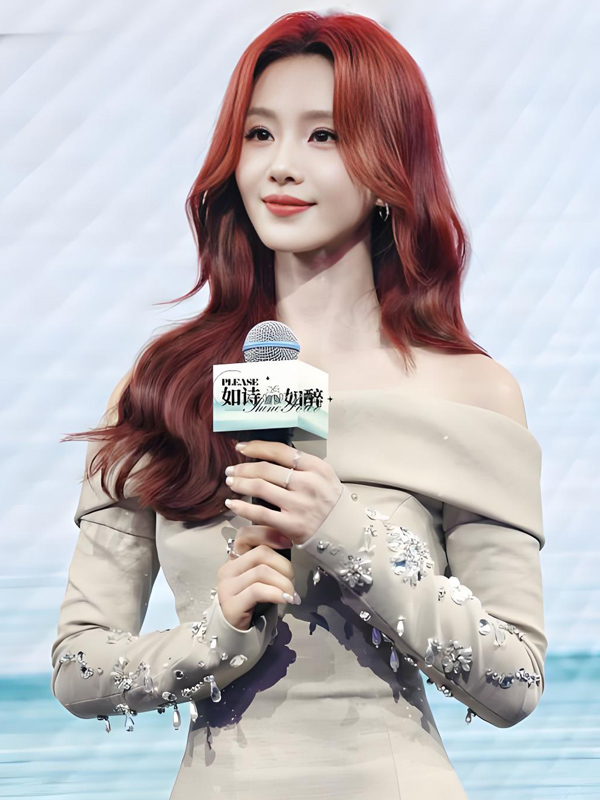
But whispers from close quarters paint a different portrait. This "disappearance" wasn't apathy. It was meticulous curation. Insiders reveal her intense, hands-on involvement in every major creative decision, especially this transformation. Late-night calls with stylists dissecting minutiae – the exact crimson hue, the fall of hair against skin, the precise drape of fabric. Her perceived serenity masked a fierce, almost obsessive, drive for perfection and control over her own narrative. The gentle exterior belied a core of tempered steel.
Echoes & Silence
The digital sphere erupted instantaneously. "Red-haired Ocean Princess personified!" gushed fans. "Beauty that breaks the rules!" wept others. "Visually arresting!" flooded timelines. The images were undeniable, arresting in their stark departure.
Yet, beneath the adulation, a counter-melody hummed. Skeptics emerged: "Pseudo-edgy, still just selling looks," scoffed one. "Can red hair really rewrite your destiny?" dismissed another. The transformation, bold as it was, became a Rorschach test – liberation to some, calculated careerism to others.
Liu Shishi's response? Profound silence. No defensive interviews, no clapbacks on social media. Reports describe her post-reveal: phone switched off, sitting alone backstage. Sipping water. Changing shoes. A profound stillness amidst the storm she had summoned. This wasn't mere detachment; it was a steely resolve, an internal fortress shielding the vulnerability such a radical act inevitably required. The public saw the fire of her hair; only she knew the cold nights of doubt wrestled into submission.
The Depths Within
This metamorphosis resonates far beyond a photoshoot. In an industry obsessed with fleeting virality and rigid beauty templates, where stars often become puppets to algorithms and public whim, Liu Shishi crafted a singular act of defiance. She didn't just tweak her image; she torched the old blueprints. The "Classical Beauty"? Incinerated. The "Zen Celebrity"? Dissolved. What emerged was the Ocean Princess: a sovereign entity, embodying secrets, caprice, and an audacious embrace of the unknown self.
Labeling this a "beauty spectacle" misses the mark entirely. This was a profound act of self-preservation. A declaration of autonomy in a system designed to commodify identity. She stepped out, not just with red hair, but with the terrifying freedom of choosing her own depths.
Her silent revolution poses a visceral question, echoing long after the camera flashes fade: Do you possess the audacity to stand, bare-shouldered against the tide of expectation, and become your own myth? Can you, too, dare to be the defiant princess of your uncharted ocean?