
Move over, stylized robes and fantastical costumes. The animated film The Legend of Hei 2 (罗小黑战记2) is making waves for an unexpected reason: its background characters. Forget generic filler; these background figures are dressed in meticulously designed Hanfu elements, sparking online applause for the creators' dedication to authenticity. This isn't just costume design; it's a subtle, powerful statement about integrating traditional Chinese clothing into the fabric of modern life. By focusing on ordinary people wearing Hanfu in everyday contexts, the film offers a refreshingly practical vision of cultural heritage existing naturally alongside contemporary fashion, prompting viewers to reconsider what "traditional" attire means in the 21st century.
Designing the Everyday
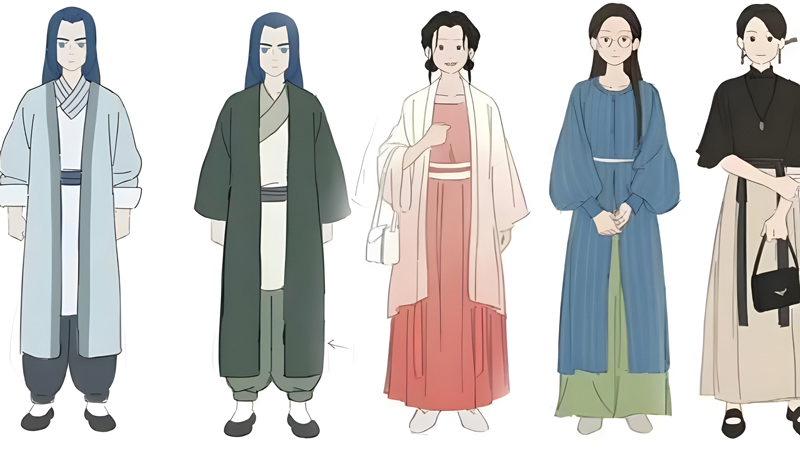
The film's creators recently released design sketches showcasing three distinct outfits worn by background characters. One ensemble pairs a Beizi (a traditional long outer garment) with a tube top-like undergarment and a Baidie skirt (pleated skirt). Another features a round-collar long shirt with practical, tapered sleeves worn over full-length trousers. The third combines a half-sleeved, upright-collar short jacket with a Mamian skirt (horse-face skirt). While seemingly simple, these outfits are carefully crafted.
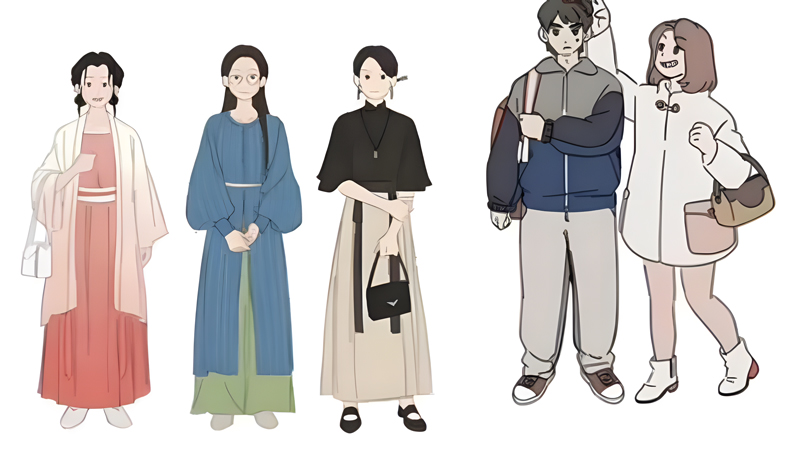
The first and third sets lean towards traditional cuts, while the second incorporates a more modern silhouette with its sleeve design. Crucially, all three prioritize wearability. Elements like gradient color transitions (soft pinks, teals), subtle stripes, and the shortened or tapered sleeves demonstrate thoughtful adaptation. These choices ensure the clothing moves easily, avoids impractical large sleeves hindering daily tasks, and integrates Hanfu aesthetics without looking jarringly out of place.
Color palettes further ground these designs in contemporary life. Youthful peach and orange gradients offer a playful touch, serene blue-green tones evoke a more subdued elegance, and versatile earth tones like black and light khaki provide universal appeal. This intentional use of color helps the garments feel harmonious within modern settings and aligns with different character backgrounds, fostering a genuine sense of lived-in reality.
Beyond the "Chinese Girl" Trope
This approach marks a significant shift in how Chinese culture, particularly clothing, is depicted in animation. For decades, international and even some domestic media relied heavily on reductive stereotypes – think Qipao and twin buns – often lumping female characters under the generic label "Zhongguo Niang" (Chinese Girl). The Legend of Hei 2's background designs represent meaningful progress.
By showcasing diverse Hanfu styles adapted for modern contexts on ordinary background characters, the film moves beyond monolithic representation. It presents Chinese historical clothing as a dynamic tradition with evolving interpretations, not frozen in the early 20th century. This subtle normalization within a popular medium plays a vital role in cultural education, both domestically and internationally, hinting at a rich sartorial history stretching back millennia, not just decades.
The trend isn't isolated. Increasingly, Hanfu elements are finding their way into various media, from domestic animations to overseas comics inspired by Chinese dramas. This growing presence underscores the powerful influence visual media wields in shaping perceptions and disseminating cultural knowledge, making thoughtful representation more crucial than ever.
Hanfu as Living Culture
While seeing Hanfu on screen is encouraging, the true goal is its seamless integration into real-world wardrobes. The journey towards widespread, everyday Hanfu wear is long, requiring continued design innovation and cultural acceptance. Here, film and television carry significant responsibility. They shouldn't confine Hanfu to historical dramas alone.
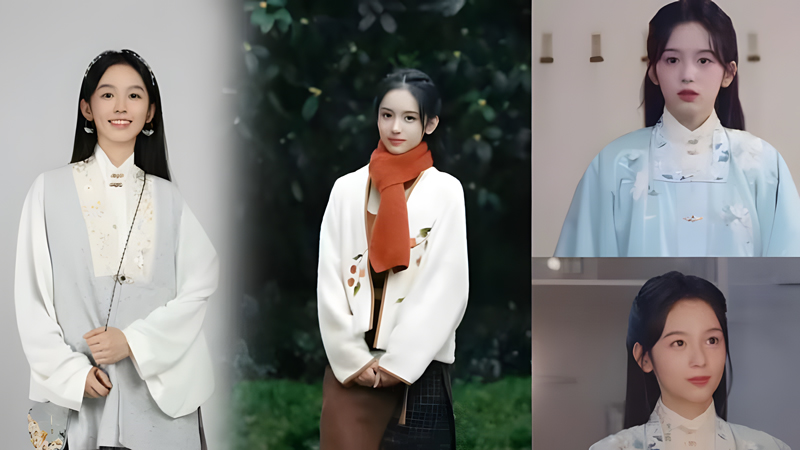
Modern narratives need these garments too. The challenge lies in striking a balance: incorporating traditional essence without slavish recreation, allowing Hanfu to evolve naturally within contemporary settings. When traditional clothing feels at home in stories set today, it signals true cultural vitality. This visibility fosters public appreciation and encourages support for accurate, creative costume design.
Definitions of "everyday Hanfu" vary widely. Yet, a comment from the The Legend of Hei 2 creators about their background characters resonates deeply: "When you look at a passerby, they aren't just background; they are simply living their life, captured incidentally by the camera." This perfectly captures the desired future for Hanfu – not as a costume for special occasions or social media clicks, but as a genuine expression of aesthetic and cultural identity existing naturally alongside jeans and t-shirts.
True Hanfu integration means garments rich in cultural detail feel unremarkable in their everyday context. They don't scream for attention; they simply belong. When Hanfu reaches this point – present, practical, and unforced within the modern wardrobe – its place as a living tradition will be truly secured.
