As the college entrance examination kicks off, do you also reminisce about the days when you were preparing for the exam? The clothing that ancient scholars yearned to wear throughout their lives was the robe of a Jinshi (进士, successful candidate in the highest imperial examination) after passing the exam. May all students inherit the good luck from ancient times and see their dreams take flight from now on!
Let's start with the conclusion. As the poem goes, "In proud triumph my horse gallops with ease; I view all flowers in Chang'an in one day." After succeeding in the imperial examination, ancient scholars didn't don the Western academic gowns we see today! It's crucial to note that China's academic gowns should have their own heritage. After scholars became Jinshi or champions, they would have different attires. This once in a lifetime honor made people eager to have their portraits painted. The champion would be specially granted a set of imperial - bestowed clothing. You know, being the champion is called "the greatest honor under heaven" and is the highest honor in the imperial examination system.
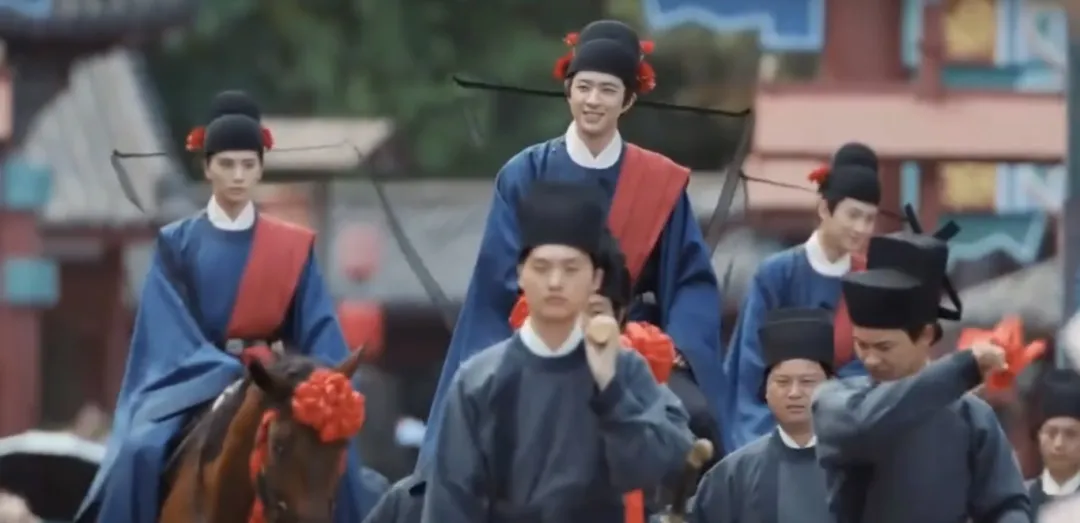
Let's proceed in order. On the day of the announcement of the examination results after the imperial palace examination (usually 3 to 5 days later), the newly - minted Jinshi (including the champion) would change into a new set of clothing called "Jinshi scarf and robe" issued by the Imperial College. They would present a memorial to express gratitude and be granted a banquet.
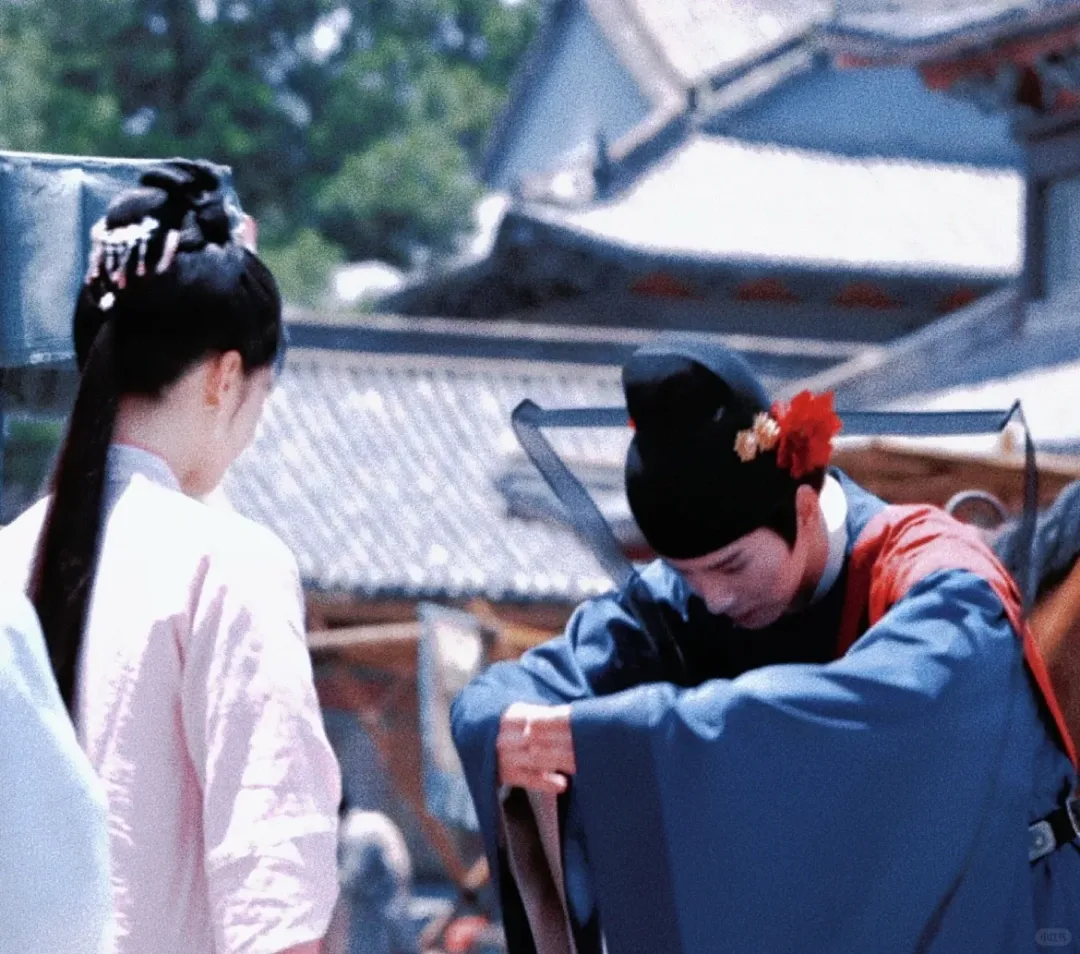
The Jinshi's clothing was generally in the style of a Lanshan (a type of traditional Chinese robe), similar to official uniforms. It was a dark - blue silk robe with dark - green edging, featuring a round collar and large sleeves. The Jinshi cap they wore was similar in shape to the black gauze cap. There were special black silk ribbons hanging from the extended parts on both sides, and there was a pair of flower ornaments with a pair of silver - plated gold medals inscribed with "Banquet of Honor", which reflected the upcoming transformation into the official system. Men wearing flower ornaments has been recorded since the Tang Dynasty. It gradually became popular during the Five Dynasties and was a common phenomenon in the late Northern Song Dynasty. Men would wear different kinds of flowers according to the seasons. They were required to wear flower ornaments when they passed the imperial examination. As a rare honor, many officials had portraits painted of themselves wearing the Jinshi scarf and robe in their official records.
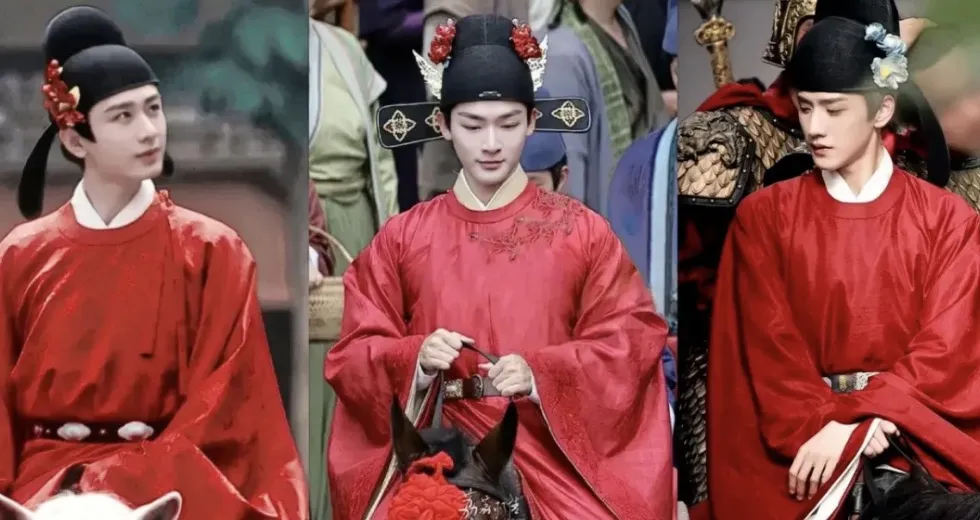
The champion also had special imperial - bestowed clothing. Emperor Zhu Yuanzhang once bestowed clothing on the new champion: "On the day of Yiyou in March, the emperor held the imperial examination in Fengtian Hall. 128 candidates passed. He granted the title of Jinshi Ji - di (the top three) to Wu Bozong and two others, the title of Jinshi Chu - shen (successful candidates) to 17 candidates in the second class, and the title of Tong Jinshi Chu - shen (equivalent to successful candidates) to those in the third class. He also ordered to bestow court clothes, caps, and belts on Wu Bozong." Since then, it has become a tradition for emperors to bestow court clothes on new champions, which has been passed down through generations.
The imperial - bestowed clothing, according to the Ming Dynasty's clothing system, consisted of a Liangguan (a type of official hat), a red - silk robe, a skirt, a white - silk undergarment, a red - silk knee - covering, a large belt, a leather belt, jade pendants, a brocade ribbon, white socks, and black shoes. The footwear was generally black cloud - toe shoes, which later evolved into cloud - toe shoes with green edges and red borders.
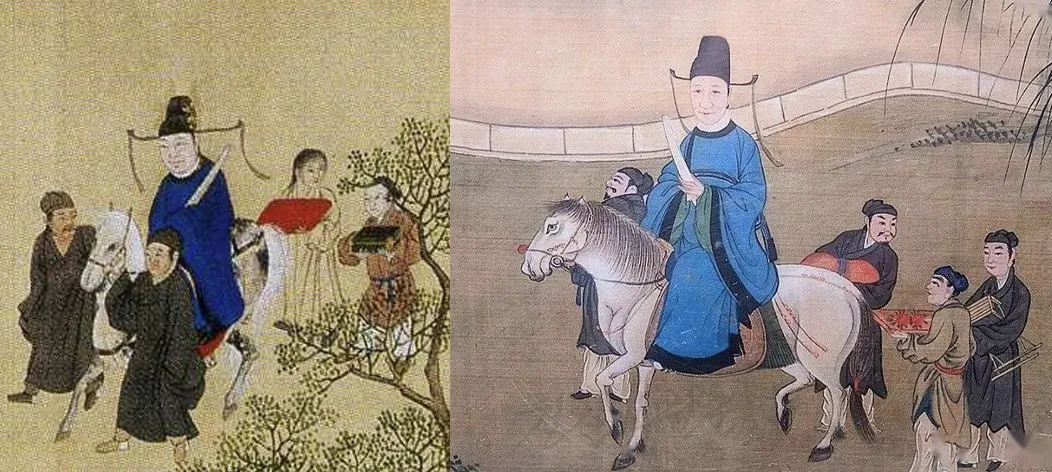
After being granted the clothing, a ceremony to offer vegetables to Confucius would be held on a selected day to pay homage to the ancient sages. The champion would lead the group of newly - minted Jinshi in their ceremonial clothes. They would be assigned official ranks. After the ceremony, they would change into regular clothes, which were generally green round - collar robes (usually with a heron patch for sixth - rank civil officials).
In some ceremonial situations, Ming - Dynasty champions could also wear scarlet round - collar auspicious clothes with a sixth - rank heron patch, as shown in Ming - Dynasty paintings and portraits. It should be noted that most of the above information refers to the Ming Dynasty. Since there are detailed records and many cultural relics from the Ming Dynasty, most Song - and - Ming - Dynasty - themed activities, photoshoots, and TV dramas today refer to the Ming - Dynasty clothing system and are paired with Song - style hats. In the Song Dynasty, there were some differences according to the color regulations of official uniforms. For example, in terms of color and accessories, in the Song Dynasty, they wore green robes and black square - cornered hats.
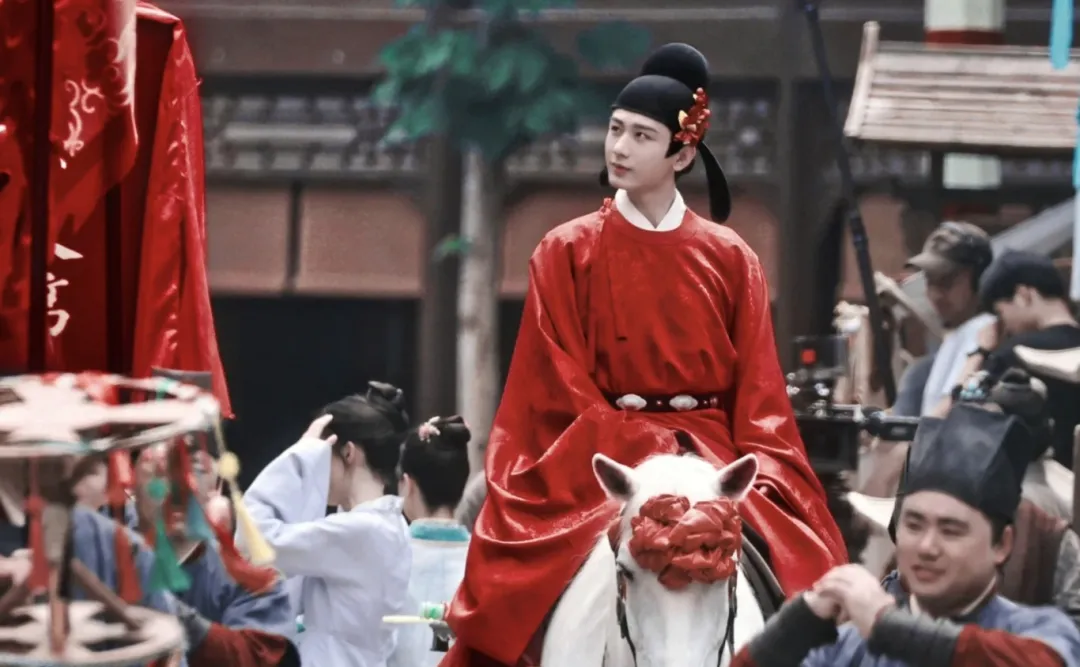
Newly - granted Jinshi would hold a huzhu (a tablet). (After the Tang Dynasty, officials below the sixth rank held wooden huzhu. In the Ming Dynasty, officials above the fifth rank held ivory huzhu, and those below the fifth rank did not hold huzhu.) The top - scorer would also be specially granted a purple bag. As recorded in historical texts, newly - passed Jinshi in the Song Dynasty were granted green robes, boots, and huzhu, and the champion was given additional items like a purple bag. Nowadays, many TV dramas dress champions in red according to the auspicious clothes of the Ming Dynasty even in a Song - Dynasty - themed background. In some banquets, there might be a situation of "borrowing scarlet", which is also to make it easier for people to distinguish. But strictly speaking, they should wear dark - blue Jinshi scarves and robes and green robes on formal occasions.
Well, by learning about the champion's clothing, you can receive good luck. I wish all students good luck in the college entrance examination and may they achieve great success from now on!