In today's TV dramas, the costumes often feature extremely long trains. One can't help but wonder: Apart from the cinematic effect, is this kind of trailing skirt really suitable for daily wear? Did the ancients dress like this too? Aren't they afraid of getting them dirty?
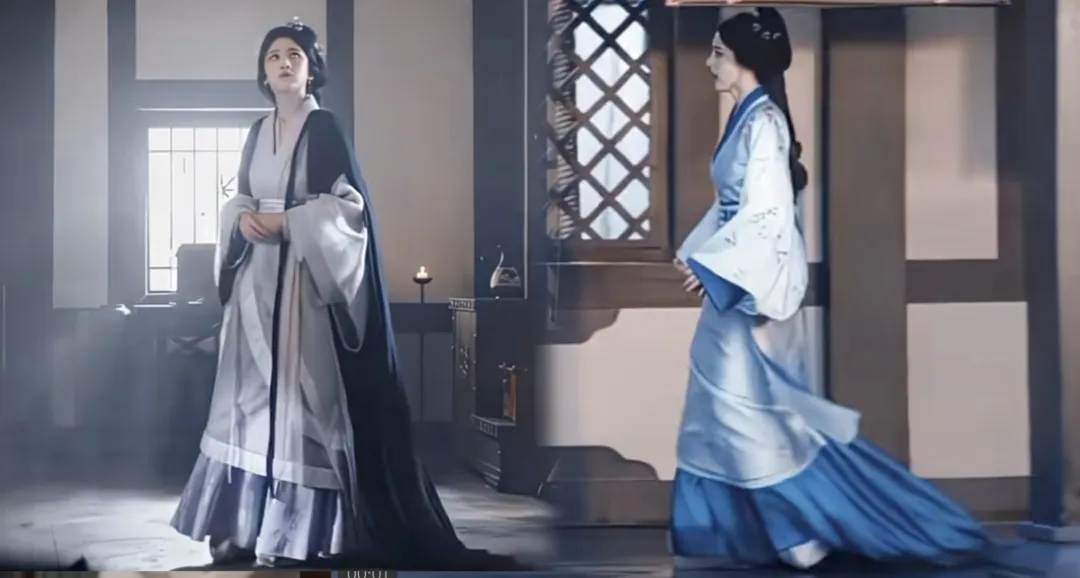
First of all, don't be misled by the long - trailing dresses in TV dramas. Even in Hanfu, the trailing styles mostly exist in formal dresses or semi - formal dresses (formal wear), not in the common people's daily clothes. There were also corresponding outfits for daily labor. Moreover, nobles didn't wear such long skirts every day. As shown in the picture, in the pre - Qin period, such clothes were only worn on major ceremonial occasions. So, they were only for large and formal events.
However, there were exceptions. For example, the popular fashion in a specific environment was irresistible. In addition to the noble's formal dress scenarios in each dynasty, some well - off families in the civilian population also followed a trend of extravagance. They regarded wearing large - sleeved robes and long - trailing skirts as fashionable. This kind of trend usually emerged in the middle and late periods of a dynasty, which can be understood as the 'decadent trend' in the declining days of a dynasty. These clothes were worn infrequently, often replaced, and with the help of servants, so there was no need to worry about washing them when they got dirty.
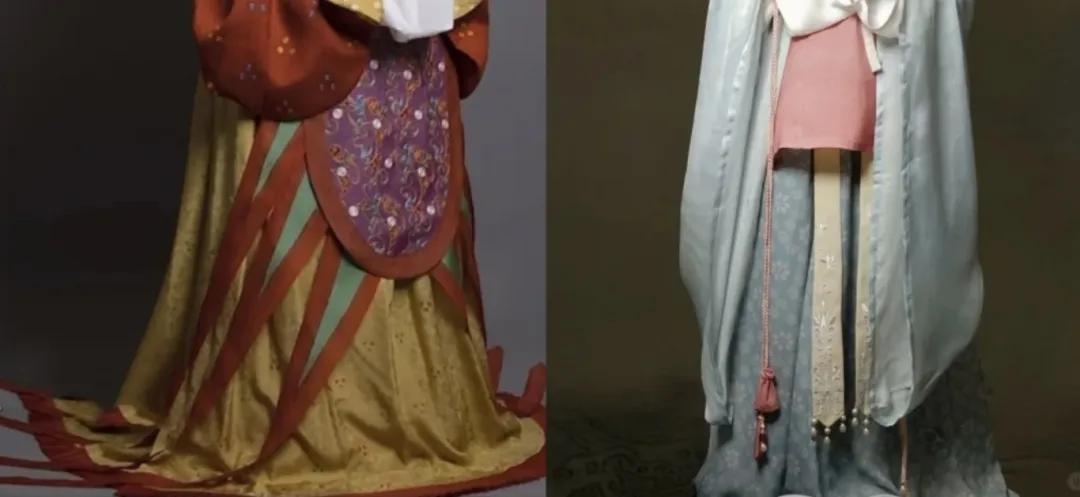
What about daily wear? Even for nobles, it would be inconvenient to wear such long clothes in daily life. Usually, the longest length of the ancient people's daily clothes/skirts was about to the ankles. Let's take a look at the lengths of several cultural relic skirts (thanks to netizens for the statistics). One is a bit shorter and one is a bit longer, but neither exceeds 90 cm. If we calculate based on Miss Huang Sheng's height of 160 cm, it really reaches the ankles. Looking at the cultural relics of horse - face skirts (thanks to netizens for the statistics), most of the skirt lengths do not exceed 90 cm. Only a few, like those from the Qian's tomb, are over 100 cm. Considering that the different lengths are partly due to the height of the owners and also for different occasions.
Besides, Hanfu doesn't always have full - skirted designs. There are also mid - length and knee - length (similar to modern pencil skirts) two - piece skirts (Xuanqun), which are all convenient for daily life. Let's take Miss Huang Sheng as an example. For the two - piece skirts made of printed silk from Huang Sheng's tomb in Fuzhou and those unearthed from the Southern Song Dynasty Zhou's tomb in De'an, Jiangxi, referring to Huang Sheng's height of 160 cm, wearing an 80 - 86 cm skirt would reach below the calf. This is almost the same length as what we mentioned before. This length is not too revealing and very convenient for those on the go.
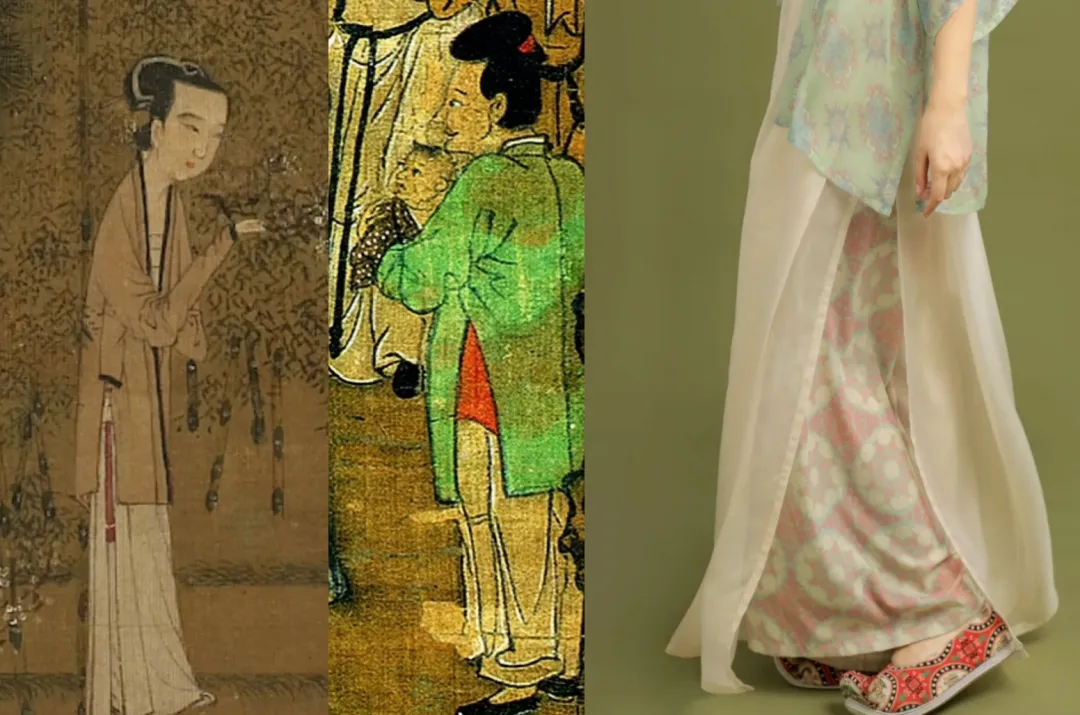
Some people also wonder if ancient women's wrapped skirts would expose them. In fact, besides the skirt, they usually wore pants inside. There were both open - crotch and closed - crotch pants in ancient times. The skirt might reach the ground, but the pants might not. With an outer wrapped skirt, even if the outer skirt was blown up by the wind while walking, there was no need to worry about exposure.
Whether it's traditional Hanfu or Hanfu fashion for modern daily wear, there's no need to stick to long - trailing skirts. Especially for skirts like horse - face skirts that have their own weight, generally, for a person with a height of 160 cm, a skirt length of 80 - 90 cm to the ankles is the best. You can refer to the size chart when buying. After all, dressing up is for a better life, so don't make things difficult for yourself.