
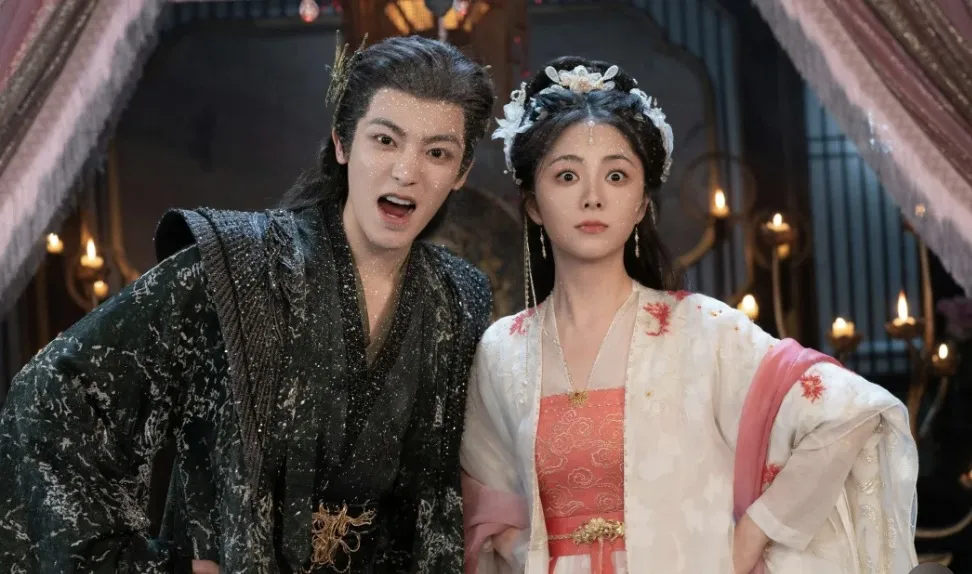
When watching costume dramas, we often notice that those from our childhood still feel like traditional ones in our memory, while the ones we watch now seem more like modern dramas set in ancient times. There are multiple reasons for this. Let's start from the beginning.
Bangs
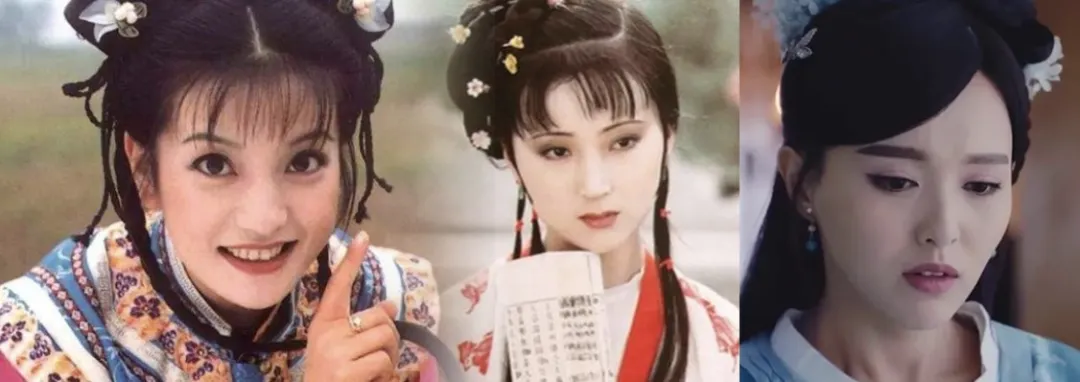
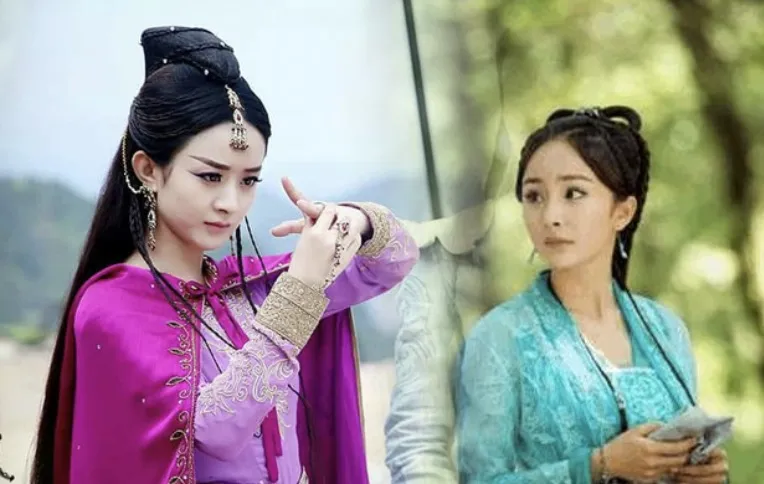
First, let's discuss bangs, a common styling element in modern costume dramas. In the past, the most common bangs were like those in My Fair Princess. Later, various types emerged, such as side - swept and blunt bangs, with a strand of hair often hanging in front of the characters' foreheads. In ancient times, after reaching adulthood, it was a basic courtesy for both men and women to keep their hair tidy. Confucianism condemned "loose hair" as a barbaric act. In public, men wore hats and women coiled their hair. "Bangs" in ancient records usually referred to children, also known as "liuhai fa" (留孩发), which evolved into "liuhai" (刘海). There were also accessories like the moe (抹额) to adorn the forehead. It was first used by warriors and later spread to women's clothing. According to records, it originated from using mink fur to warm the forehead in the cold north.
Modern Makeup
Secondly, the modernization of makeup in TV dramas is quite prominent. Modern makeup emphasizes facial three - dimensionality, while classical makeup creates an atmosphere through eyebrows, eyes, and blush. Elements like curved and exaggerated false eyelashes, heavy contouring, exaggerated aegyo sal, and jelly - like lips make the overall makeup lose its classical charm.
Hairstyles
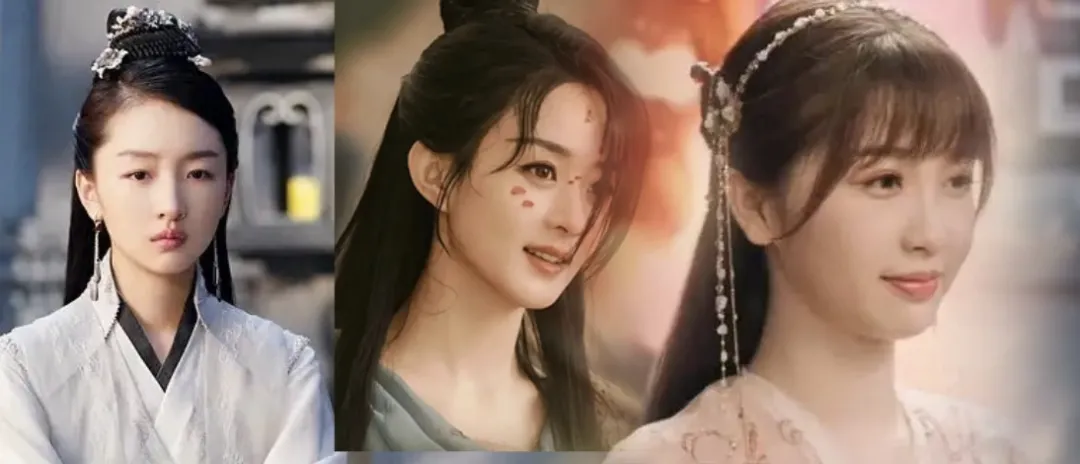
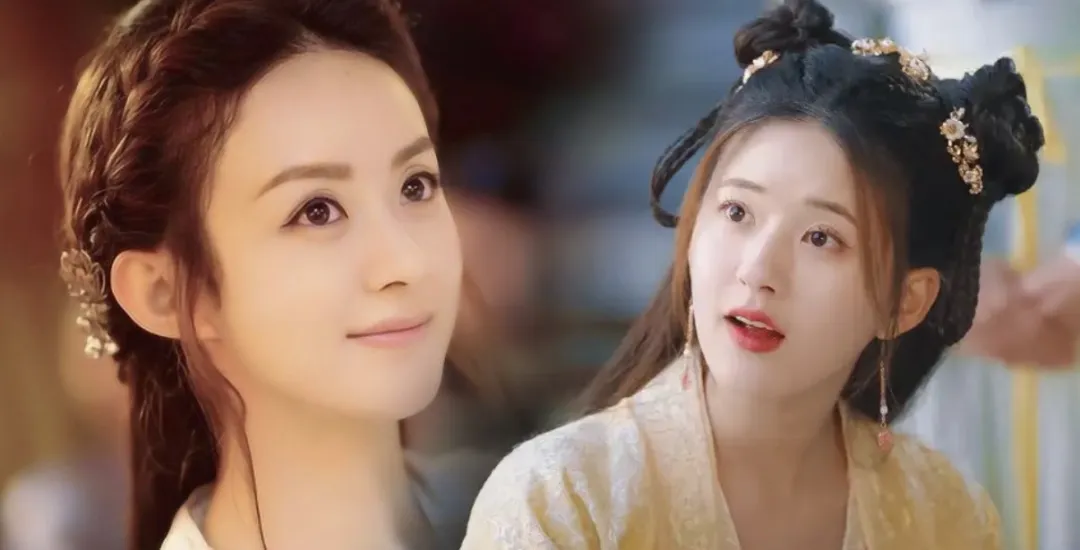
The simplification of hairstyles has transformed complex and classic looks into uniform princess - style hair, high ponytails, and even includes yellowish or reddish hair dye or highlights. Classical buns like the snail bun, sword bun, intertwined bun, and snake bun have disappeared. Combined with bangs and modern makeup, it feels like a modern drama set in an ancient scene.
Costumes
Now, let's talk about costumes. Many costume dramas have fictional themes without a strict historical background. Costumes in these dramas are often imaginative. There's a difference between modifying traditional costumes for TV and creating "ancient - style + TV - adapted" costumes from modern fashion. For example, some costumes in the movie version of Eternal Love of Dream have a modern structure with forced classical elements. Some costume dramas simplify costumes so much that traditional elements like patterns, fabrics, color - matching, and layering are ignored, reducing the classical charm. High - saturation clothing also gives a more modern visual impression.
Scenes
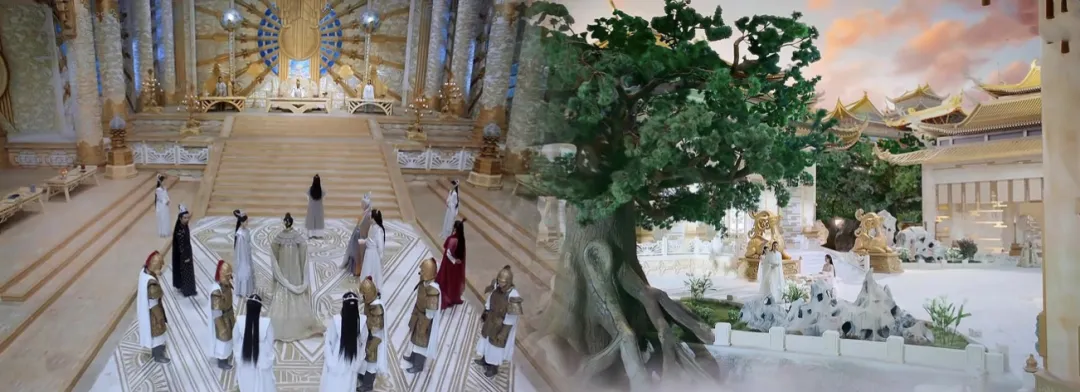
Finally, let's discuss scenes. In classical scenes, ambient light like candlelight, sunlight from the window, and moonlight is used to create a classical atmosphere. Scenes in The Longest Day in Chang'an use ambient light to create natural shadows and warm tones. However, most modern dramas are magnificent, with bright frontal lighting at night. There are also various European - style decoration elements, gaudy golden decorations, modern minimalist furniture, and modern - era props, which take the audience out of the ancient atmosphere.
When discussing why modern costume dramas have a modern flavor, we don't demand a certain way. Instead, we hope people can learn more about our ancestors' aesthetic culture, inherit and carry it forward. After all, Chinese aesthetics is most suitable for us. We also look forward to better - made costume dramas in the future.
