
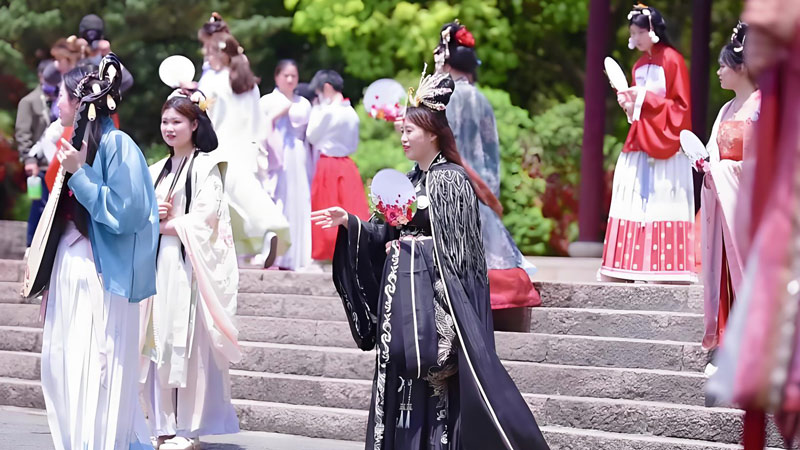
On June 28, 2025, Shanghai’s Fangta Garden transformed into a portal through time. Over 110 hanfu enthusiasts gathered for Sohu Video’s "Li Yi Hua Xia" Hanfu Model Competition, their silk robes swirling amid 800-year-old pagodas and moon gates. This was no costume party—it was a deliberate revival of China’s sartorial legacy, where dynastic elegance met contemporary creative expression.
Threads Through Time: The Stage is Set
Fangta Garden’s Ming-era architecture provided the ultimate backdrop. Towering cypresses framed stone bridges, while the hexagonal Fangta Pagoda watched over contestants adjusting Song-dynasty beizi (褙子) jackets and Tang-style ruqun (襦裙) skirts. The garden’s moss-covered steles and lattice windows didn’t just complement the garments; they whispered stories of the artisans who once inspired them.
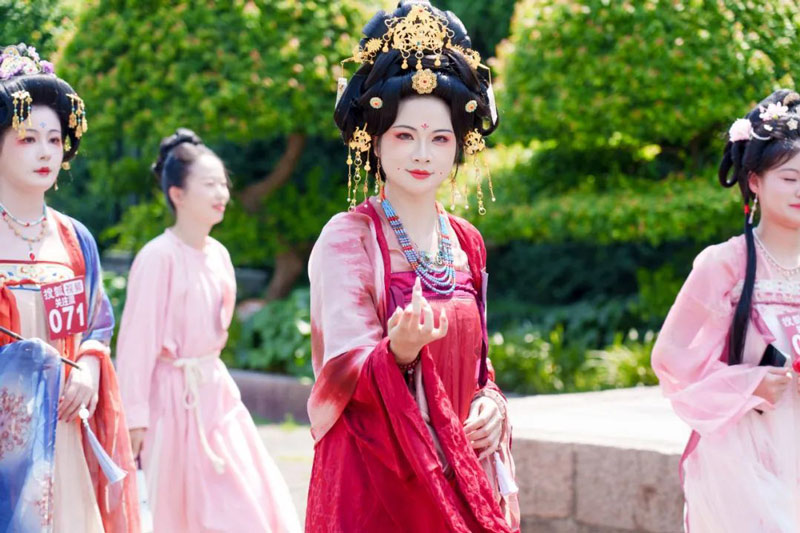
As models prepared near the Nine-Dragon Wall, stylist Sheng Kaiyuan explained her Song tea-maid ensemble: "The linen changshan and pleated skirt mirror 12th-century practicality. This wine flask?" She lifted a celadon vessel. "A nod to Kaifeng’s tavern culture." Nearby, contestant Wei Shige tested the drape of her Tang daxiushan. "The gauze sleeves must float like poetry," she said, spinning until gold-embroidered phoenixes seemed to take flight.
Weavers of Dreams: Crafting Identity
Backstage, historical accuracy fused with personal narrative. Wei’s Tang outfit used digitally printed silk replicating Dunhuang fresco patterns—a technological homage to ancient artistry. "My sleeves bear cloud motifs from Empress Wu Zetian’s robes," she noted, the fabric cascading like ink wash.
Sheng’s Song dynasty portrayal, meanwhile, embraced subtle rebellion. "Tea maidens were rarely depicted," she said, adjusting her hairpin. "I’m reclaiming invisible women’s histories." Her bamboo-woven hat and indigo-dyed apron countered stereotypical imperial opulence, celebrating everyday grace.
Eyes on Tradition: The Judgment Gate
Before judges including Hanfu scholar Lin Gefeng (林格锋) and intangible heritage heir Gao Jun (高筠), contestants navigated a cultural tightrope. At the Fangta Screen Wall—a Ming relic carved with mythical beasts—each model paused for assessment.
Lin scrutinized sleeve seams: "Tang robes require 45-degree cuts for that waterfall drape." Gao evaluated posture: "A Song tea maiden wouldn’t stride; she’d glide like a swan." Contestant Zhang Lu earned praise for her Zhou-era sash knot—a complex braid symbolizing marital unity. "Modern competitions often miss these details," Gao remarked.
Beyond the Catwalk: Culture’s Living Market
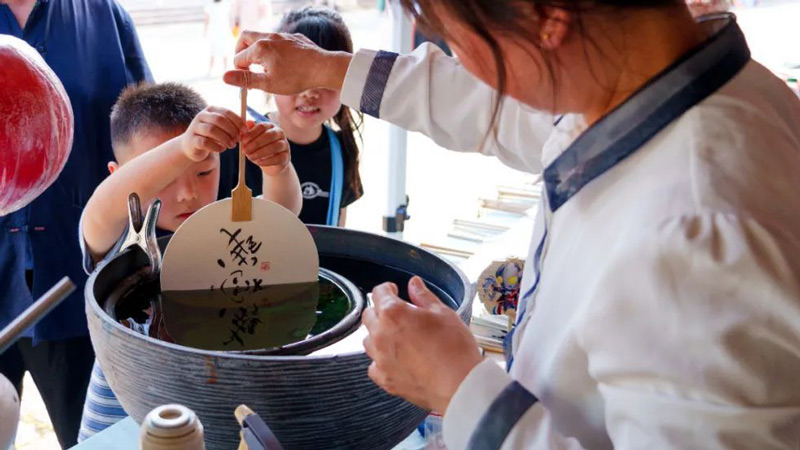
Outside the competition zone, Suzhou fan-makers demonstrated ivory-split techniques beside stalls selling AI-designed hanfu. Tech start-up Yun Silk displayed algorithm-generated patterns based on Southern Song pottery shards. "We trained AI on museum textiles," explained founder Li Wei. "But human hands still stitch every piece."
At the flower-silk stand, craftsman Wang Ming threaded 24-karat gold through sapphire beads. "These hairpins?" He held up a phoenix design. "Same method Empress Xiaoduan wore in 1600." Nearby, visitors tried VR headsets transporting them to a Song dynasty tea house—blending tactile heritage with digital immersion.
Fangta Garden’s stone paths still echo with silk whispers days after the event. As participant Chen Yifei observed while packing her Mingaoqun: "We’re not recreating history—we’re weaving its threads into today’s fabric." With every stitch preserving the past and every algorithm imagining its future, Shanghai proved tradition isn’t frozen behind glass. It breathes, dances, and evolves.
Enthusiasts engaged in lively exchanges, sought advice, and acquired new pieces, blurring the lines between appreciation and participation. This vibrant marketplace, nestled within the ancient garden amidst flowing silks, became a dynamic hub. It demonstrated that the hanfu revival isn't merely about clothing; it's intrinsically linked to a wider revival of traditional arts, crafts, and communal engagement, offering tangible ways for the public to connect with and sustain cultural practices. The significant online and offline attention generated underscored its role in actively fostering the transmission and development of this facet of Chinese heritage.
