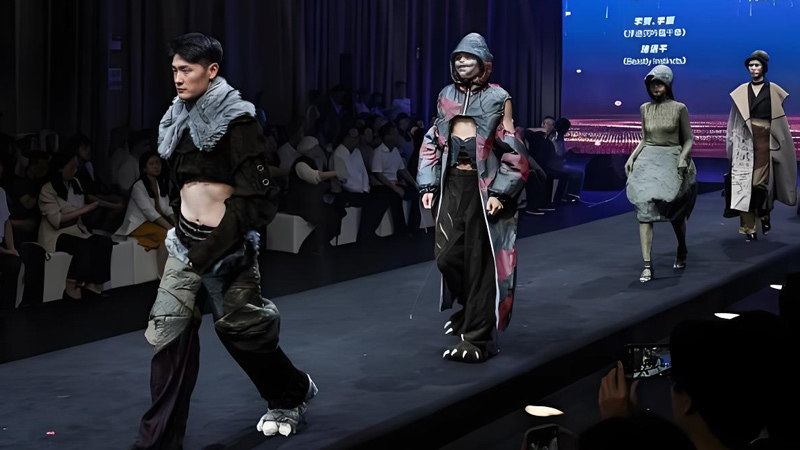
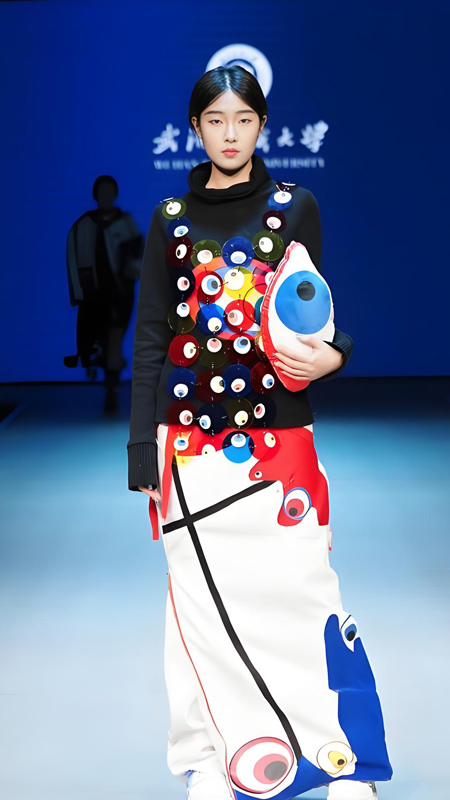
The runway pulsed with energy at Wuhan's Red T Fashion District on July 5th. Nearly one hundred young designers from universities across mainland China and Taiwan transformed fabric into dialogue, showcasing 38 finalist collections for the Fourth Golden Clothes Award.
This event, part of the 19th Hubei-Wuhan Taiwan Week, became more than a competition—it evolved into a vibrant conversation about shared heritage and contemporary vision. Models moved beneath lights not just displaying garments, but carrying stories woven from ancient motifs and futuristic textiles, revealing how a new generation interprets identity through cloth and craft.
Silk Roads Redrawn
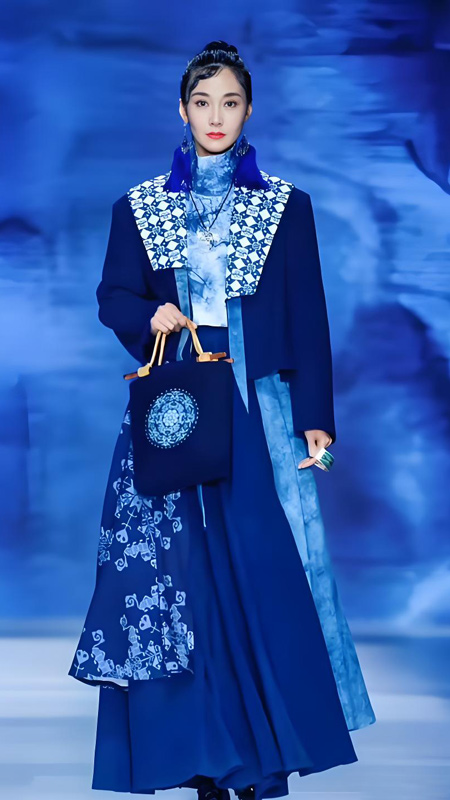
Layers of hand-dyed indigo flowed like mountain mist down the runway. One designer merged digital-printed Song Dynasty landscapes with biodegradable synthetics, creating gowns where past and future coexisted seamlessly.
Another finalist reimagined Miao embroidery techniques using recycled thread, patterning jackets with geometric phoenixes traditionally stitched over months, now achieved with innovative speed without sacrificing artistry. The tactile richness of handwork met engineered fabrics unexpectedly.
A collection from Taiwan featured modular clothing using magnetic Han-style closures, allowing wearers to reconfigure silhouettes instantly. This practical innovation honored traditional fastening methods while embracing adaptability for modern life.
Judges noted how entrants sourced inspiration from regional textile archives yet employed zero-waste cutting methods. One dress cascaded from a single uncut length of hemp silk, its drape echoing Tang Dynasty robes while its sustainability spoke to current concerns.
Water Flows, Ideas Follow
Taiwan designer Tu Yongzhu's collection moved with liquid grace. "My work explores shang shan ruo shui—the wisdom that supreme goodness resembles water," she explained backstage. Her dresses clung and released like tidal patterns, sculpting bodies with bias-cut jacquard that mimicked river currents.
She described collaborating with a Suzhou embroidery master met during preliminary rounds: "We combined water-drop beadwork with laser-cut acrylic, fusing his lifetime skill with new materials." The resulting pieces shimmered with controlled movement.
During workshops, mainland designers introduced Tu to 3D-knitting techniques capable of producing seamless garments mimicking water's continuous form. "Their technical solutions gave me vocabulary I lacked," she reflected, noting how cross-strait exchange accelerated her creative process.
Creatures Reimagined
A model stepped out wearing boots molded into stylized bear paws, trousers flowing seamlessly into the sculpted feet. The audience murmured as she turned, revealing a subtle articulated tail swaying with her gait—playful yet sophisticated zoomorphism.
Another ensemble transformed the wearer into a walking chrysanthemum, petals unfolding through hidden mechanisms in the skirt layers during movement. Design notes revealed this as an homage to Wuhan's city flower, using thermo-reactive fabric that changed opacity with body heat.
Traditional theatre inspired a headpiece fusing Ming Dynasty opera crown elements with lightweight aerospace alloys, its phoenix motifs seeming to hover around the model's head. "We stripped away the heaviness but kept the drama," its creator noted.
One Taiwanese student incorporated indigenous Paiwan tribe serpent symbols into laser-etched leather, paired with LED-embedded tulle simulating bioluminescence. The fusion honored ancestral stories while embracing technology.
Stitching Common Futures
Gold medalist Lin Yizhen (林嬑贞) from Taiwan's Fu Jen University found the experience transformative. "Beyond the fabrics," she shared, "was seeing how designers here approach problems. Their boldness with scale and public art integration shifted my perspective." Her winning ensemble integrated interactive sound sensors within woven brocade.
Wuhan Taiwan Business Association President Xiao Yongrui (萧永瑞) observed designers exchanging contact information eagerly. "This generation collaborates instinctively," she noted. "They see cultural roots not as boundaries, but as infinite creative resources to remix together." Plans emerged for virtual co-creation studios before the gala ended.
The Jianghan District government announced new residency permits easing long-term stays for Taiwanese creative professionals. One policy allows designers to establish micro-studios within state-owned cultural complexes at subsidized rates, fostering sustained interaction beyond events.
As models took their final walk wearing hybrid creations—one featuring augmented reality projections onto Song Dynasty silhouettes—the applause acknowledged more than aesthetics. It celebrated a tangible, threaded connection being woven stitch by stitch between young visionaries across the strait, their shared language written in pattern and innovation.