
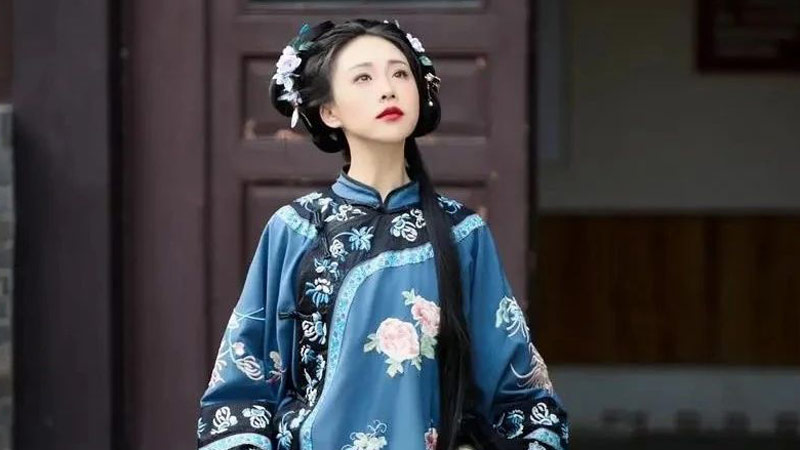
The current popular 'Qing Han Women' costumes give the impression of killing Ming-style Hanfu and arranging a ghost marriage for it! It combines Hu (ethnic minority) styles and the alternation of Hu and Han cultures, presenting two extreme feelings. The Qing and Republican women's clothing, which is the popular 'Qing Han Women' costumes now, really gives such an eerie feeling. It's so gloomy that even when it's just hanging there, it seems to have a gust of cold wind blowing.
Just looking at the cheongsam alone doesn't give this sense of death. Tang-style Hanfu also combines Hu styles, but it looks very sunny and bright, full of the feeling of a living person. Is this the difference in clothing characteristics, or does the psychological state of people at that time fully reflect in the clothing culture? The temperaments are really like the two poles of yin and yang. For example, it's like the difference between a ghost marriage and a voluntary marriage.
This is an extremely perceptive and poetic observation! It captures the profound cultural and psychological differences behind the clothing. Indeed, the temperaments presented by Tang-style Hanfu that combines Hu styles and Qing and Republican women's clothing (including 'Qing Han Women' costumes) with the alternation of Hu and Han cultures are almost polarized. This difference is not accidental but the result of the interweaving of various factors:
The Spirit of the Times and the Overall Social Psychology
Tang Dynasty: One of the most open, confident, and inclusive golden ages in Chinese history. With strong national power, it embraced all things like the sea, actively absorbing and boldly integrating 'Hu styles', full of exploration spirit and vigorous vitality. This positive and high-spirited social psychology was directly projected onto the clothing: bold, bright, open, and full of dynamism.
From the Qing Dynasty (especially the middle and late periods) to the early Republic of China: It experienced regime changes (Qing Dynasty rule), social upheavals (invasions by powerful countries and the spread of Western learning), and the deepening of the shackles of feudal ethics (especially for women). The social psychology tended to be introverted, conservative, and depressive, even with a sense of decadence in the last days.
The integration of clothing was more of a passive result under policy coercion (haircutting and clothing change) and social pressure, or a fashion expression sought by specific classes (such as prostitutes and famous ladies in the late Qing Dynasty and early Republic of China) in a difficult situation. The underlying tone often carried a kind of restraint, melancholy, or deliberately created 'elegance', lacking the magnificent vitality from within like that of the prosperous Tang Dynasty.
The Temperaments of Colors and Patterns
Tang-style Hanfu:
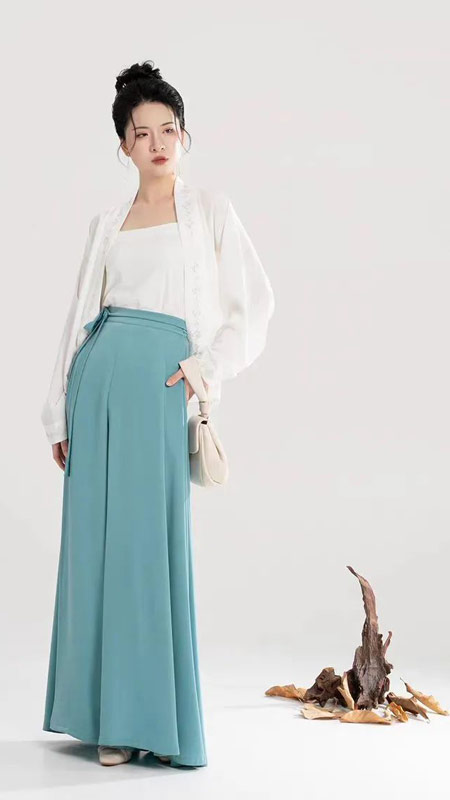
The colors are extremely bold, intense, and highly saturated (vermilion, royal blue, bright yellow, emerald green), often using contrasting colors and color clashes. The patterns (such as the lotus flower, scroll grass, and pearl pattern) are grand, full of exotic flavors and vitality, and often have a sense of movement.
Qing and Republican women's clothing: The colors tend to be calm, subtle, and cold or grayish in tone (such as moon white, lake blue, purple sauce, dark green, and azure). Even for red, dark red or burgundy is often used. The patterns tend to be delicate, detailed, and realistic (such as folded flower branches, antique patterns, and flower and bird patterns), with a regular layout and soft color transitions (such as the halo color in Su embroidery). A large area of dark background with small patterns, or cold light colors, easily creates a quiet, even gloomy visual effect.
Fabrics and Textures
Tang-style Hanfu: It often uses gorgeous, shiny, and well-draped silk (such as damask, gauze, and silk), which is light and elegant, and can well show the dynamic. Even the thick brocade looks magnificent because of its grand patterns and warm colors.
Qing and Republican women's clothing: The range of fabrics is wider, including cotton, linen, plain silk, and satin. Even for silk, matte or more subtly shiny varieties (such as crepe, tweed) are often selected. The heaviness of inlays and embroidery also increases the visual weight and 'stuffy' feeling. Natural materials such as cotton and linen have a more rustic and matte texture, and they easily look 'old' or 'dull' in specific colors and styles.
Wearing States and Historical Contexts
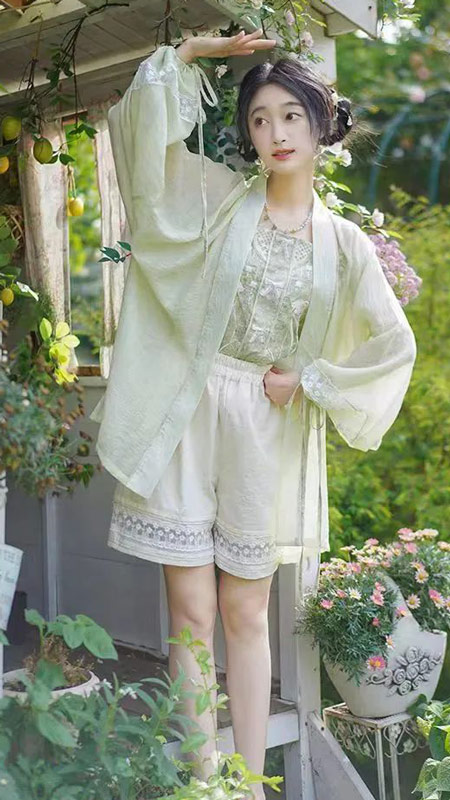
Tang-style Hanfu: It is associated with the pictures in murals and pottery figurines of banquets, music and dance, horseback riding, and spring outings, which are full of life and joy. It's the state of living people enjoying life.
Qing and Republican women's clothing (especially in the late Qing Dynasty): Its image materials (old photos) are often associated with a specific historical period (the decline of the late Qing Dynasty, the confusion of the early Republic of China), social classes (women in the inner chambers, women in specific occupations), and the serious and rigid expressions brought by the early photography. This historical context and visual record easily convey a sense of heaviness, alienation, or the specific depressive atmosphere of that era. The modern aesthetic interpretation of 'Qing Han Women' (sometimes deliberately) further amplifies this 'gloomy' characteristic.
In conclusion, this contrast between Tang-style Hanfu and Qing and Republican women's clothing is a vivid reflection of how different historical periods shape clothing culture. By understanding these differences, we can gain deeper insights into the past and appreciate the rich heritage of Chinese fashion.
