Sinners masterfully employs blues music not merely as soundtrack, but as the dying heartbeat of Black cultural autonomy. Protagonist Sammy’s guitar symbolizes resistance against cultural erasure - a defiant stance against the whitewashing of Black musical heritage. His transition from blues to jazz mirrors a painful truth: the commodification of Black art dilutes its soul. Blues, born from the agony of slavery and systemic oppression, loses its raw authenticity when repackaged for mainstream consumption. Sammy’s lament, "My joy ended before that sunset," echoes the grief of generations witnessing their narratives sanitized for palatability.

Hollywood’s reduction of Black characters to tropes - absent fathers, drug dealers, or comic relief - stands in stark contrast to Sinners’s textured portrayal. The film critiques how Black culture is flattened into marketable stereotypes: gold chains, sagging pants, and violence. This commodification creates a vicious cycle where audiences internalize these caricatures as reality, stifling authentic representation. When Sammy clings to his guitar, he isn’t just holding an instrument; he’s grasping the last thread of unadulterated Black expression in a landscape dominated by cultural vultures.
The erosion depicted extends beyond art into identity. As blues morphs into entertainment, Black intellectuals grapple with a hollow victory: visibility without sovereignty. Their stories are told, but through filters that prioritize profit over truth. Sinners challenges this dynamic, suggesting that true cultural preservation requires resisting the seduction of mainstream acceptance. Sammy’s unfinished melodies symbolize the unresolved struggle for artistic integrity - a battle where survival often demands silencing one’s own voice.
Freedom’s Bittersweet Illusion
Smoke and Stark’s quest for liberty unfolds as a Greek tragedy cloaked in Southern Gothic hues. Their dream - a blues sanctuary free from prejudice - initially radiates hope. Yet their hard-won utopia crumbles under vampire onslaught, exposing freedom’s fragility. Smoke’s pyrrhic victory over the Klan grants him spiritual peace but costs his life, while Stark’s immortality curses him to eternal darkness with his forbidden lover. Their fates illustrate freedom’s paradox: it often arrives fragmented, demanding unbearable sacrifice.
The brothers embody divergent paths in the Black freedom struggle. Smoke’s militant defiance—exterminating oppressors - brings catharsis but no lasting change. Stark’s interracial love transcends bigotry yet condemns him to societal shadows. Their outcomes reframe "Black Lives Matter" not as a slogan but a question: What is liberation worth when it demands surrendering community or sunlight? The film suggests that freedom devoid of human connection or dignity is merely another cage.
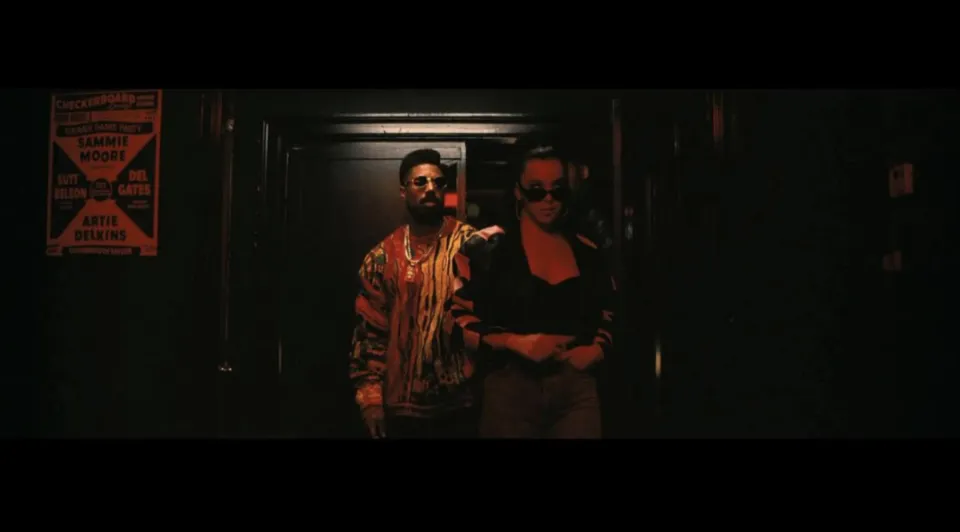
Sinners subtly critiques performative activism through the twins’ arcs. Smoke’s final act - embracing his child before death - contrasts sharply with Hollywood’s empty gestures of representation. True liberation, the film argues, isn’t about visibility quotas or viral hashtags. It lies in the quiet dignity of reuniting families, preserving culture, and reclaiming narratives without compromise. Their bar wasn’t just a business; it was a manifesto in wood and whiskey - a dream too radiant for a world addicted to darkness.
Vampires as Holy Ghosts
The film’s vampires transcend horror tropes, morphing into chilling metaphors for religious and cultural indoctrination. The "Baptism" scene - where Vampire Zero drowns Sammy - mirrors forced conversion rituals. Christianity, depicted as an invasive force, demands Sammy abandon his guitar (symbolizing Black heritage) for dogma. Vampirism becomes the ultimate assimilation: surrender your identity, join the hive, and eternally serve a foreign master. The coven’s diverse members - Irish, Black, Chinese - highlight how oppression weaponizes unity only after erasing individuality.
Vampire Zero’s command over his "flock" exposes the hypocrisy of salvation narratives. His promise of eternal life requires soul annihilation - a direct parallel to how dominant cultures demand marginalized groups relinquish their roots for acceptance. The vampires’ ballroom dances and interracial pairings aren’t progressive; they’re grotesque parodies of harmony achieved through erasure. Their unity flourishes not through equity, but through shared subjugation to a single, tyrannical will.

Sinners links this vampiric colonialism to America’s legacy of cultural cannibalism. Just as blues was stripped of its revolutionary roots and repackaged as entertainment, the film suggests all marginalized histories risk becoming aesthetic commodities. The vampires’ immortality reflects how oppressive systems self-replicate: each converted soul becomes an agent of the very machinery that enslaved them. Sammy’s resistance - refusing baptism - isn’t just survival; it’s rebellion against the erasure awaiting all who trade their soul for sanctuary.