-
Deep Cyan & White: Hu Bingqing’s Bijia Hanfu
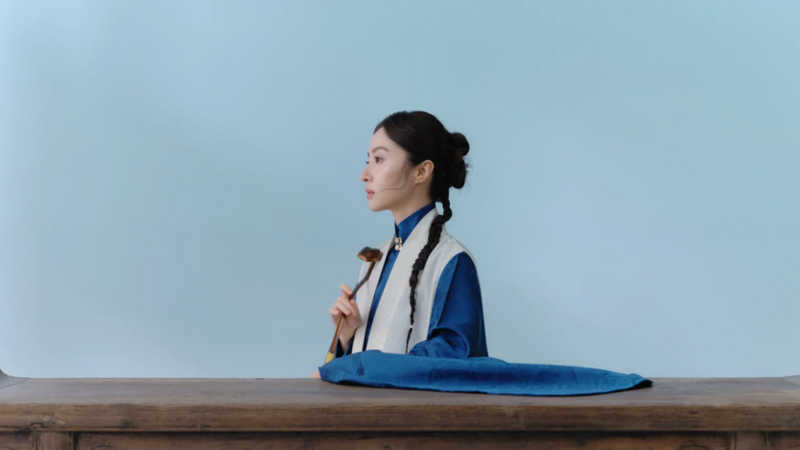
She looks like she just walked out of a silk painting. When actress Hu Bingqing (胡冰卿) released her latest magazine photoshoot in Hanfu, the internet paused. Unlike the typical glamorous or overly romanticized styles seen on other celebrities, her outfit carried a quiet, scholarly elegance. The color palette was unusual—deep, almost moody green paired with crisp white. And the garment itself? A sleeveless, open-front long coat that few modern wearers would recognize. It wasn't a familiar Ming Dynasty robe or a Tang Dynasty skirt. It was a Bijia (比甲), a forgotten piece of nomadic practicality turned aristocratic fashion. Hu Bingqing didn't just wear clothes; she wore a historical footnote. And in doing so, she reminded us that the most striking fashion statements are often the ones buried deepest in the past. A Vest from History At first glance, the Bijia resembles a modern vest or a long waistcoat. But look closer. It has no sleeves, no standing collar, and opens straight down the front with a center split. The sides are slashed from armpit to well below the knee. Its length varies—some versions stop at the hip, others at the knee, and a few nearly graze the ankle, leaving less… -
Hu Bingqing: Her Song Dynasty Baoji in Da Song Ci Ren Zhuan
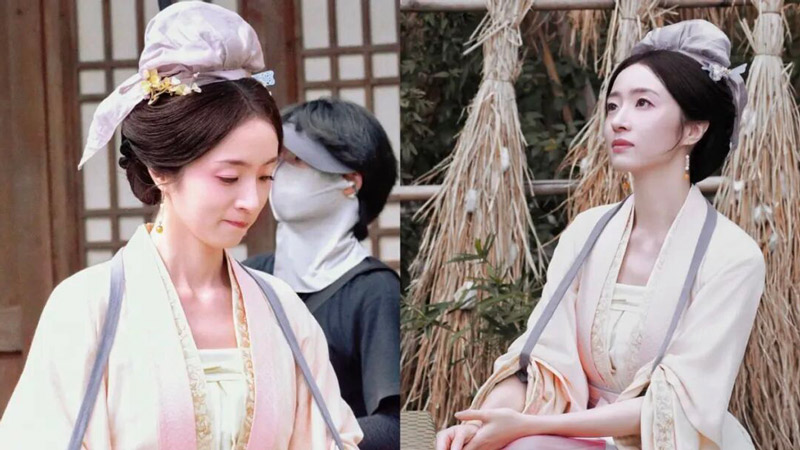
A single image from a documentary has captivated audiences, sparking both curiosity and admiration. In the CCTV production Da Song Ci Ren Zhuan (大宋词人传), actress Hu Bingqing (胡冰卿) portrays Xu Wenmei (徐文美), the wife of renowned poet Qin Guan (秦观). Her most striking feature is an elegant, sculptural headwrap that some viewers humorously compared to a chef's hat. Yet, far from being a culinary misstep, this delicate headdress is a meticulously researched piece of historical attire. It represents a perfect marriage of actress, aesthetic, and era, leading fans to applaud the "authoritative taste of CCTV" for its authentic and harmonious presentation of Song Dynasty elegance. The Headwrap's History The style worn by Hu Bingqing is known as a Baoji (包髻), a term literally meaning "wrapped hair knot." Its origins can be traced to practical necessity. For women engaged in daily work or managing households, keeping intricate hairdos tidy was a challenge. The Baoji offered a simple, graceful solution: a square piece of cloth, often silk or fine linen, folded and wrapped securely around the styled hair. This practice was not invented in the Song Dynasty. Its precursor was the more structured Jinguo (巾帼), a headdress from the Han Dynasty. The…
Hu Bingqing
❯
Profile
Check-in
Message
Message
Search
Customer service
Scan to open current page
Top
Checking in, please wait...
Click for today's check-in bonus!
You have earned {{mission.data.mission.credit}} points today
My Coupons
-
$CouponsLimitation of use:Expired and UnavailableLimitation of use:
before
Limitation of use:Permanently validCoupon ID:×Available for the following products: Available for the following products categories: Unrestricted use:Available for all products and product types
No coupons available!
Daily tasks completed