Article
Search results:
-
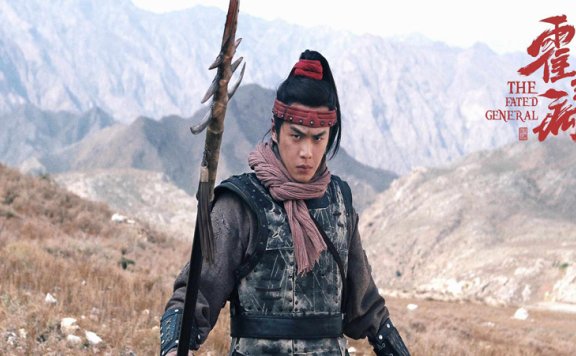
Zhang Ruoyun: 5 Costume Masterpieces Ranked
If you're new to Chinese historical dramas, Zhang Ruoyun's (张若昀) name should be at the top of your list. Forget stiff period pieces—his shows mix sharp wit, high-stakes politics, and characters who feel real, even in silk robes. Whether he's playing a math genius in the Ming Dynasty or a warrior prince in a fictional empire, Zhang makes centuries-old stories crackle with modern energy. Let's cut to the chase: here are his five best costume masterpieces to binge next. Joy of Life 庆余年 Aired: Season 1 (2019), Season 2 (2024) Period Background: Fictional Qing Dynasty-inspired empire Genres: Political intrigue, Historical fantasy, Mystery Main Roles: Fan Xian (范闲): Zhang Ruoyun as a witty, modern-minded nobleman navigating court conspiracies. Emperor Qing (庆帝): Chen Daoming (陈道明) as the enigmatic ruler. Adapted From: Cat Nip's novel Joy of Life. If you've ever wondered what Game of Thrones might look like with a Chinese twist—minus the dragons but packed with biting humor and brainy schemers—Joy of Life is your answer. Zhang Ruoyun's breakout role as Fan Xian redefined historical fantasy, blending time-travel logic, political chess games, and a protagonist who'd feel just as at home in a coffee shop as in a royal palace. Aired in two… -
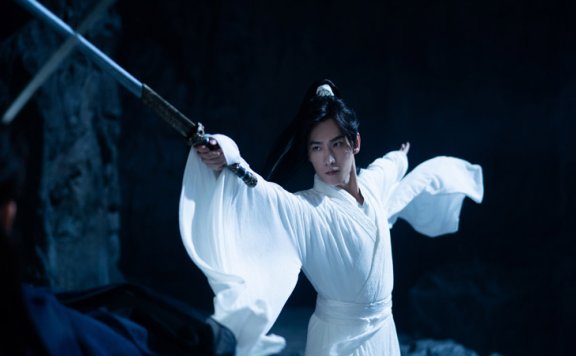
Yang Yang's Top 4 Costume Adventures
If you're tired of predictable heroes in period dramas, meet Yang Yang (杨洋)—an actor who's equally convincing as a brooding immortal, a sword-slinging detective, or a prince who'd rather solve equations than wage wars. Forget stuffy historical accuracy; Yang's dramas thrive on blending fantasy, wit, and heart. Whether he's floating through xianxia realms or sparring with corrupt officials, his roles feel like invitations to explore China's storytelling traditions. Here's why his costume dramas offer the ultimate historical adventures. Who Rules the World 且试天下 Aired: 2022 Period Background: Fictional warring kingdoms (inspired by ancient Chinese dynasties) Genres: Wuxia, Political intrigue, Romance Main Roles:Hei Fengxi/Prince Feng Lanxi (黑丰息/丰兰息): Yang Yang as a cunning, dual-identity prince balancing court politics and martial arts mastery. Bai Fengxi/Feng Xiyun (白风夕/风惜云): Zhao Lusi (赵露思) as a warrior princess and his equal in wit and combat. Adapted From: Qing Lengyue's (倾泠月) novel Who Rules the World. Set in a fictional world of warring kingdoms (think ancient China meets Dune), the show avoids stuffy historical lectures. Instead, it drops you into a high-stakes power struggle between six royal families. Hei Fengxi isn't your typical prince: by day, he's Feng Lanxi, a sickly scholar calculating tax reforms. By night, he's… -

Yang Mi's 5 Essential Period Drama Picks
If you've ever binge-watched a Chinese drama just for the costumes, chances are Yang Mi (杨幂) was in it. From mischievous fox spirits to time-traveling heroines, she's dominated China's costume drama scene for over a decade—not just with her looks, but with roles that blend grit, wit, and heart. Let's cut straight to her most iconic characters and why they're worth your screen time. Eternal Love 三生三世十里桃花 Aired: 2017 Period Background: Mythical fantasy realm spanning heavenly, mortal, and demonic worlds. Genres: Xianxia (fantasy martial arts), Romance, Drama Main Roles: Yang Mi as Bai Qian (白浅), Mark Chao (赵又廷) as Ye Hua (夜华) Adaptation Source: Novel Three Lives, Three Worlds, Ten Miles of Peach Blossoms by Tang Qi Gong Zi (唐七公子) Bai Qian, a 140,000-year-old fox goddess and ruler of the Qingqiu Fox Clan, is no damsel in distress. She's a deity who drinks wine like water, fights demons with a smirk, and has zero patience for celestial bureaucracy. But her life gets complicated when a celestial romance curse forces her into three lifetimes of love, loss, and amnesia. First Life: As a young immortal, Bai Qian disguises herself as a male disciple named "Si Yin" to train under the… -

Top 5 Zhao Liying Costume Dramas Recommendations
Zhao Liying (赵丽颖) stands as a luminary in the realm of historical and fantasy dramas. Known for her versatile acting, ethereal screen presence, and ability to embody strong female leads, Zhao has dominated China's television landscape for over a decade. This article curates her most iconic costume dramas, offering insights into their historical settings, genres, and cultural significance. Perfect for newcomers to Chinese TV, these recommendations blend rich storytelling, breathtaking visuals, and Zhao's unparalleled charm. The Legend of Lu Zhen 陆贞传奇 Aired: 2013 Period Background: Set in the Northern Qi Dynasty (北齐; 550–577 CE), a short-lived but culturally rich regime during China's chaotic Northern and Southern Dynasties (南北朝; 420–589 CE). This era was marked by frequent wars, shifting alliances, and the rise of Buddhism, offering a dramatic backdrop of political instability and social transformation. Genres: Historical Epic, Political Drama, Female Empowerment Main Roles: - Zhao Liying as Lu Zhen – A commoner-turned-political strategist. - Chen Xiao (陈晓) as Emperor Gao Zhan – A reformist ruler battling court corruption. Adapted From: The novel Nü Xiang (女相, "Female Prime Minister") by Zhang Wei (张巍), loosely inspired by the life of Lu Lingxuan, a historical female official in Northern Qi. Born into a… -

How to Wear High-Waisted Hanfu Skirts, Prevent Falling Down?
Why didn't the high-waisted hanfu skirts (齐胸裙) worn by people in the Tang Dynasty fall down? This kind of skirt didn't have elastic bands or other similar measures. Did it rely on large breasts to stay up? Could it really stay in place without falling? The Principle of Skirt Fixation As we all know, in the Sui and Tang Dynasties of China's clothing history, the waistline of skirts became popular to move up. The current popular way of wearing it is called "high-waisted". As the name suggests, since it is worn on the chest and the high-waisted skirts we often see don't have shoulder straps, the force can only go downward. Then the chest must bear the necessary pressure. Let's think in a more straightforward way. We know that a skirt won't fall when tied around the waist because the waist is like a mortise and tenon structure. As long as it is tied tightly enough to prevent the waistline from slipping, you rarely see a wrapped skirt falling off unless it isn't tied properly. Similarly, for high-waisted skirts, as long as the tying part is tightened, you can jump around without the skirt falling. Fabric and Design Considerations Of… -

Why Did Ancient People Have Buttons on Their Clothes?
Did ancient clothes have buttons? Isn't it too "modern"? Well, buttons did exist in ancient times! They just weren't always called "buttons". Traditional "Jieying Xidai" In ancient Chinese clothing, the most commonly used method was "Jieying Xidai" (结缨系带). It involved wrapping two delicate ribbons around to connect the two sides or front and back parts of the clothing tightly. It was both stable and adjustable in terms of fit. As recorded in "Liji Yuzao" (礼记·玉藻), "Disciples use twisted ribbons to tie knots." "Niu" (纽) in Chinese is related to threads as it has the radical "mi". Uncertain Cases in Qin Dynasty However, there were also some special cases. For example, there were decorations on the Terracotta Warriors that resembled one - character buttons. But some also claim that they were ropes specifically for connecting armor, and this is still in doubt. Development in Tang and Song Dynasties During the Tang and Song dynasties, although ribbons still dominated, the clothing culture was quietly changing. Round - collared robes and some minority Beizi (褙子) gradually incorporated cloth buttons, mostly made by knotting silk fabrics. Some reports now call them "Niupan" (纽襻). Flourishing in Ming Dynasty In the Ming Dynasty, the prosperity of… -

Why Do Ancient Women Love Pomegranate Skirt?
The Origin of the Pomegranate Skirt When a woman's beauty or charm captivates a man, people often use the phrase "succumb to the pomegranate skirt" to describe this irresistible allure. So, where does this enchanting "pomegranate skirt" come from and what does it symbolize? The pomegranate, also known as Anshiliu (安石榴), originated in Iran and Central Asia. It was brought back to China by Zhang Qian after his mission to the Western Regions. It is said that the ancient version of Book of Marvels (待求证) records: "Zhang Qian of the Han Dynasty brought back pomegranate seeds from the Tulin and Anshi countries after his mission to the Western Regions, hence the name Anshiliu." The Anshi country, also known as the Parthian Empire, is now Iran and its neighboring areas. The term "pomegranate skirt" is said to have emerged during the Han Dynasty, referring to a bright red women's skirt. Its popularity stems from the vivid color of pomegranate flowers. The color of the pomegranate skirt, or pomegranate red, is a slightly deeper red like that of pomegranate fruits, or an orange - red as bright as pomegranate flowers. The ancients used pomegranate flower juice to dye fabrics, creating the distinctive… -

The Trendy Hanfu Styles: Fragmentation & Fatalism
In the past year, various concepts of 'fragmentation' and 'fatalism' have suddenly become popular online. Paired with trendy Hanfu styles such as the straight-fronted robe of the 'Warring States' period, the silk shirt of the Northern Song Dynasty, Tang-style shirts and skirts, and armor, there are all sorts of scenarios: running away in the rainy back - view, collapsing in the ice and snow, being tied up, drawing a sword, dying in battle, and even imitating Emperor Chongzhen's 'hanging himself'. It's really a wide variety, giving us a fresh feeling of fatalism. Understanding 'Fragmentation' and 'Fatalism' What exactly are 'fragmentation' and 'fatalism'? Do we really need this kind of emotional appeal? In short, this kind of aesthetic doesn't necessarily have to be called 'fragmentation' or 'fatalism'. It's a kind of incomplete, heart - wrenching but irresistible sadness. Originally more common in the fields of painting and sculpture, with the lower threshold of shooting short dramas and taking photos and the improvement of costumes and props, ordinary people have more opportunities to touch those emotional corners that are usually hard to notice and seek deep 'resonance'. Creating the Atmosphere To create this sense of fatalism, besides creating extreme environments, for example,… -

Are Short-Sleeved Hanfu Tops Worn Only by Maids?
Why Maids Often Wear Short-Sleeved Tops in TV Dramas Why do we often see maids wearing short-sleeved tops in TV dramas, while young ladies rarely do? Let's first talk about these so - called "short - sleeved" tops. Maids wear them mainly for the convenience of work. However, this style is not restricted to maids; it's just a type of clothing item. In ancient China, it had two names: "Banxiu" (半袖) and "Banbi" (半臂). It originally evolved from the short ru (a kind of traditional Chinese upper - body garment). Usually, it reached the waist, and the sleeve length was up to the elbow or even shorter. It was not worn alone, and the most common way to wear it today is to put it over a long - sleeved garment. Actually, men could also wear it. In the Tang Dynasty, it was often used as an inner layer, like wearing a Banbi inside a round - collar robe. The Origin and Popularity of Banbi This style emerged during the Han and Jin dynasties. The figurines of a lute - playing person and a mirror - holding person in Sichuan Han tombs were all wearing Banbi over long - sleeved… -

Did the Ancient People Have Astonishing Hair Volume?
Questioning Ancient Hair Volume Did the ancient people have astonishing hair volume? Could they create such high buns with their own hair? Well, it's a joke! The ancient people already had the "baldness crisis" and secretly wore wigs. In fact, the hair volume of the ancient people might not be as thick as that shown in Zhou Fang's Painting of Ladies Wearing Flowers in Their Hair (《簪花仕女图》). The so - called "Yiji" (义髻) in ancient times was the predecessor of the wig buns we see today. The fashion of wearing wigs started among upper - class women, aiming to increase hair volume and create more complex bun styles, similar to today's hair pads. Materials and Styles of Ancient Wigs The common materials for Yiji were hair or alternative modeling materials like wooden pieces. This spiral - shaped Yiji was made of "false hair". Lined with linen, wrapped with palm hair and dyed, it was made into a spiral shape. You could just press it on your head to complete the makeup, showing both simplicity and ingenuity. The materials for making Yiji were diverse, not limited to real human hair. For example, thin wooden pieces were used. This lacquered wooden wig… -

Modern Black Lipstick and Its Historical Predecessor
Nowadays, young people are into black lipstick. Their families would surely be shocked and wonder about this "weird" aesthetic. But if this trend went back over a thousand years to the Tang Dynasty, you'd be amazed at the "ahead - of - time" makeup looks. People would exclaim, "It's still our ancestors who were the trendsetters!" The "Wu Gao" (乌膏) mentioned by Xi Jun and Mrs. Ma in "The Detective Diaries 2" (唐诡2) did exist in the Tang Dynasty. It was a special kind of lip balm in the "Shishi Zhuang" (时世妆), or the fashionable makeup of the time. According to "New Book of Tang -五行志", during the Yuanhe period of Emperor Xianzong of the Tang Dynasty, women favored a makeup style of "round - bun and cone - shaped hair, no hair ornaments, no rouge or powder, only using Wu Gao to paint the lips, looking like someone who had been crying." Characteristics of the Makeup Even the spider spirit in "Black Myth: Wukong" has the same "Wu Gao - painted lips". This makeup was not just about painting the lips nearly black. It also included drawing eight - character eyebrows, adding oblique red makeup on the cheeks, and… -
Huadian: A Mark Between the Eyebrows
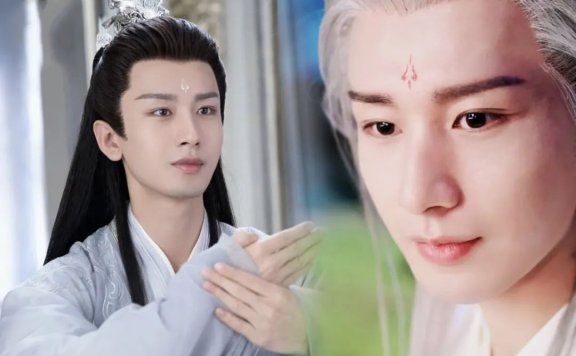
In the TV series A Love So Beautiful, the "Xian Dian" (仙钿) became the lifelong pursuit of many little fairies. The character played by Cheng Yi even achieved the transformation between immortal and demon identities by switching the marks between his eyebrows of different colors and shapes. Taking a closer look, isn't this "Xian Dian" just the Huadian (花钿) in traditional makeup? In most ancient - costume dramas, the classic "red dot between the eyebrows" often appears. These Huadian between the eyebrows are truly amazing. Not only women, but also more and more male characters in various popular ancient - costume TV dramas are using all kinds of Huadian. Even in many fairy - tale dramas, in order to distinguish status, derivatives such as "Xian Dian" for immortals ascending the immortal rank and "Asura marks" have emerged. In the game Black Myth: Wukong, the forehead of the spider spirit is also decorated with different Huadian. Huadian may also be an inherited mark. Different Huadian can be designed according to personal characteristics. Although the usage of Huadian in movies and TV shows is also strange, the facial makeup decorated with Huadian actually has a bit of classical charm. Where Does Huadian… -
Xianfu or Shenxianfu: Are They the Same?
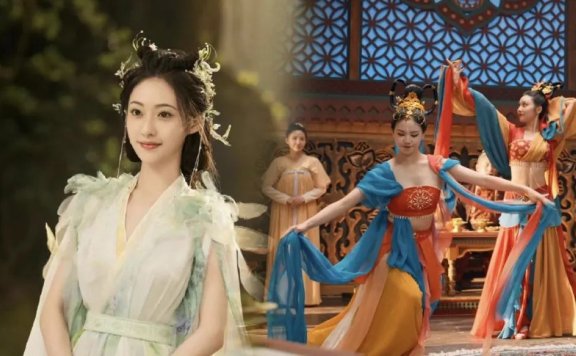
The recent trend of Shenxianfu (神仙服) has sparked enthusiasm for traditional clothing culture. But do you know the difference between Xianfu (仙服) and Shenxianfu? Defining Xianfu and Shenxianfu Here’s a clear distinction: Xianfu: Modernized Han-inspired fashion, blending traditional elements with contemporary aesthetics—think oversized sleeves, lace, and sheer fabrics to create a fairy-tale or princess vibe, often seen in fantasy dramas. Shenxianfu: Traditional Hanfu (汉服) with added accessories, rooted in historical paintings like Gu Kaizhi’s Nymph of the Luo River or Yuan Dynasty murals, featuring layered robes, feathered capes, and ornate sashes. Shenxianfu draws from ancient art, such as Tang Dynasty Eight Immortals paintings or Dunhuang frescoes, adhering to Hanfu’s foundational styles like 上衣下裳 (upper garment with skirt) and embellished with 垂髾 (flowing ribbons) or 璎珞 (beaded necklaces). Why It Matters Both styles celebrate Chinese heritage—Xianfu as a creative evolution, Shenxianfu as a historical homage. While debates persist among Hanfu enthusiasts, appreciating their distinct origins enriches cultural dialogue. What’s your take? Share your thoughts below! -

Wang Churan New Drama: The Story of Willow Boat
Recently, the TV series The Story of Willow Boat has been a huge hit. Wang Churan (王楚然), who plays the role of Liu Miantang, presents an image of grace and elegance. The whole drama features the charm of the Song Dynasty, and Wang Churan mainly wears Song - style costumes, mainly cross - collared shirts and skirts, and outer robes (褙子). She co - stars with Zhang Wanyi (张晚意), who plays Cui Xingzhou, in a romantic drama between an amnesiac female bandit leader and a prince in charge of suppressing bandits. However, this article focuses on her costumes rather than the plot. Before this, there have been many impressive characters in the field of Song - style costumes, such as Zhao Liying (赵丽颖), Liu Yifei (刘亦菲), Jiang Shuying (江疏影), and Zhou Ye (周也). Wang Churan has experienced various style changes in the ancient - costume drama field. It was not until The Clear Peace that people really remembered her as Zhang Beihan, a bold and passionate character. Then, her image as a courtesan in Joy of Life 2 helped her quickly gain popularity in the Song - style costume arena. Note that the Song - style costumes here mainly refer… -
Why Hanfu with Such Large Sleeves?
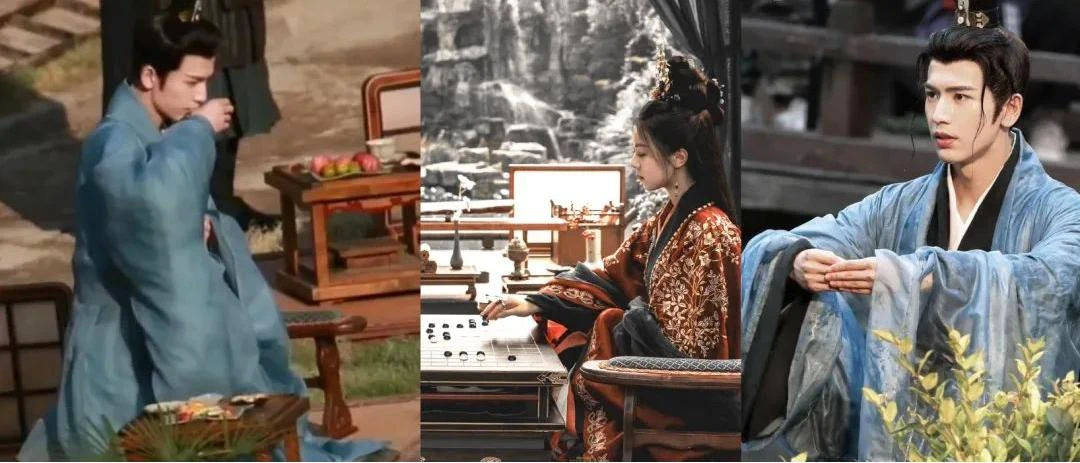
Sometimes when we see people in TV dramas wearing clothes with large sleeves while going out, having meals, dating, fighting, or sleeping, it just seems so awkward. Were all the ancient people's clothes with large sleeves? How inconvenient would it be to go to the toilet then? We usually use the term "broad robes and large sleeves" to describe the characteristics of Hanfu. "Broad robes" means the Hanfu has a loose fit, and "large sleeves" or "wide sleeves" refer to the wide sleeves. However, it should be noted that this is not a universal feature of Hanfu but rather a characteristic of Hanfu formal wear, used to highlight the wearer's status, such as the historical large-sleeved shirts and official uniforms. Except for formal occasions, people in daily life rarely wore such large sleeves. Various Sleeve Types of Hanfu If we simply categorize the sleeve types of Hanfu, there are many, suitable for any current daily occasion. To simplify, narrow sleeves are suitable for daily labor, martial arts, etc.; hanging beard sleeves, pipa sleeves, and straight sleeves are suitable for daily occasions without labor; short sleeves are suitable for ordinary outerwear and home wear in summer. Examples of Sleeve Width For… -

Li Qin's Hanging Hanfu Hairstyle
For those who love ancient - style makeup and hairstyles, whether you watched the show Nian Jin during the Spring Festival Gala or followed The Ballad of the Southern Kingdom before, you might be confused about why the characters always have a hanging hair strand on their foreheads. It seems a bit 'crazy' at first glance, but it's not the makeup artists' random choice. To understand this style, we have to start from the 'head'. This style can be seen in The Admonitions of the Instructress to the Court Ladies and The Illustrations of Women of Virtue and Wisdom. Its formal name is the Chui Shao (垂髾) hairstyle. Pei Yin's Collected Annotations on Records of the Grand Historian quotes Guo Pu as saying: 'Shao refers to the hair hanging from the bun.' That is, the bun is on the top of the head, some facing backward, and the hair ends are combed out from the upper part of the bun and hang down behind the earlobes. From various portraits, we can commonly see two types of this style: one is the Chui Shao at the back - of - the - head bun, and the other is the Chui Shao… -
Explore the Ancient Hanfu Pibo: the Draped Shawl
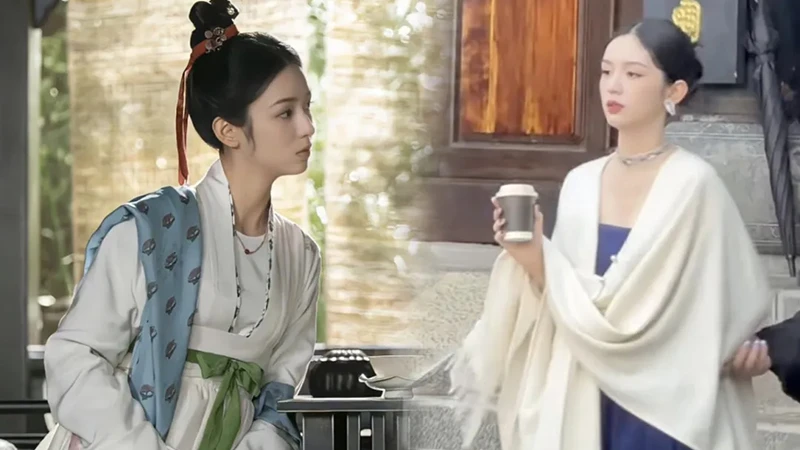
At a recent event, actress Zhou Ye (周也) stunned in a shawl draped in a way reminiscent of her character in Scent of Time (为有暗香来). This sparked a wave of admiration online: “Who knew a shawl could be worn like this? Fashion truly transcends time!” Indeed, the various ways modern shawls are styled bear a striking resemblance to the classical pibo (披帛) of ancient China. While today’s shawls come in a variety of materials and styles, their role in enhancing an outfit remains unchanged. And just like in ancient times, there’s more than one way to wear them. The Evolution of Draped Elegance The concept of draping fabric over the shoulders dates back thousands of years. As early as the Wei and Jin dynasties, terracotta figurines depicted women wearing short, wide scarves known as 帔 (pei) or 披 (pi). These early forms of pibo were not just functional but also stylish, much like modern scarves. A poetic reference from the Southern and Northern Dynasties describes a woman’s elegance: "Her step-shaking hairpin sways, and the red edges of her pei flutter." By the Tang Dynasty, the pibo had evolved into a long, narrow accessory, becoming an essential part of women’s fashion.… -
How Hanfu is Shaping Modern Trends in 2024
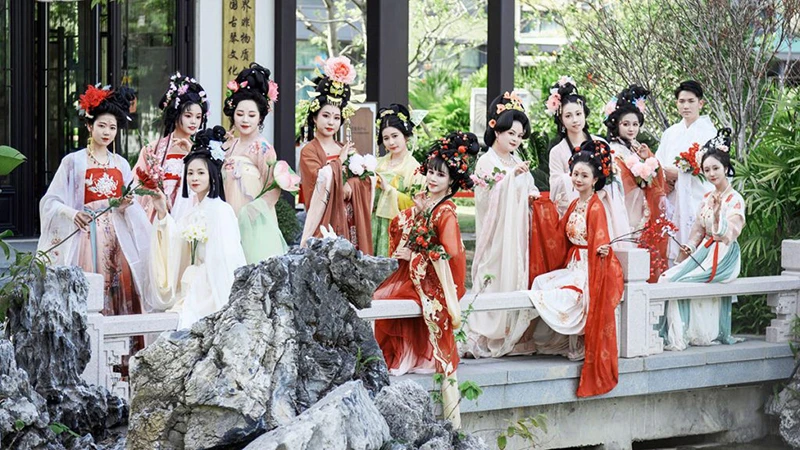
Hanfu, the traditional clothing of the Han Chinese, has experienced a remarkable resurgence. What was once a niche interest among history enthusiasts and cultural purists has now blossomed into a full-blown fashion movement. By 2024, the Hanfu market is not just thriving—it’s evolving, adapting, and influencing modern fashion in ways that few could have predicted a decade ago. The Hanfu Phenomenon The Hanfu revival isn’t just about clothing; it’s a cultural statement. Rooted in over 3,000 years of history, Hanfu represents more than just aesthetics—it’s a symbol of identity and heritage. In 2024, this traditional attire has found its way into the wardrobes of a diverse audience, from young students to working professionals, and even international fashion enthusiasts. The driving force behind this resurgence? A combination of government support, cultural pride, and the rise of China-chic (国潮). Policies promoting traditional culture, such as the "14th Five-Year Plan for the Development of Chinese Traditional Culture," have played a significant role in boosting public interest. Events like China Huafu Day (中国华服日) and Huazhao Festival (花朝节) have further cemented Hanfu’s place in contemporary culture, turning it into a symbol of national pride. The Market Boom: Numbers Don’t Lie The numbers speak for themselves.… -
Festivals & Hanfu: A Seasonal Style Guide
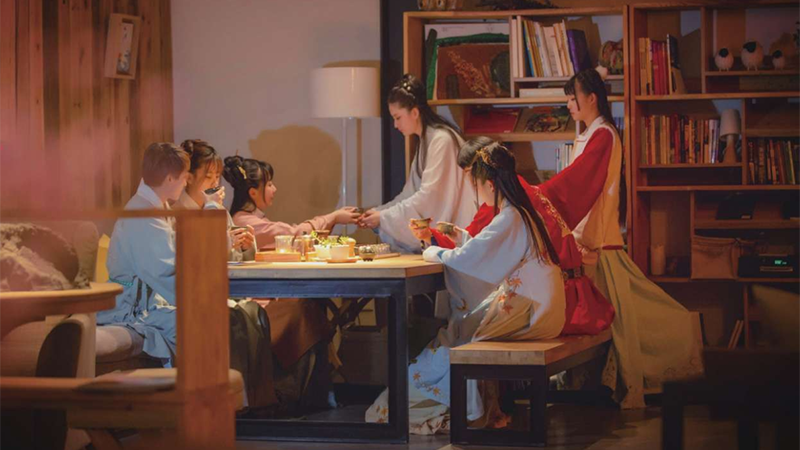
Ancient Chinese wisdom distilled clothing choices into simple truths: light robes for summer, padded jackets for winter. But look closer, and you’ll find a nuanced system—24 solar terms (节气), 72 micro-seasons (物候), and festivals each demanding specific colors and motifs. This wasn’t just practicality; it was a silent dialogue between humans and the rhythms of nature.. Chapter 1: Lunar New Year (春节) The tradition of wearing new clothes for the Lunar New Year is widespread in Chinese culture. Regardless of social class, people are expected to wear their finest attire to usher in the new year. For officials and those of higher status, formal ceremonial clothing is a must. The colors of these garments—red, blue, yellow, white, and black—offer a range of options, but certain traditions guide their use. White is typically worn for mourning, red symbolizes celebration, and yellow was reserved for emperors after the Tang Dynasty. Red, blue, and black are more common, with red standing out as a symbol of prosperity, joy, and good fortune. Throughout the New Year festivities, red decorations such as firecrackers, lanterns, and spring couplets (春联) fill the environment, creating an atmosphere of happiness and festivity. Red has become the hallmark of wealth… -

The Over-the-Top Sleeves of Historical Dramas: Style or Inconvenience?
If you've ever watched a historical drama and wondered how anyone in those flowing, oversized sleeves could manage to go about their daily life—let alone eat, fight, or even use the restroom—you're not alone. The sight of characters gracefully strolling through scenes, their sleeves billowing out like sails, can seem a bit comical at times. But are these oversized sleeves a true reflection of ancient attire, or just a modern cinematic effect designed for flair? Understanding the "Big Sleeve" in Historical Fashion The term "wide sleeves" or "broad sleeves" has become almost synonymous with traditional Chinese clothing, especially in popular depictions of Hanfu in historical dramas. But here's the first thing to clarify: this feature is not a universal characteristic of all Hanfu garments. Instead, it’s a defining element of the ceremonial or formal robes, often worn by people of high social status, such as royalty or high-ranking officials. The expansive sleeves were meant to highlight the wearer’s identity, power, and elegance, signaling a person’s nobility or importance. Outside of official events or ceremonies, though, everyday clothing was designed for practicality, not drama. The oversized sleeves often seen in TV shows are a more recent trend driven by visual aesthetics,…