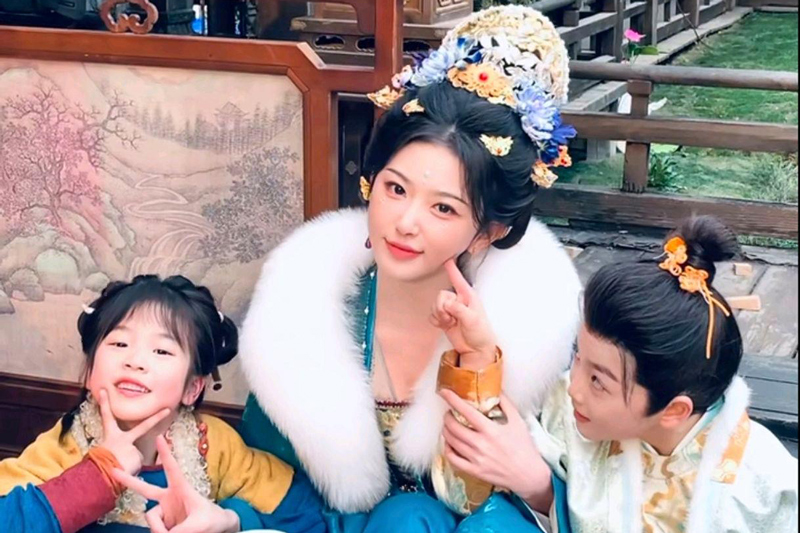
The Chinese drama series Pursuit of Jade (逐玉) has captured audience attention with its gripping secondary storyline featuring Qi Min (齐旻), an obsessive imperial prince from the lost Eastern Palace, and Yu Qianqian (俞浅浅), a merchant's daughter who becomes his captive. Unlike typical forced romance narratives where the female lead eventually succumbs to her captor's charms, Yu Qianqian maintains her emotional independence throughout. She never develops feelings for Qi Min, and in a shocking climax, she ultimately poisons him.
This subversion of genre expectations has sparked intense viewer discussion about what makes this particular love-hate dynamic so compelling. The answer lies in understanding Yu Qianqian's true identity—she is actually a modern woman who has traveled back in time, bringing with her values and perspectives that fundamentally clash with Qi Min's worldview.
The Hidden Clues Revealing Her Transmigrator Origin
The drama never explicitly states that Yu Qianqian is a transmigrator, but the evidence scattered throughout her behavior paints an unmistakable picture. Her speech patterns provide the first significant hint. She casually drops contemporary expressions like "nü hanzi" (女汉子) meaning tough girl, "zhu ya" (蛀牙) for cavity, and "kao pu" (靠谱) meaning reliable—phrases that would sound completely foreign to ancient ears. These linguistic slips reveal someone whose native linguistic environment is unmistakably modern Chinese society rather than historical China.
Perhaps most convincing is her revolutionary approach to commerce. When establishing herself as a merchant, Yu Qianqian insists on signed contracts for all business partnerships—a practice far ahead of her time. Her marketing strategies mirror contemporary discount schemes, offering tiered discounts for bringing multiple customers: five referrals for twenty percent off, ten referrals for twenty-five percent off, twenty referrals for thirty percent off. She even designs a brand logo for her shop, demonstrating sophisticated understanding of corporate identity that simply didn't exist in her apparent era. These business innovations reveal someone trained in modern capitalist practices rather than traditional merchant methods.
Why Modern Values Create Ancient Relationship Barriers
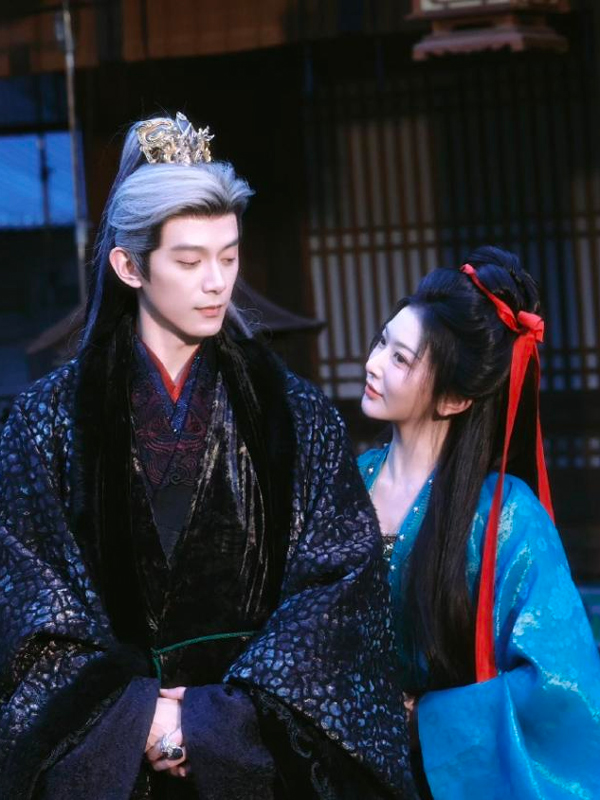
Yu Qianqian's transmigrator identity fundamentally shapes her response to Qi Min's obsessive pursuit. From her modern perspective, his behavior represents not romantic devotion but terrifying psychological abuse. The typical television portrayal of a powerful, handsome man forcibly taking a woman as his concubine, then loving her possessively, might appear seductive to viewers enchanted by the actors' chemistry and dramatic lighting. But Yu Qianqian sees through this romanticized surface to the horrifying reality beneath—a reality that would translate in contemporary terms to an abusive ex-partner tracking down a woman who escaped him while pregnant, threatening her child's life to force reconciliation.
Her modern consciousness rejects the patriarchal assumptions that underpin Qi Min's worldview. She does not view men as the center of women's existence, nor does she fear social judgment about her circumstances. This emotional independence stems from growing up in a society where women theoretically enjoy equal status and opportunities. The concept that a woman must eventually love her captor because he provides status and protection simply doesn't compute with her internalized values. She judges relationships based on mutual respect and genuine affection rather than transactional benefits.
Qi Min's fundamental character flaws become unforgivable when viewed through Yu Qianqian's modern ethical framework. He schemes to reclaim imperial power without regard for the thousands of soldiers and innocent civilians who would die in his political machinations. His willingness to sacrifice others for personal ambition reveals a moral vacuum that no amount of passionate devotion can fill. From her perspective, loving someone with such casual disregard for human life would mean complicity in his future atrocities.
The Psychological Horror Behind the Romantic Fantasy
When audiences step back from the dramatic production values and charismatic performances, Qi Min's pursuit transforms into something genuinely disturbing. Picture the scenario transplanted to contemporary settings: a woman escapes a controlling partner while pregnant, relocates to start fresh, builds a successful business from nothing, and raises her child in hiding. Then her abuser tracks her down, using their child's safety as leverage to force her return. This narrative contains no romantic elements whatsoever—only the stuff of nightmares and true crime documentaries.
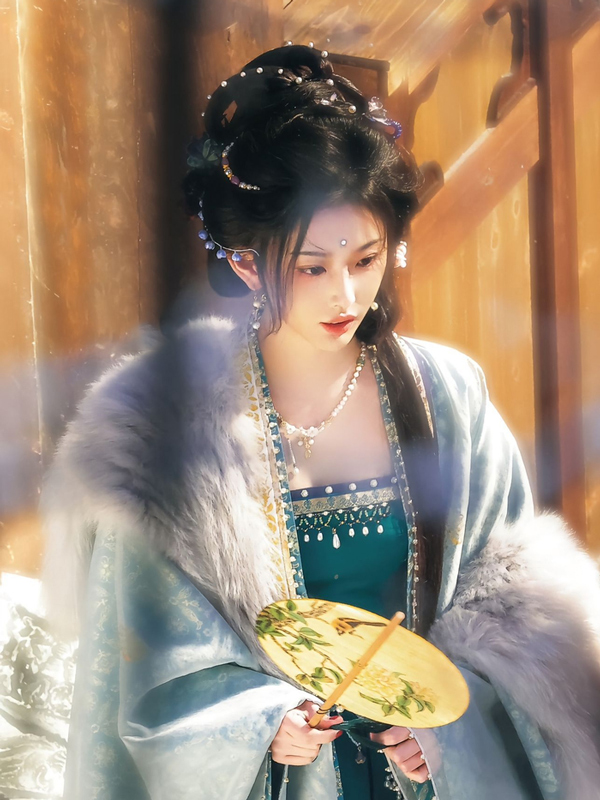
The drama's presentation cleverly masks this horror through aesthetic choices. Qi Min's character benefits from handsome casting, elaborate period costumes, and the inherent romanticism of imperial settings. These production elements create distance between viewers and the story's underlying darkness. Yu Qianqian, however, lacks this distance entirely. She experiences Qi Min's pursuit without the buffer of dramatic convention, feeling each threat as viscerally real. Her transmigrator status means she understands exactly how this scenario would play out in the modern world she remembers.
Her complete emotional immunity to Qi Min represents not coldness but psychological self-preservation. Yu Qianqian recognizes that developing feelings for someone who violated her autonomy, imprisoned her, and now threatens her child would constitute a form of Stockholm syndrome. Her modern psychological awareness protects her from falling into this trap. She sees Qi Min's obsession as the pathology it truly represents rather than mistaking it for passionate love. This clarity allows her to ultimately choose freedom and her child's safety over any illusory connection with her captor.
The secondary storyline in Pursuit of Jade succeeds precisely because it subverts the forced romance trope through Yu Qianqian's transmigrator perspective. Her modern consciousness functions as both plot device and thematic commentary, exposing the darkness underlying romanticized captivity narratives. By maintaining her emotional independence and ultimately choosing her own path, Yu Qianqian delivers a satisfying conclusion that respects both her character's integrity and the audience's intelligence. Her story resonates because it acknowledges what many dramas forget—that genuine love cannot grow in soil fertilized by coercion and watered with threats, regardless of how beautifully costumed or dramatically lit that garden might appear.