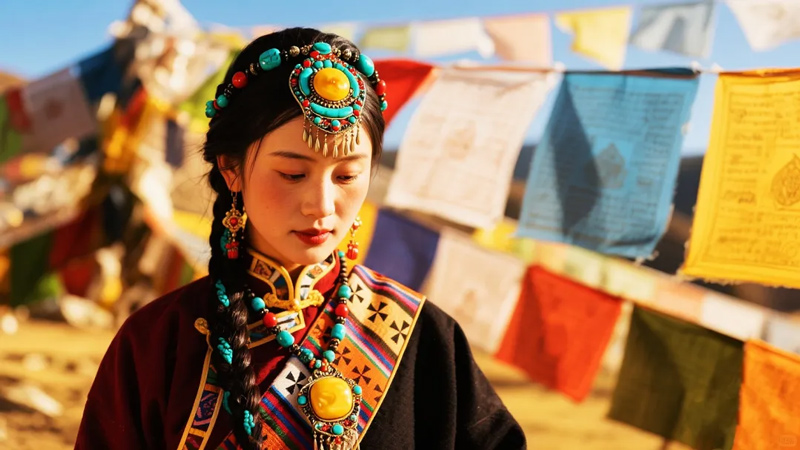
Walking through the highlands of Tibet, you might notice something striking: the local people often wear heavy, beautiful jewelry made of turquoise and amber. These aren't just simple decorations. For them, these pieces hold deep meaning, representing history, identity, and security. This tradition is not about fashion in the way many outsiders might think. It is a rich part of their cultural and practical life, developed over centuries. Unfortunately, this very tradition has also become a target for scams, leaving many well-meaning tourists with worthless imitations. Understanding the real story behind these adornments is the first step toward true appreciation.
Portable Wealth
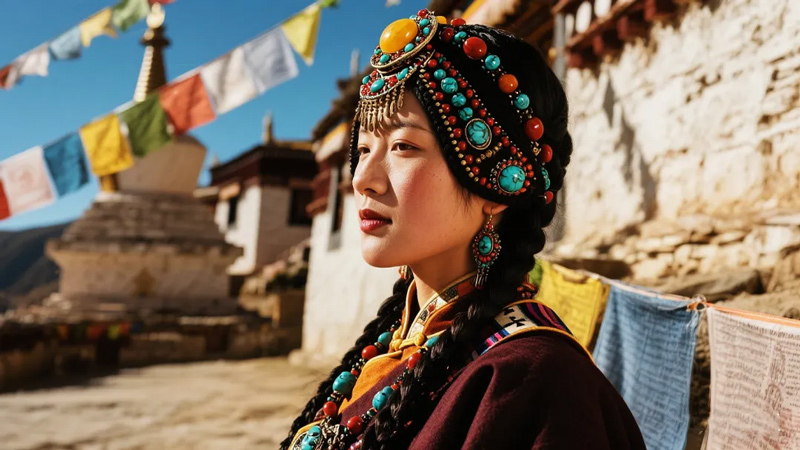
For nomadic Tibetan peoples, life is defined by movement. Following their herds across the vast plateau, they could not carry fixed assets or large amounts of cash. Instead, they invested their wealth in precious, durable objects like turquoise and amber. Wearing this jewelry was the safest way to transport their life savings. A single necklace or bracelet could represent a significant portion of a family's wealth, making it both a beautiful ornament and a practical financial strategy.
This jewelry also functions as a family archive, passed down through generations. Each piece carries the memories and history of those who wore it before. Scratches, changes in color, and wear patterns tell a story of a family's journey. When a daughter marries, her mother often gifts her the finest pieces from the family collection. This is not merely a transfer of wealth; it is a profound blessing, connecting the new bride to her ancestry and wishing her a prosperous future.
The value of these items is both cultural and material. In times of need, a family could use a piece of amber or turquoise as collateral for a loan or trade it for essential goods. This system of portable banking is a brilliant adaptation to a mobile lifestyle. It underscores a deep understanding of value that is intrinsic and lasting, far beyond the fleeting nature of paper currency.
Cultural Identity
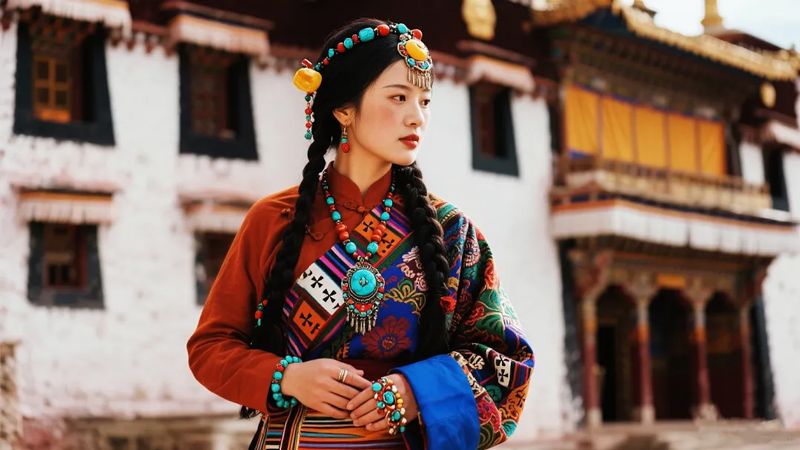
The vibrant traditional dress of the Tibetan people is a spectacle of color and craftsmanship. The brilliant blue-green of turquoise and the warm, golden hue of amber are perfectly suited to complement these outfits. These stones are not random choices; their colors are deeply symbolic, representing the sky, water, and earth—elements sacred in their culture and environment.
These gemstones are often set in Tibetan silver or gold, using unique local metalworking techniques. The resulting style is distinctively bold and organic, often described as "rustic" or "earthy." This aesthetic is a conscious rejection of delicate refinement, valuing instead a beauty that is powerful, natural, and connected to the land. The jewelry is a key component of their national dress, worn with pride during festivals, ceremonies, and daily life.
Wearing these stones is an act of cultural preservation. In a rapidly modernizing world, it is a visible, tangible declaration of identity. For many, putting on a piece of inherited turquoise is like wrapping themselves in the history and spirit of their people. It is a daily reminder of who they are and where they come from, making each piece a cherished heirloom.
Tourist Traps
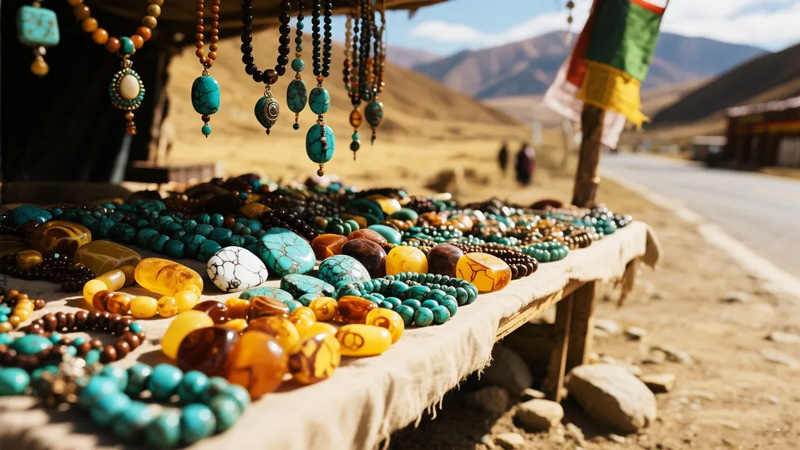
The deep cultural significance of these gems has created a lucrative market for counterfeits. Unscrupulous vendors, often positioned near tourist sites, exploit visitors' desires for an authentic piece of Tibet. They use high-pressure sales tactics and weave convincing stories about the origins of their goods, which are often cheap plastic or resin imitations. Many tourists, unaware of what to look for, fall victim to these scams.
One woman from Sichuan, working in Lhasa, was thrilled to purchase what she believed was a genuine amber bracelet. A local friend vouched for its authenticity, and she paid over 2000 yuan for it. Later, she discovered it was merely heat-treated lower-grade material, worth a fraction of the price. She learned that the "local friend" was part of the scheme, preying on her trust and desire for a real treasure.
Another common tactic is the forced sale. A young man browsing a roadside stall picked up a turquoise bracelet to ask its price. The vendor immediately demanded 800 yuan. When the man tried to politely return it, the seller became aggressive and insisted he had to buy it since he had touched it. Feeling intimidated and cornered, the young man paid. He later had it checked at a reputable shop in his hometown and was told it was a complete fake. These stories are sadly common warnings for travelers.