

Dilraba's evolution from a celebrated beauty to a veritable makeup muse encapsulates a fascinating journey of artistic refinement. While her striking features initially captivated audiences, early makeup styles often relied more on her natural assets than on technical finesse, leaving admirers unable to replicate her look. This changed profoundly through her collaboration with visionary makeup artist Jin Helong (金鹤龙). His expertise ushered in a new era of sophistication, transforming her face into a canvas of intentional, impactful design.
The hallmark of this refined "Dilraba-Style Makeup" is a series of strategic, deliberate choices: dimensional contouring that sculpts without heaviness, masterful textural contrast between luminosity and matte elements, and saturated color placed with precision. This approach, prioritizing skin clarity and soft, natural arches, has made her looks both aspirational and remarkably reproducible. The following analysis delves into the specific architectural shifts—in facial contouring, nasal refinement, eye reshaping, and lip enhancement—that define this iconic style, illustrating how technical mastery can elevate even the most innate beauty into a universally emulated art form.

What is Dilraba-Style Makeup?
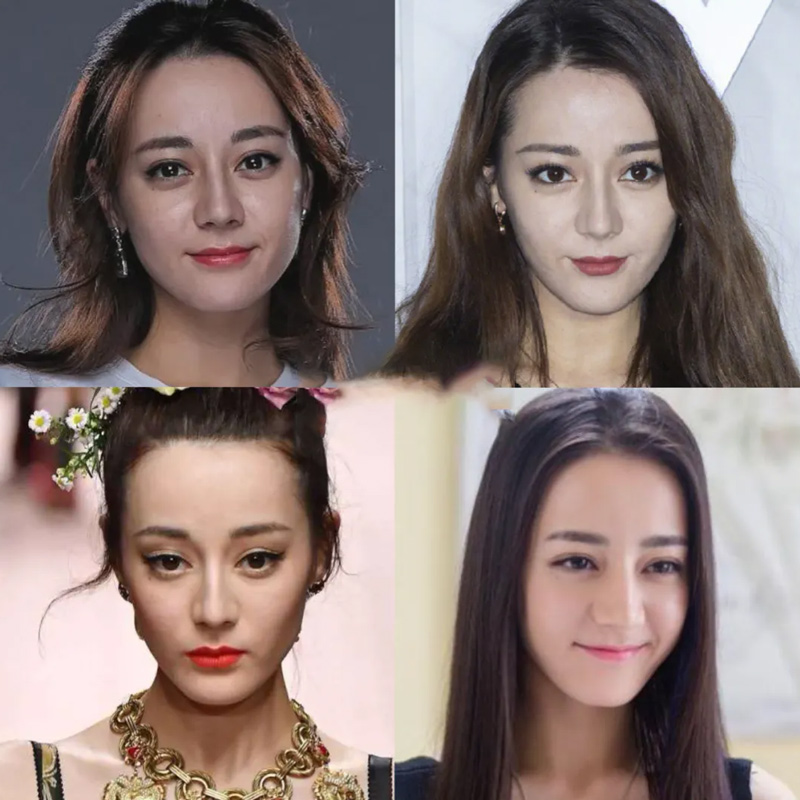
Dilraba's status as a visual icon is undisputed, yet her journey to makeup mastery reveals a fascinating transformation. Early in her career, her looks often relied heavily on her striking features rather than refined cosmetic techniques. These initial styles, characterized by unpolished application, failed to inspire widespread imitation despite her popularity. The disconnect was evident—aspiring admirers struggled to replicate the magic, resulting in unconvincing attempts.
This dynamic shifted dramatically with her collaboration with makeup artist Jin Helong. His influence propelled her aesthetic into a new realm of sophistication. The change wasn't subtle; it was a definitive elevation in precision and artistry. Jin's signature approach brought a clarity and finesse previously absent, turning Dilraba's face into a canvas for intentional, impactful design.

Two recent looks, widely emulated online, exemplify this refined Jin Helong aesthetic. The distinctiveness lies in specific, deliberate choices. Key differences include a focus on dimensional contouring that enhances bone structure without heaviness, and a mastery of textural contrast—juxtaposing luminous skin with precisely defined matte elements. The use of saturated color placement became more strategic, often concentrating intensity on either the eyes or lips rather than diffusing it. Eyebrow definition evolved towards softer, more natural arches framing the eyes effectively.
Finally, an emphasis on skin clarity replaced opaque coverage, allowing her natural luminosity to shine through as the foundation of the look. These technical refinements, executed with Jin's signature precision, created looks that were both aspirational and remarkably reproducible, sparking the current wave of successful imitations.
Specifically, what is the difference in this makeup? I have picked up a few points that I think are very important in the following text.

Facial Architecture Evolution
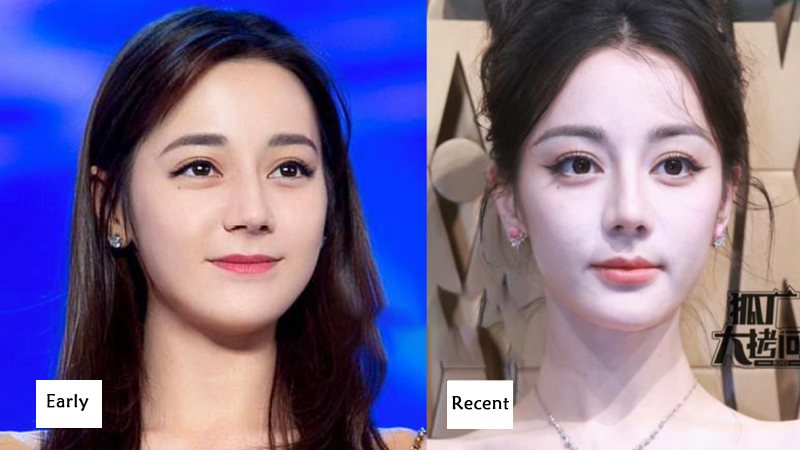
Early in her career, she possessed a notably fuller face shape, earning her the affectionate nickname "Plump Di". This softness contrasted sharply with her current aesthetic. Presently, her makeup meticulously sculpts pronounced bone structure, creating stark definition between frontal and profile views. This sharp contouring achieves a visually smaller, remarkably dimensional face.
her facial structure isn't naturally narrow; substantial features occupy space. Moderate cheekbone width, combined with previously fuller cheeks, contributed to a rounded silhouette. The visual shift from then to now is dramatic. Strategic contouring now refines and tapers the lower cheek area. Makeup artists deliberately apply shading to optically narrow the cheekbones.
The technique involves creating an illusion: actual cheekbone width versus the perceived width achieved through strategic blush or bronzer placement. Shading is applied inward from the natural cheekbone prominence. This visual trickery compresses the face laterally, enhancing depth and amplifying her striking presence. The effect undeniably creates a narrower facial impression than before.
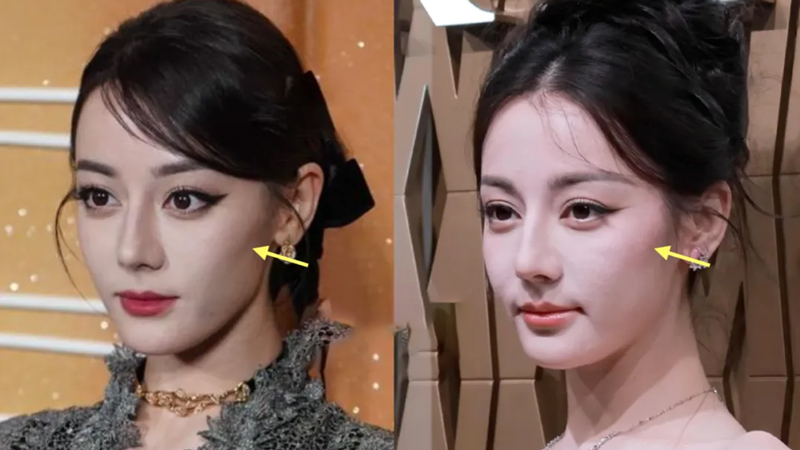
Failure to narrow this area visually can lead to an unintended consequence: excessive tapering towards the chin creates a sunken appearance in the mid-face. The intensity varies significantly with the makeup style. Subtle looks utilize sheer, cool-toned blushes for soft definition. Dramatic occasions warrant stronger contouring products for pronounced sculpting.
This approach particularly benefits those with prominent cheekbones, noticeable temple hollows, or flatter facial planes. When executed well, it can visually reduce facial width substantially – often by half a size or more. Observing makeup recreations reveals a pattern: individuals with naturally wider faces consistently achieve a noticeably slimmer look post-application.
However, its value diminishes for those with inherently narrow bone structure in the cheek region. Applying heavy contouring here risks making features appear crowded or unnaturally compressed. The technique isn't universally flattering; its success hinges entirely on the underlying architecture.

Refining Nasal Definition
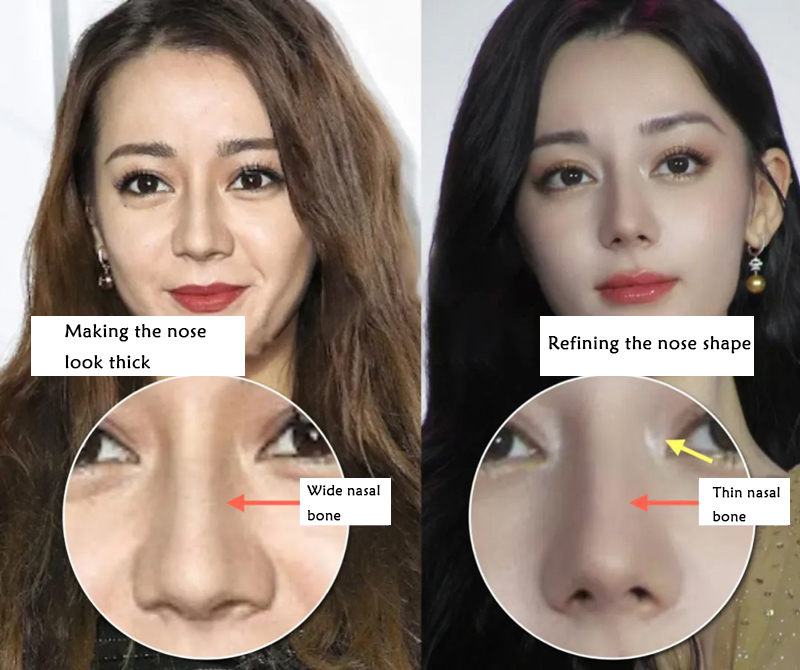
Widespread commentary suggests she avoids nose contouring, leading many to assume her features require no enhancement. This interpretation misses crucial nuance. While nose shadow might not suit her, refinement occurs through alternative methods. Even striking beauty benefits from targeted adjustments.
Early appearances sometimes conveyed a certain textural roughness compared to her current polished image. This wasn't solely about eye makeup precision. A prominent, robust nasal bridge contributed significantly to this perception. Its strong presence added a distinctly angular quality to her features.
For individuals with substantial nasal bone structure, traditional contouring often proves counterproductive. Adding shadow along the sides increases visual weight, making the nose appear larger, not smaller. her transformation relies instead on strategic inner-corner highlighting and precise concealing techniques to optically slenderize the bridge.
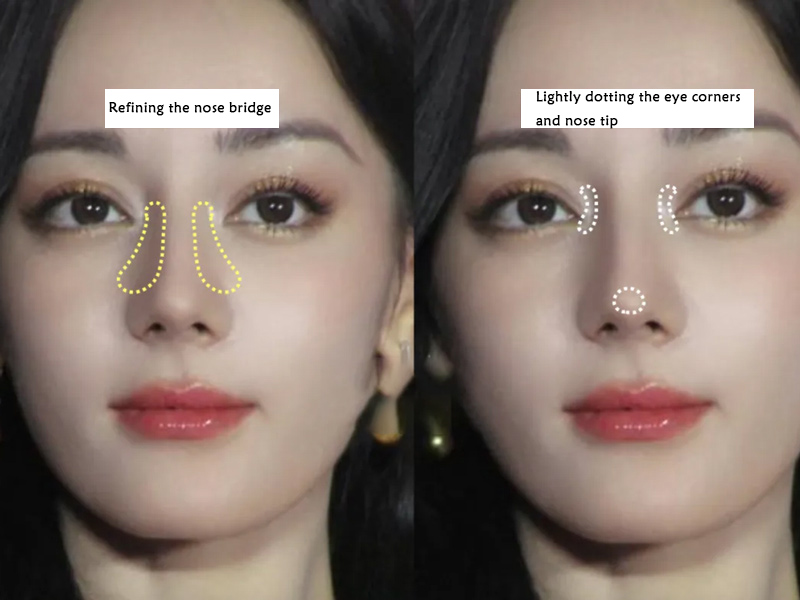
The specific method involves using a light-toned concealer slightly lighter than the skin tone, applied centrally along the nose bridge. This creates an "optical push" effect, drawing the eye inward. The result is a nose that appears more delicate and refined. Crucially, this technique also increases the perceived space between the eyes, alleviating any sense of congestion in the central face.
This nasal refinement was pivotal in enabling her to embody more intricate, delicate styles. The principle extends beyond celebrity. Anyone experiencing a broad nasal bridge or feeling their eyes sit too close together (due to narrow inter-eye distance or a wide nose) can benefit. Creating that central luminous strip offers breathing room.
Consider another prominent figure: she previously exhibited similar challenges – a thicker nasal bridge contributing to a crowded eye area. Recent makeup strategies, focusing on this central highlight, yield a narrower, more elegant nose and a less cramped central zone. This approach suits her features independently, not merely as imitation. However, caution is needed; if the primary concern is wide nostrils, over-narrowing the bridge can exaggerate their appearance. Technique must match the specific structural need.

Crafting Expressive Eyes
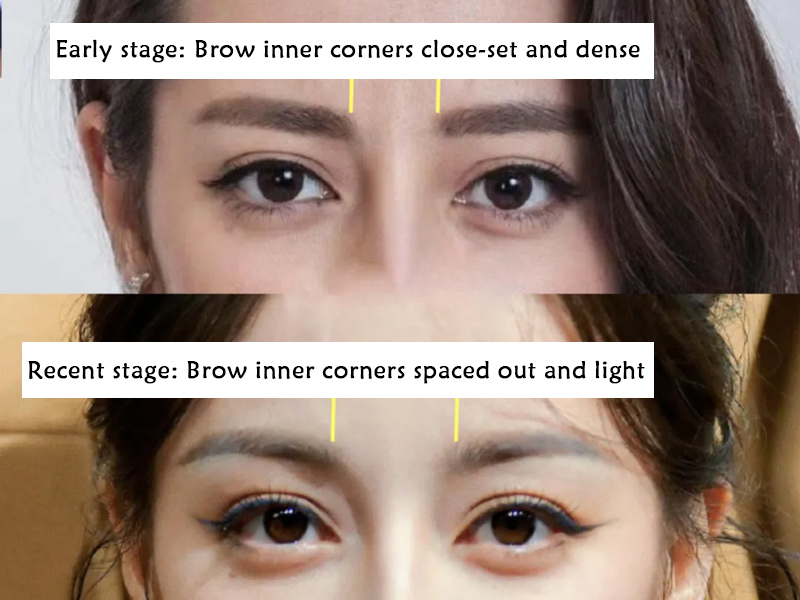
her large eyes were always a signature feature, yet their sharp inner corners and straighter shape initially lent a certain intensity that could read as stern. Some early styling choices amplified this effect. The evolution lies in achieving a captivating, doll-like softness. Makeup now maximizes the eye size while tempering any harshness, resulting in exquisite, inviting femininity.
How is this transformation achieved? A pivotal change involves abandoning heavy, blocky brows. Current styles favor finer, softer, more breathable brows with distinctly curved, graceful lines. Careful attention is paid to brow placement. Given the naturally close-set eyes, positioning the brow starts slightly further out than the inner eye corner is essential for visual comfort.
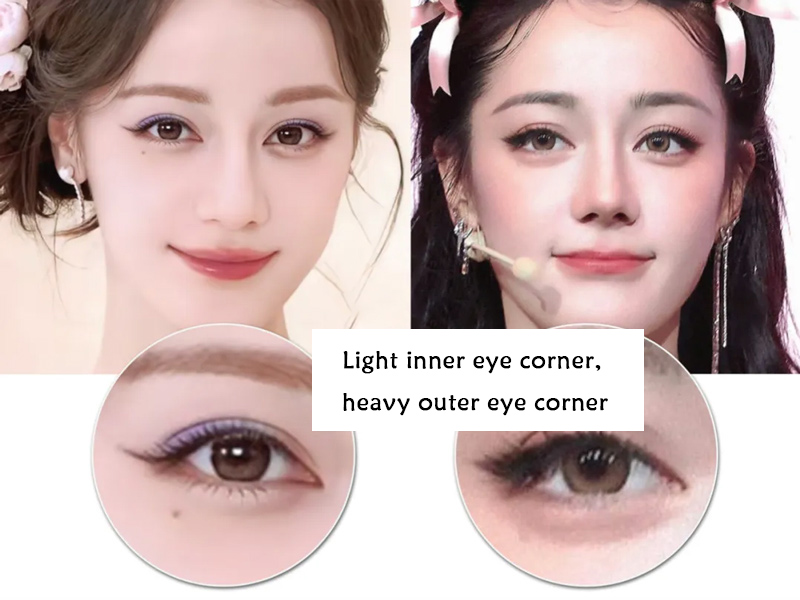
This outward brow placement slightly softens the prominence of the nasal bridge. However, her strong bone structure accommodates this well. Crucially, the brow shape meticulously follows the underlying orbital bone structure – a foundational principle for achieving dimension without harshness. The brows flow seamlessly into the nasal contour.
The eye makeup strategy places maximum emphasis on the outer sections. Weighting the outer corners visually pulls attention laterally, counterbalancing the central density and achieving greater facial equilibrium. Another figure, known for dramatic eyes, also favors strong outer corners, but for a different structural reason: balancing wider temples. her eye shape required less fundamental reshaping.
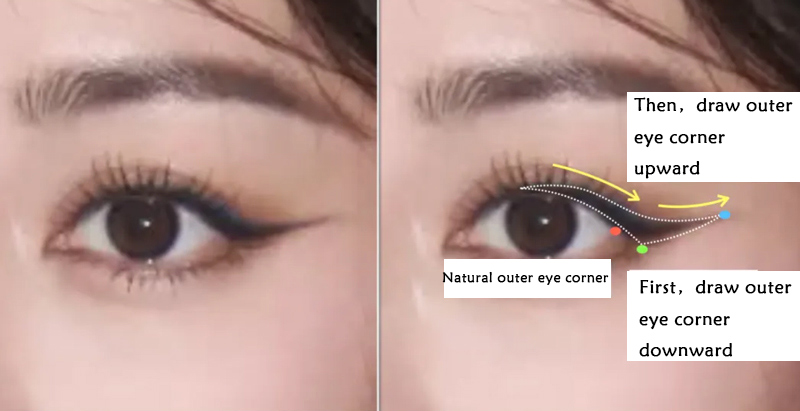
Her eye shape, characterized by sharp inner corners and a less curved upper lid, naturally leaned towards intensity. Therefore, reshaping became paramount. Makeup artists meticulously craft the outer eye line: beginning with a subtle downward dip near the outer corner before lifting upwards. This unique "dip and lift" combines softness (the dip) with playful energy (the lift).
Excessive lift or overly straight lines reintroduces hardness, sometimes leading to unsuccessful looks. The lower lash line is equally transformed, reshaped into a gentle, rounded S-curve using liner or shadow. This comprehensive approach – curved brows, dipped-and-lifted upper lash line, softened lower lash line – replaces innate sharp angles with flowing, emotive lines. Previously, a neutral expression could appear cool or detached. The restructured eyes now convey nuanced feeling and connection.

Strategic Lip Enhancement
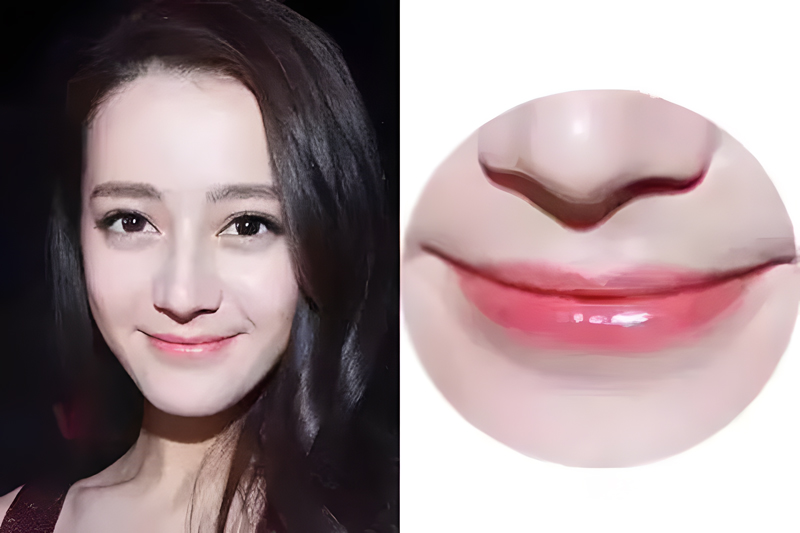
Beyond the eyes, lip styling shows another point of sophisticated adaptation. Both figures frequently appear with glossy, reflective finishes. While visually similar, the underlying goals and techniques differ subtly. her naturally thinner lips prompted a strategy focused on uniform enlargement. Lip products carefully overdraw the natural lip line, emphasizing a soft, curved shape to enhance femininity.
Even when optically enlarged, thinner lips often retain a characteristic flatness or slight inward curve, lacking the inherent plumpness of fuller lips. This inherent texture makes glossy finishes particularly effective. High-shine glosses or lacquered lip tints create surface reflection, mimicking the light bounce of naturally full lips, achieving a convincing illusion of volume.
The other figure's lip enhancement addresses a different concern: a longer space between nose and mouth. Consequently, makeup artists often extend her upper lip line slightly upwards at the cupid's bow. This vertical adjustment counteracts the length visually. Glossy textures also benefit her, adding youthful vibrancy and reducing potential heaviness from matte formulas.
However, her naturally fuller lip volume requires careful product selection. Highly reflective glosses combined with very light or bright colors can sometimes create an overly swollen appearance. Achieving the right balance – sufficient color saturation with moderate shine – yields the most harmonious result. Deep, rosy tones paired with a controlled gloss level often work best.
Replication attempts sometimes falter by neglecting individual lip anatomy. Applying generic "plumping" techniques without considering natural lip thinness or philtrum length leads to less impactful outcomes. The core principle emerges clearly: effective transformation requires understanding one's unique features. Borrowing elements is valuable, but direct copying rarely yields optimal results.
The motivation to emulate often stems from perceptions of innate, unchallenged beauty. Another figure openly discussed periods of self-doubt regarding appearance. Yet, compelling moments reveal distinct, equally valid beauty expressions. True enhancement involves self-discovery and strategic accentuation of inherent attributes, not chasing an external ideal. The artistry lies in the bespoke application.


In Conclusion

Dilraba’s transformation from a naturally striking beauty to an influential makeup icon represents a masterclass in the power of intentional cosmetic artistry. Her collaboration with visionary artist Jin Helong marks a definitive turning point, shifting the focus from innate features to technical sophistication—where every brushstroke serves a purpose. This refined "Dilraba-Style Makeup" is built on principles of dimensional sculpting, textural harmony, and strategic color use, creating looks that are not only breathtaking but also eminently reproducible.
Through deliberate modifications in facial contouring, nasal refinement, eye reshaping, and lip enhancement, her makeup now artfully enhances without overpowering, balancing structural definition with softness and clarity. What makes this evolution truly significant is its democratization of high-level technique: it demonstrates that makeup can be both an art form and a toolkit, allowing individuals to reinterpret—not merely replicate—beauty ideals. Ultimately, Dilraba’s journey underscores that true makeup mastery lies in understanding unique facial architecture and enhancing it with precision and creativity, inspiring a new generation to approach beauty with both aspiration and intelligent adaptation.
