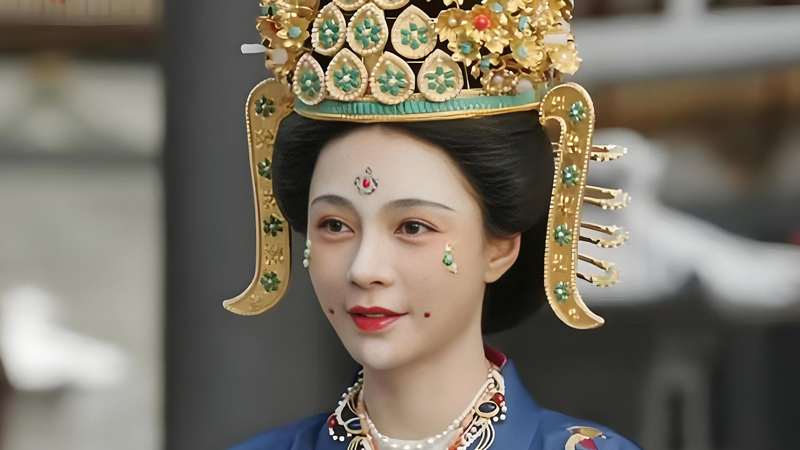
A recent scene in the Chinese historical drama Flourished Peony (锦绣芳华) ignited social media: actress Shen Mengchen (沈梦辰), portraying Imperial Consort Huangfu Lingge, appeared wearing a headdress so magnificently large it dwarfed her head. Dubbed "the crown bigger than her head," this visual spectacle instantly captured the public's imagination, sparking widespread fascination with the Tang Dynasty aesthetics meticulously recreated in the series. The drama’s costume and makeup design team has undertaken a significant task, interpreting historical grandeur for the modern screen.
Shen Mengchen’s portrayal, radiating imperial authority with every subtle movement, offers a glimpse into the sophisticated beauty standards and rigid hierarchical symbolism embedded within the Tang Dynasty’s courtly attire, particularly focusing on the extravagant headwear, the stately robes, and the distinctive facial adornments that defined an era.
The Towering Floral Crown
The most arresting element of Consort Huangfu Lingge's ensemble is undoubtedly the monumental Huashuguan (floral tree crown). This architectural masterpiece of hair adornment features a breathtaking assembly of pearls, kingfisher feathers, gold hairpins, glittering gemstones, and swaying tassels. Its multi-layered construction creates profound depth and dimension, catching light dynamically. While visually overwhelming, the crown serves a crucial narrative purpose: instantly communicating the character's elevated status and the immense power concentrated within the Tang imperial court. Far from being a flight of fancy, this design finds grounding in archaeological discovery.
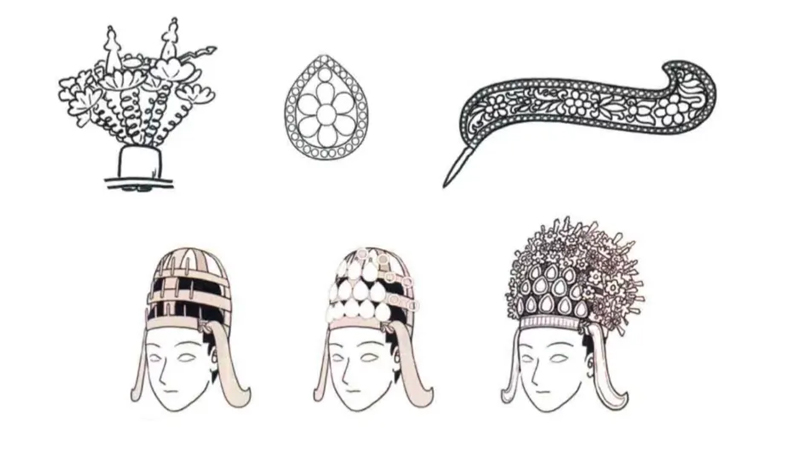
The inspiration stems directly from the exceptionally well-preserved crown excavated in 2013 from the tomb of Empress Xiao, consort of the Sui Dynasty Emperor Yang. This extraordinary artifact comprises thirteen "floral trees" – intricate assemblies featuring wooden bases, bronze stems, and spiraled branches topped with gold-copper floral sockets, glass stamens, and miniature stone figures. Additional elements included twelve teardrop-shaped Baodian (宝钿) ornaments fixed to the front, two S-shaped Bobin (博鬓) panels framing the temples, twelve bronze hairpins, and an underlying metal framework. This specific combination of Huashu (花树), Dian, and Bobin draws upon depictions found in the tomb murals of Prince Li Shou (dated to the Zhenguan era, 5th year), representing the formal attire of high-ranking noblewomen.
Robes of Rank: The Zhaiyi
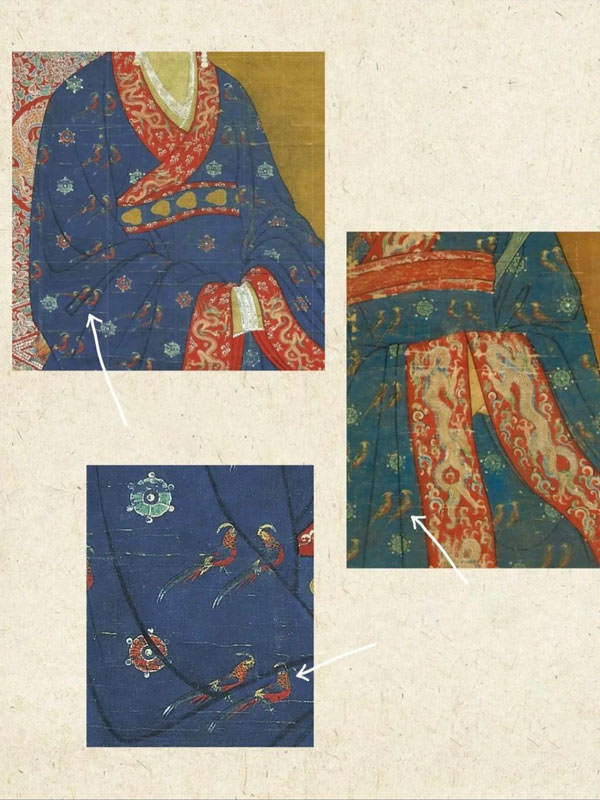
Complementing the imposing crown is Consort Huangfu’s stately robe, clearly inspired by the traditional Zhaiyi (翟衣), the highest formal attire for women in ancient China. The costume manifests a deepqing (a dark blue-green hue associated with nobility) in a classic Shenyi cut – a one-piece garment with a cross-collared, right-over-left closure and expansive sleeves flowing to the ground, projecting solemnity and dignity. The most significant feature, anchoring its identity as a Zhaiyi derivative, is the prominent display of pheasant patterns woven or embroidered onto the fabric. These long-tailed pheasant motifs were the definitive hallmark of the Zhaiyi, strictly regulated across dynasties to signify rank.
The Rites of Zhou (周礼) mentions royal consorts wearing "huiyi" decorated with pheasant feathers; the Tang Six Statutes detail the Empress’s huiyi adorned with twelve rows of pheasant patterns; the Code of Great Ming Dynasty (明会典) further codified the system, specifying deep blue Zhaiyi with nine rows of pheasant patterns for Imperial Consorts. While Flourished Peony doesn’t slavishly replicate any single dynasty’s exact specifications, the deliberate use of the pheasant motif, combined with the deep color and formal structure, effectively communicates Huangfu Lingge’s elite position within the court hierarchy.
The costume designers have adeptly translated the core symbolic language of historical Zhaiyi into a visually compelling television aesthetic that resonates with contemporary audiences while respecting historical context.
The Painted Face: Tang Dynasty Makeup
Completing the transformation into a Tang noblewoman is the distinctive facial artistry. Consort Huangfu Lingge’s makeup prominently features the classic "Three Whites" technique. This involved applying thick white powder specifically to the forehead, the bridge of the nose, and the chin, creating stark highlights that dramatically sculpted the face, enhancing dimensionality under soft lighting – a signature look of Tang aristocratic beauty immortalized in tomb murals like those of Princess Yongtai (永泰) and Tang figure paintings like Palace Concert. Beyond the foundational base, intricate facial decorations were paramount.
The forehead is graced with a Huadian. Historically evolving from floral designs applied in earlier dynasties, Tang Huadian were often crafted from delicate materials like gold leaf, fish scale, or mica, cut into shapes ranging from birds and flowers to intricate geometric patterns. Shen Mengchen’s character wears a central, vibrant cinnabar dot – a potent symbol of Tang opulence – surrounded by elaborate green patterns, possibly suggesting feather inlays or mineral pigments like malachite, creating a striking red-green contrast emblematic of the era’s bold aesthetic.
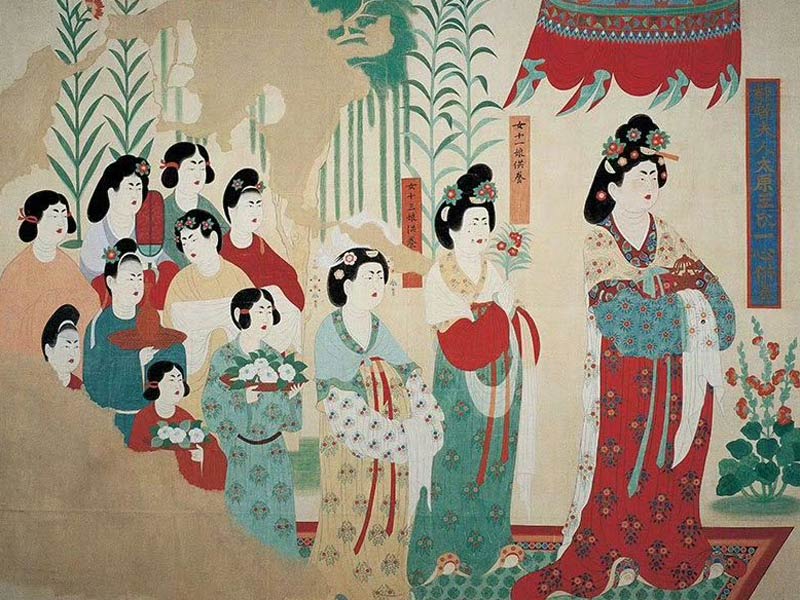
Enhancing the cheeks are Mianye (面靥)– small decorative dots traditionally applied near the dimples. While historical Tang examples found in art sometimes depict whimsical shapes like birds or stars, Flourished Peony opts for a more restrained interpretation, using simple red dots or tiny teardrop shapes reminiscent of those seen on court ladies in Princess Yongtai’s tomb murals. This selective approach demonstrates the makeup team’s strategy: distilling the most recognizable and visually impactful elements of Tang facial adornment.
By focusing on the defining Sanbai base, a bold central Huadian, and subtle Mianye, they achieve a look that instantly reads as "Tang Dynasty court beauty" to a modern viewer, balancing historical authenticity with the demands of clarity and elegance on screen. The overall effect is one of sophisticated artistry, where every painted detail reinforces the character's status and the drama’s immersive recreation of Tang splendor.