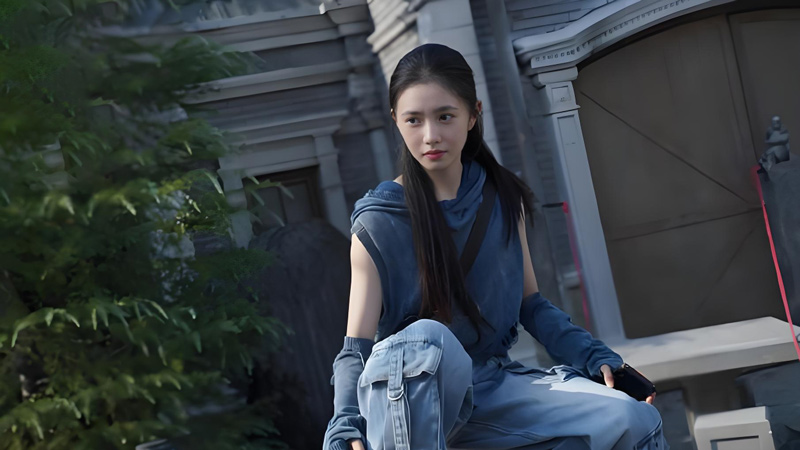
The closing scenes of Qi Gen Xin Jian linger not just for its mystical plot, but for Liu Haocun’s rugged-yet-elegant workwear ensembles. As Mu Dai (木代) navigating urban alleys and ancient secrets, her pocket-laden trousers and structured jackets became symbols of freedom. This summer, workwear sheds its purely utilitarian image, morphing into a canvas for self-expression. No longer confined to "tomboy" aesthetics, modern iterations fuse functionality with subtle femininity, offering wearers both comfort and attitude. From Hailey Bieber’s parachute pants to military-inspired cropped cuts, the trend embraces diversity in form and spirit.
Utility Reborn
Workwear’s origins trace back to 19th-century labor needs. Durable fabrics like canvas resisted wear, while oversized pockets held tools for miners and mechanics. Its transition from factory floors to fashion runways began when designers recognized its raw authenticity. Today’s iterations retain pragmatic elements—deep pockets, robust stitching—but refine silhouettes for metropolitan life. Lightweight nylon replaces heavy twill, and articulated knees allow effortless movement.
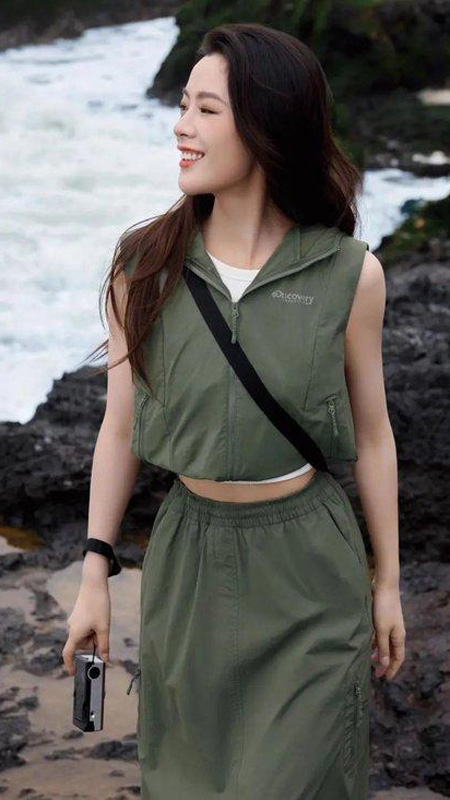
The cargo pant remains the trend’s cornerstone. Its multiple pockets and straight-leg cut flatter all body types, camouflaging insecurities while elongating frames. Avril Lavigne’s iconic pairing with band tees in the 2000s demonstrated its rock-edge potential. Now, cropped versions dominate, as seen in military-green seven-eighth lengths that pair seamlessly with tank tops. These offer ventilation for humid days without sacrificing the signature utilitarian vibe.
Parachute pants bridge sportswear and workwear. Their tapered ankles and gathered waists create volume up top, narrowing toward footwear. Styled with minimalist crop tops, they balance streetwise edge and comfort. The hybrid design suits everything from cafe outings to music festivals, proving workwear’s adaptability across contexts.
Color Alchemy
Traditional workwear palettes revolve around earthy neutrals: khaki, olive, charcoal, and coffee. These hues mirror natural landscapes, ensuring versatility. Monochromatic outfits in varying shades—charcoal trousers with heather-gray tees—achieve cohesion through texture contrast. Matte nylon against ribbed cotton adds depth without color chaos.
For warmer days, integrate ivory or stone tones. A sand-colored vest layered over a slate tee prevents darker looks from feeling heavy. This approach maintains the aesthetic’s grounded essence while brightening it seasonally. M Yang’s khaki shirt and forest-green skirt ensemble exemplifies tonal layering; leather boots deepen the richness, proving neutrals needn’t be bland.
Daring colorists experiment with controlled contrasts. Pair terracotta shorts with teal tops, or use accessories like mustard bags against navy jumpsuits. These combinations energize the look while honoring workwear’s pragmatic roots. The key lies in limiting hues to three per outfit—ensuring boldness without clutter.
Signature Styling
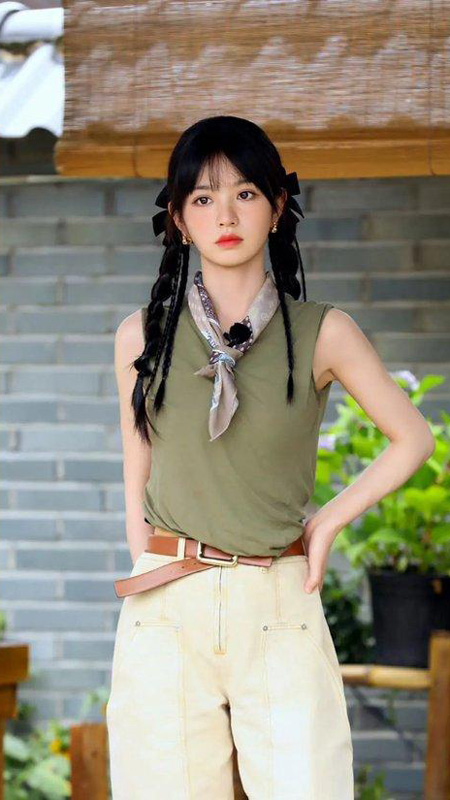
Workwear’s magic lies in customization. Belts cinch loose silhouettes, defining waists over billowy shirts. Silk scarves soften jackets’ rigidity, as Tian Xiwei (田曦薇) demonstrated by knotting one around her neck. These touches preserve utility while inviting femininity. Footwear choices further personalize: chunky boots amplify toughness, while strappy sandals introduce breezy contrast.
Unexpected pairings defy expectations. Zhou Ye (周也) merged ethereal lace tops with olive cargo pants, balancing delicacy and grit. Similarly, fishnet stockings under ripped-hem trousers nod to grunge nostalgia. Even flip-flops gain edge alongside camouflage shorts—proof that workwear thrives on stylistic friction.
Accessories anchor narratives. Wide-brimmed raffia hats evoke nomadic romance, especially when color-matched to tops. Chunky silver jewelry or tactical watches punctuate minimal outfits. For apres-sunset coolness, oversized sunglasses and chain necklaces reference 90s hip-hop, illustrating workwear’s cultural fluidity.
Beyond Boundaries
Workwear’s evolution rejects rigid definitions. Liu’s Qi Gen Xin Jian wardrobe fused warrior pragmatism with modern flair, inspiring fans to reimagine their pieces. A mechanic jacket becomes a dress when belted; parachute pants transform into tailored culottes with precise cuffing. This adaptability reflects today’s fashion ethos: wearers, not trends, dictate style.
Post-apocalyptic influences further stretch creativity. Distressed knits draped over cargo pants, as modeled by Naza, merge survivalist themes with high fashion. Frayed hems and asymmetrical layers suggest rebellion against perfection. Such looks thrive in urban settings, where concrete jungles meet creative resilience.
Ultimately, workwear is less about garments than perspective. It champions autonomy—choosing comfort without compromising character, blending eras, or mixing "masculine" and "feminine" elements. As temperatures climb, its breathable fabrics and modular designs offer practical panache. Like Mu Dai traversing dual worlds, wearers today navigate life’s demands with pockets full of possibility and silhouettes built for adventure.