
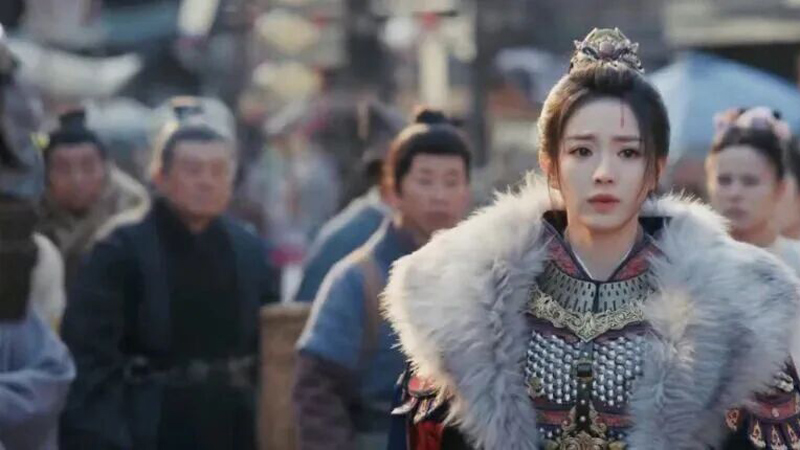
Why Does He Let Her Face the Emperor’s Gate Alone? The Brilliant, Brutal Logic of Love in Pursuit of Jade (逐玉)
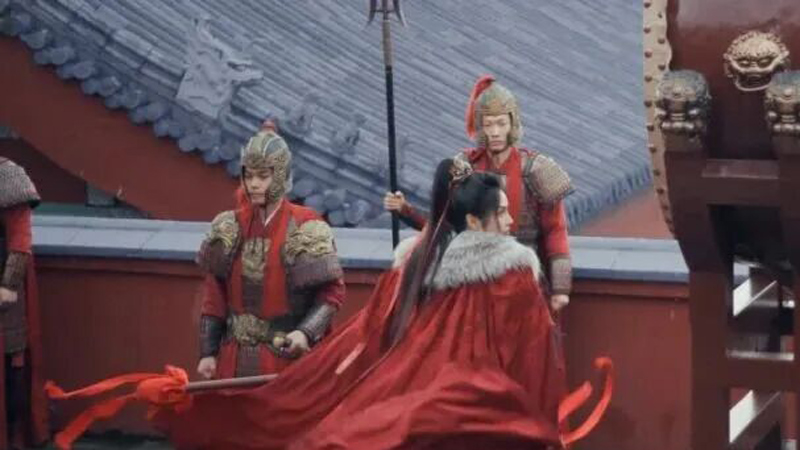
In the sweeping climax of the historical drama Pursuit of Jade, a scene of staggering visual and emotional power unfolds: Fan Changyu (樊长玉), clad in a red battle robe, raises a massive hammer and strikes the imperial grievance drum before the palace gates. Snow falls in a torrential curtain as she shouts her accusations against the heavens, the emperor, and corrupt officials. It is a moment of pure, devastating courage.
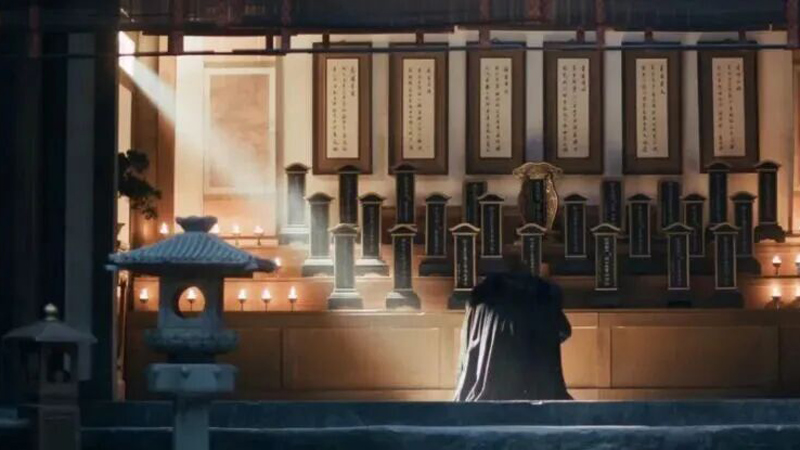
Yet, as she stands alone against the machinery of the state, her beloved, the general Xie Zheng (谢征), is conspicuously absent. He is not by her side, shielding her from the stones and vitriol of the crowd. Instead, he is kneeling in his family’s ancestral hall. This isn't an act of abandonment, but a masterclass in strategic love, a division of labor for a battle that must be fought on two fronts: one against the tyranny of power, the other against the tyranny of blood.
The Drummer and the Ghost
The scene is a study in stark contrasts. Fan Changyu’s struggle is external, visceral, and public. Every strike of her drum is a physical assault against injustice, drawing the crowd’s fury and the state’s oppressive weight. She endures the humiliation of being paraded through the streets, a spectacle of suffering meant to break her spirit. This is a battle she must wage in the open, her fiery red robe a beacon of defiance against the grey winter. Her fight is a tangible, explosive demand for truth. She needs to be seen, to become a symbol that cannot be ignored. Her pain is on the surface, a martyrdom for all to witness.
Simultaneously, Xie Zheng wages his own war in the silent, hallowed space of the Xie ancestral temple. His battle is internal, spiritual, and completely private. He kneels before the spirit tablets of his parents, not to pray for victory, but to apologize. “Father, mother, your son has been unfilial,” he whispers. This is not a man shirking his duty; it is a man confronting the deepest, most painful roots of the conflict. His enemy is not just a political rival, but his own uncle, Wei Yan (魏严)—the man who raised him, trained him, and ultimately, orchestrated the deaths of his parents. For Xie Zheng, the battlefield is the corrupted legacy of his own family. He cannot bring his uncle to justice while still tethered by the bonds of filial piety and gratitude. This solitary moment of penitence is his final act of severance.
The Price of a Name
To understand his absence at the drum, one must first appreciate the brutal price he paid to even stand on the same moral plane as Fan Changyu. Earlier, to win the right to marry her and to break his oath of loyalty to his uncle, he endured 108 lashes. Each strike was a calculated exchange: pain for obligation, blood for freedom. That act was a public and physical declaration of independence from Wei Yan. It was the first, explosive step in their shared war.
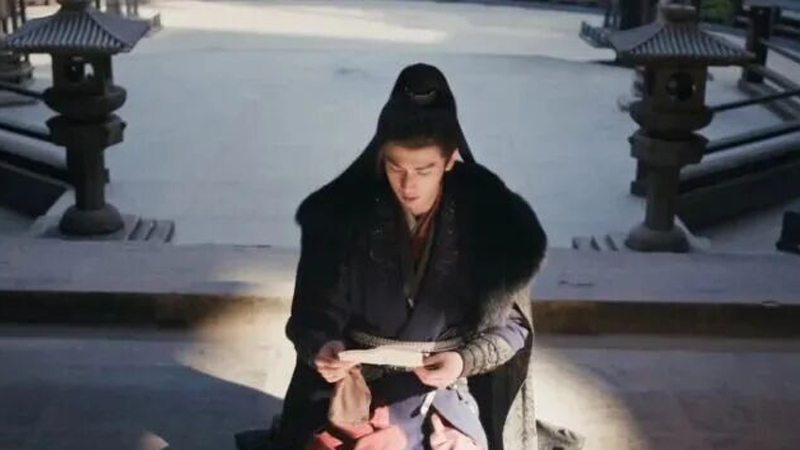
Now, at the drum, he is not being selfish or cowardly. He is executing the next, more delicate phase of their plan. By not appearing at her side, he creates a strategic vacuum. Wei Yan, believing his nephew has finally retreated to the family shrine to stew in guilt, would let his guard down. The general’s arrogance would surface, and his treacherous nature would be laid bare. Meanwhile, Xie Zheng is not idle. While kneeling in apparent submission, he is piecing together the final, undeniable proof of his uncle’s crimes—a hidden letter that holds the key to the decade-old massacre of his father’s army. One partner draws the enemy’s fire and attention; the other quietly finds the weapon to end him.
A Separation That Unites
The true genius of this narrative choice lies in its emotional symmetry. Fan Changyu is battered by the visible world—the jeering crowd, the cold, the physical toll of her defiance. Xie Zheng is consumed by the invisible world—the weight of ancestral duty, the agony of familial betrayal, the silent scream of having to condemn the man who raised him. They are in two different arenas, enduring two different kinds of hell, but their purpose is one. Her public suffering legitimizes the accusation; his private investigation provides the proof. They are two halves of a single, devastating attack on a corrupt system.
This is not a story of a hero rescuing a damsel. It is a story of two warriors fighting a war on parallel fronts. Xie Zheng’s love is not in the grand, obvious gesture of standing in front of her. It is in the quiet, calculated trust of letting her stand alone, knowing she is strong enough to do so. It is in the relentless work he does in the shadows—positioning allies, gathering evidence, preparing a counter-strike. When he finally arrives at the court with the damning letter, he does not diminish her moment; he completes it. He joins her battle not as a shield, but as the final, decisive sword. His absence at the drum was never a lack of love; it was the ultimate expression of a love that understands the battlefield requires both a knight and a strategist.
