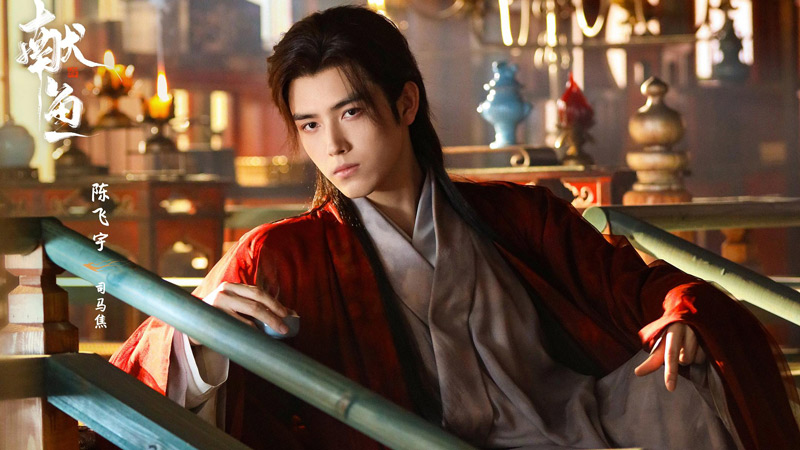
In the summer of 2025, Chen Feiyu returned to the spotlight with his new drama When Destiny Brings The Demon (献鱼). His role as Sima Jiao shattered the usual image of the flawless male lead in xianxia dramas, immediately stirring heated discussion online.
According to data from Detawen, since its premiere on August 16, 2025, When Destiny Brings The Demon has crossed 9700 in popularity on Youku's in-app index. At the same time, the "character contribution rate" for Sima Jiao—essentially measuring how much his presence drives the drama's popularity—soared to a peak of 46%. Chen's performance is widely credited as a key factor behind the show's surging momentum.
Social media comments show just how much the role has clicked with viewers:
"In this B-king lane, our 'Shizu' (师祖, literally 'ancestral master,' here used playfully to refer to Sima Jiao) has endless tricks up his sleeve."
"The unhinged Shizu is crazy but I adore him."
"The tsundere Shizu spoiling someone with bossy tenderness? Hot."
"Finally, the fantasy of the overworked employee getting pampered by their boss comes true."
These reactions highlight more than just a trending character—they also signal Chen Feiyu's progress as an actor. From the inexperienced Ning Que in Ever Night (将夜), to the aloof Li Xun in Lighter & Princess (点燃我,温暖你), and now to the layered, unpredictable Sima Jiao in When Destiny Brings The Demon, Chen has grown from being labeled a "new face" into an actor capable of anchoring IP-driven roles. His career arc now feels less like potential and more like proof of ability.

Chen Feiyu Is Hailed as the Costume Drama
Produced by Youku, Galaxy Cool Entertainment, and Bentu Pictures, the drama is adapted from Fu Hua's historical romance novel Offering a Salted Fish to the Ancestor Master. The story follows Sima Jiao, a powerful master sealed in the mountains for five centuries, who meets Liao Tingyan, a woman who stumbles into the cultivation world. Liao's "salted fish" instincts (a Chinese slang term for someone who is content being lazy and unambitious) disarm the seemingly untouchable Sima Jiao. In turn, she gradually guides him toward kindness, becoming the person who changes him. As they grow closer, their relationship deepens into love, and together they face trials across immortal realms, demonic domains, and the human world, ultimately choosing to protect each other and preserve peace across the three realms.
With a massive reader base from the original novel, When Destiny Brings The Demon stands out among costume xianxia dramas by mixing in a "workplace cultivation" concept. The clash between a "chaotic, unhinged master" and a "corporate-drone-style otter" (社畜水獭, literally "wage-slave otter," a humorous internet archetype in China used to describe someone meek, overworked, yet endearing) creates both comedic sparks and relatable frustration. Modern workplace jargon slips into the fantasy setting, making it feel less like escapism and more like an exaggerated mirror of daily grind culture.
On bullet screens (real-time audience comments scrolling across the screen), viewers turned the show into a kind of digital complaint forum for office workers. This unique blend of humor and resonance kept the series at the top of Youku's popularity charts for weeks. Cumulatively, When Destiny Brings The Demon reached 3.554 billion impressions across platforms, cementing itself as one of the defining hits of the season.

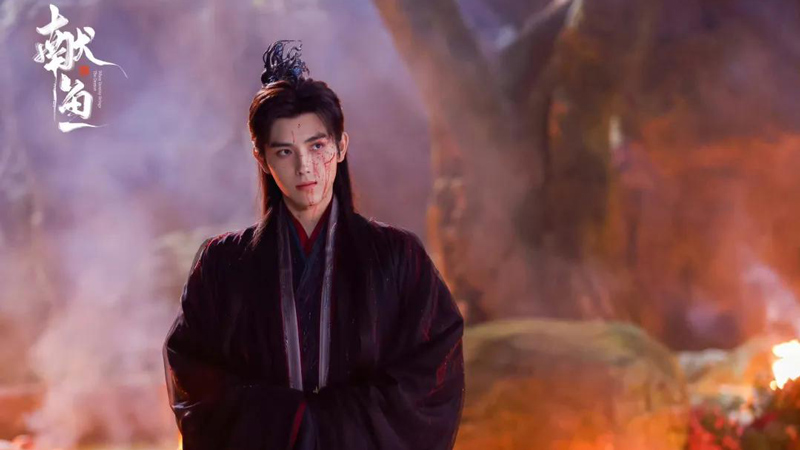
Along with the show's rising popularity came growing recognition for Chen Feiyu as an actor. Early on, Sima Jiao appears as a "mad ancestor" (疯批老祖, shorthand for a chaotic and dangerous figure) who has been sealed for five centuries, scarred by fire, both beautiful and tragic. His brooding temperament, sharp gaze, and explosive mood swings gave him a strikingly villainous aura often described as "bking" (a fandom term in China meaning "boss king," used to praise characters who dominate the scene with charisma). Later, however, Sima Jiao's icy exterior cracks as he is disarmed by Liao Tingyan's "salted fish" spirit. He evolves into a near-parody of the protective lover archetype, sometimes called a "wife-obsessed maniac" (护妻狂魔, a Chinese fandom label for characters who go to extreme lengths to protect their partner). The transformation created a memorable sense of contrast.
To capture the shifting states of the character, Chen Feiyu even adjusted his vocal delivery. Rather than rely on the common industry practice of dubbing, he performed his own lines in a deep, cold register that viewers praised as perfectly matching Sima Jiao's aura. Comments like "his raw voice finally broke the curse of costume idol dramas being overly dependent on dubbing" circulated widely online.
The complexity of Sima Jiao's charm demanded equally complex acting. Chen's most notable breakthrough was his ability to balance subtle emotional shifts with layered inner depth. From his numb indifference at the beginning, to the subtle softening when he first notices the heroine, to the tenderness once love takes root, his eyes often did the storytelling.
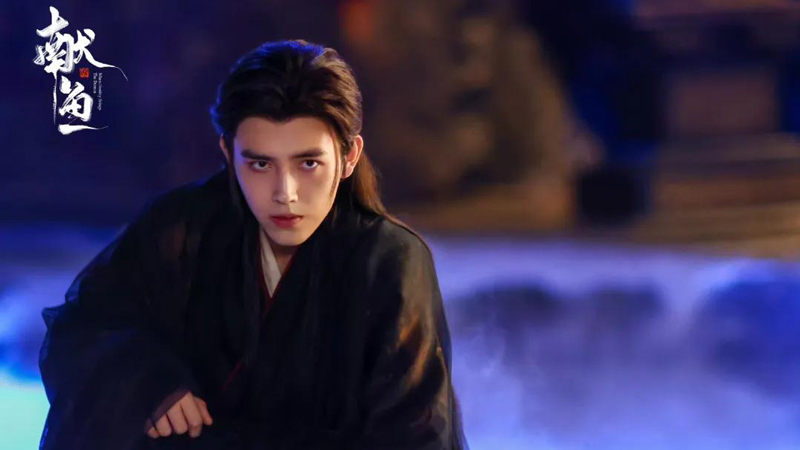
For example, in his debut as the "mad ancestor," his piercing stare conveyed five centuries of suppressed rage and anguish. Fans of the novel remarked, "It feels like he walked straight out of the book—this is the boss we imagined." In another moment, when Liao Tingyan explains the meaning of a "like" gesture, he scoffs, eyes full of disdain, muttering "your tricks won't work on me." Yet when she isn't looking, he awkwardly imitates the gesture, his cold façade giving way to comic cluelessness. Or during the confession scene marked by a "Truth Oath" ritual, the sincerity in his expression, the movement of his Adam's apple, and the tightness of his jawline all heightened the emotional weight of his words: "I hold you as precious."
This mix of visual detail and tonal nuance left audiences with a set of performance keywords: "high physical resemblance," "micro-expressions," "chaotic energy," "raw voice delivery," "contrasting gaze," and "layered emotions."

Why Chen Feiyu's Portrayal of the "Powerful Falling for the Ordinary" Resonates
Sima Jiao's overwhelming popularity is also rooted in the show's use of the "powerful man loves an ordinary woman" storyline, which speaks directly to contemporary social psychology. According to data from Detawen's user psychology database—based on systematic analysis of trending discussions around love and marriage across major platforms—the audience's emotional connection with the dynamic of "high-ranking Sima Jiao" falling for "ordinary Liao Tingyan" boils down to four psychological triggers:
Anchors in reality—Viewers see their own struggles mirrored in the heroine's ordinariness, which grounds the fantasy.
Direct emotional delivery—The drama doesn't shy away from bold affection, appealing to audiences tired of ambiguous romance.
Breadth of life experience—By pairing the immortal master with someone unremarkable, the story emphasizes that love transcends power and background.
A safe harbor from pressure—For many, the fantasy of being cherished by someone powerful reflects a yearning for emotional refuge in a stressful world.

The reason Chen Feiyu could so precisely deliver the narrative of a "powerful figure bowing his head for love" lies in his ability to capture two psychological transformations in Sima Jiao. The first is a shift in posture—from lofty condescension to genuine equality. The second is an internal metamorphosis—from fractured identity to embracing human warmth, ultimately achieving integration. Rather than reducing Sima Jiao's love to a simplistic symbol of domineering indulgence, Chen dug into the character's inner void and longing. Through layered acting choices, he made this psychological journey feel convincing.
In terms of posture, Chen mapped out a clear performance arc. Early on, his gaze was downward and dismissive, paired with careless, languid body language, shaping Sima Jiao as a godlike figure who saw Liao Tingyan as nothing more than a tool.
As the story progressed and Liao Tingyan acted beyond his control, Chen conveyed cracks in that superiority through flickers of confusion and irritation—a sense of being "broken through" (破防感, internet slang for losing one's composure). Moments like his awkward attempt to mimic a "thumbs-up" gesture brought comic texture while signaling his gradual willingness to enter her world. By the time love had taken root, his entire presence shifted: his gaze softened and lingered with longing, his body unconsciously leaned toward her, and he even crouched down to meet her eye-to-eye. Each choice underscored that he no longer stood above her but had placed her on equal, if not higher, ground.

In terms of internal transformation, Chen traced Sima Jiao's evolution from "non-human" to "human." At first, he embodied the split between divinity and demonic madness—cold at times, unhinged and violent at others—making the character's isolation and pain palpable beneath the armor of power. When Liao Tingyan, as the embodiment of everyday human warmth, entered his life, Chen shifted into subtle gestures: minute changes in his eyes as a passive observer, the barely noticeable lift of his lips signaling thaw. His body language also moved from tight and rigid to open and relaxed, reflecting Sima Jiao's release once he found an emotional "safe harbor". Viewers responded in real time with bullet comments like "Shizu seems even more emotionally dependent on Yan Zi" and "This pairing is wickedly addictive."
Ultimately, Chen's performance broke free from formula. He mastered the push-and-pull between ferocity in moments of protection and pure vulnerability in solitude. The result was a Sima Jiao who remained formidable yet learned to love and be loved—a complete, believable figure. And beyond that, he and his co-star created a romance that felt natural and alive, rather than staged.
In short, it was precisely through this layered performance that Chen Feiyu made tangible Sima Jiao's journey of being drawn to an "ordinary person," gradually transformed, and ultimately redeemed. By embodying the powerful figure's yearning to shed arrogance and embrace genuine emotion, he gave the romance remarkable credibility and emotional pull.
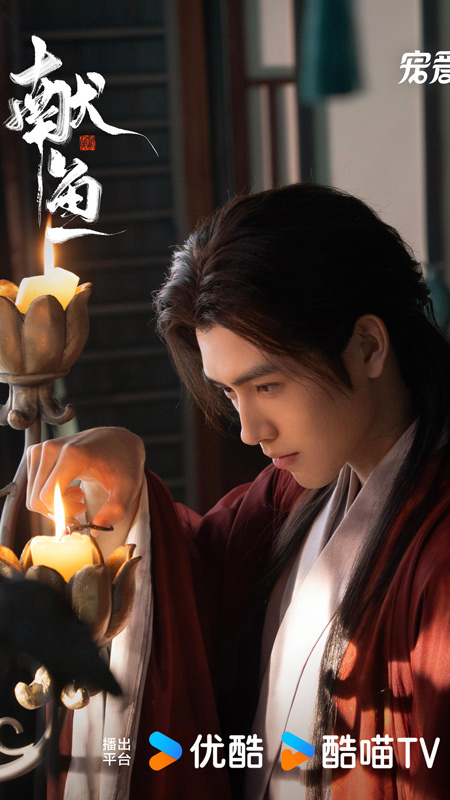
Falling from an aloof pedestal into the warmth of daily life, Chen illustrated Sima Jiao's discovery that only through Liao Tingyan's direct, unfiltered affection and her utterly different perspective on existence could he taste what ordinary life feels like. For the first time, he found a place where he could let down his guard, rest his spirit, and simply be himself. This fulfilled his craving for both authentic living and straightforward love, turning him from a lofty ancestor into someone touched by human warmth. These emotional shifts not only mapped neatly onto the four psychological drivers behind the "powerful loves ordinary" trope but also carved out a clear growth arc for the character.
According to Detawen's monitoring data, trending keywords tied to Chen Feiyu in recent weeks have included show-related terms like "Sima Jiao," "When Destiny Brings The Demon" , "original novel," and "adaptation," alongside reputation markers such as "chaotic energy" (疯批), "delicate yet unhinged" (病娇), "voice," "eyes," "good-looking," "liked," and "acting." Together, these reinforce his compatibility with the role and his ability to shape it—further proof of the mutual success between actor and project.

Inexperienced "Second-Gen Star" to IP Roles
The drama's popularity and the strength of its central role both underline Chen Feiyu's growing influence in the market. At the same time, they show how he has begun to move beyond the inherited label of "second-generation star" (星二代, children of famous actors) to prove his worth through performance.
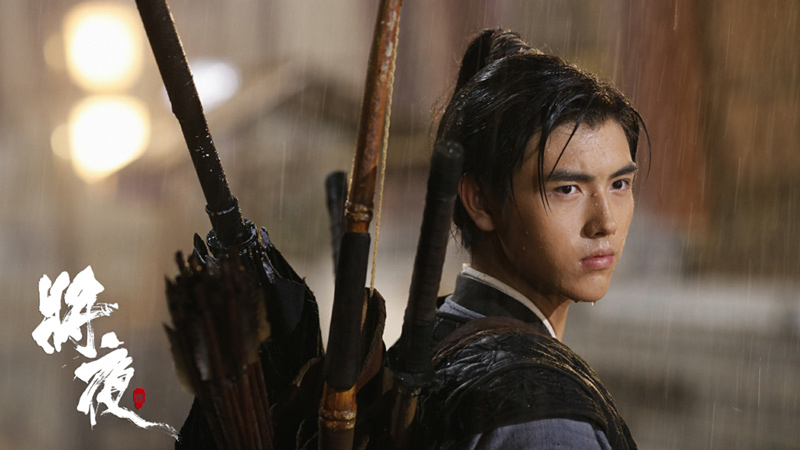
From his turn as Ning Que in Ever Night—a carefree yet loyal underdog rising from the margins of the martial world—to Li Xun in Lighter & Princess—aloof, stubborn, deeply conflicted yet luminously evolving—to now Sima Jiao, a boss-like ancestor defined by contrasts and volatility, Chen has pushed himself with each project. In just five years, he has transformed from a raw newcomer into a capable actor who can carry complex IP-based roles. His trajectory makes clear an actor's path of steady preparation and carefully plotted growth, with increasingly broad horizons ahead.
What stands out is that both Li Xun in Lighter & Princess and Sima Jiao in When Destiny Brings The Demon belong to the same broad category of "Bking" characters (a fandom term describing dominant, intimidating male leads). Yet Chen Feiyu managed to deliver high compatibility in two entirely different genres—modern romance and costume fantasy. Both roles generated strong audience response. The keywords tied to Li Xun included "destined Li Xun," "resilient," and "aloof but defiant," while Sima Jiao inspired associations like "sharp-tongued and fragile," "brooding and vulnerable," and "chaotic ancestor." These descriptors aligned closely with the characters' cores and left strong impressions among both book fans and drama fans. It again underlines Chen's precision in reading a role's inner world and breathing life into characters that might otherwise risk feeling formulaic.
Following the drama's release, Chen's audience demographics also shifted. A growing portion of his fanbase now comes from women aged 31–40—viewers who tend to value character complexity, textured performances, and strong narrative foundations. His popularity is also higher in economically advanced regions such as "new first-tier" cities (a China-specific urban ranking just below Beijing, Shanghai, Guangzhou, and Shenzhen). This suggests that his portrayal of Sima Jiao not only broke into a more mature demographic but also expanded his commercial potential.
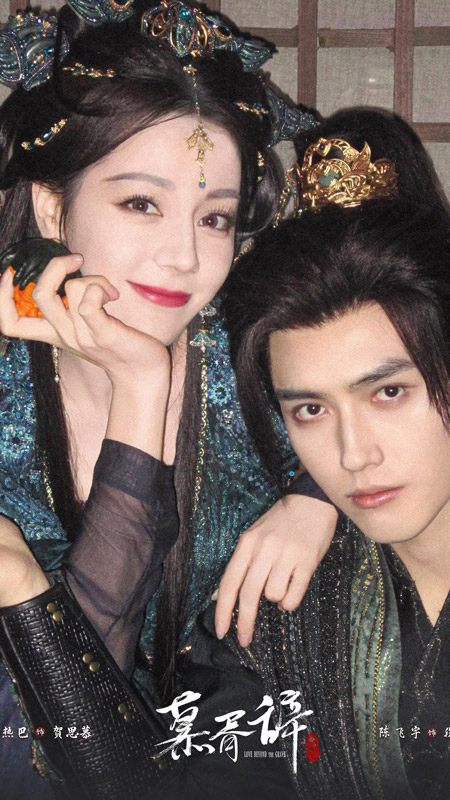
Looking ahead at Chen Feiyu's upcoming projects, his career planning reveals a clear strategy: strengthen his existing advantages while breaking into new territory. For instance, in Love Beyond the Grave (慕胥辞), a costume fantasy drama, he takes on an even more layered role to consolidate his footing with the core audience of the genre. At the same time, he is set to branch into different material with the period romance Love Story In The 1970s (实用主义者的爱情), which will test his versatility and broaden his range. Together, these choices highlight both his growing confidence in shaping IP-based characters and his conscious effort to diversify as an actor, creating multidimensional appeal and anticipation.
The success of Sima Jiao in When Destiny Brings The Demon marks a turning point in Chen Feiyu's career. He not only proved his ability to anchor a high-profile fantasy drama but also showcased his flexibility and growth potential as an actor. By consistently pushing himself and expanding into different types of stories, Chen has already established the reputation of an "IP role shaper." This makes audiences look forward to his next steps—and raises the question of whether he can solidify his place as a central figure among the new generation of actors.